Plant Overview
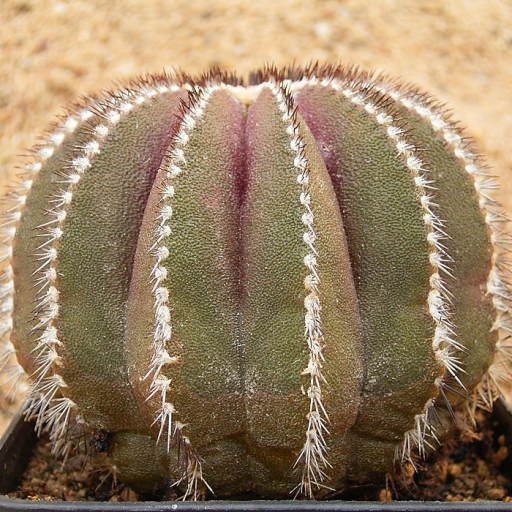
Known as the "Comb-bearing Cactus," Uebelmannia pectinifera is one of the most visually striking succulents in the botanical world. Its dark, metallic-purple skin and perfectly aligned white spines make it look more like a piece of modern art than a living plant. Native to the rugged, quartz-rich mountains of Minas Gerais, Brazil, this cactus is a prized "holy grail" for collectors due to its unique "stitched" appearance.
🔍 How to Identify
- 🌵 Skin Texture: The body is famously dark, ranging from deep chocolate brown to a rich, waxy purple. This dark pigmentation helps the plant absorb heat and protect itself from intense high-altitude UV rays.
- 🪮 Comb-like Spines: The species name pectinifera means "comb-bearing." It features 15–18 sharp ribs, each lined with dense, white or light gray spines that point downward in a neat, symmetrical fashion.
- 📏 Growth Habit: It typically grows as a solitary, upright cylinder. While it stays a neat, small globe for many years, a mature specimen can eventually reach about 20 inches in height.
🏡 In Your Garden
- 🧪 Acidic Soil Needs: Unlike many desert cacti that prefer alkaline conditions, this Brazilian native craves slightly acidic soil. It thrives in a mix that mimics its native quartz sand and gravel, so avoid using mixes with high lime content.
- 💧 The Mist Drinker: While it is highly susceptible to root rot if left in standing water, it actually enjoys more atmospheric humidity than most cacti. In the wild, it survives by "drinking" the morning mists that roll over the mountains.
- ☀️ Light & Warmth: To maintain that beautiful dark purple color, it needs very bright light. However, it is sensitive to cold; it must be kept warm year-round, as it lacks the frost tolerance of North American cacti.
⚠️ Safety & Toxicity
- 🛡️ Non-Toxic Status: Uebelmannia pectinifera is generally considered non-toxic to cats, dogs, and humans. It does not contain the irritating saps found in some other succulent families.
- 📌 Physical Hazard: While not chemically dangerous, those "combs" are very sharp! The spines can easily puncture skin, so always use thick leather gloves or specialized tongs when repotting.
✨ Fun Fact
This cactus is a master of "fog harvesting." In its native habitat, the dense arrangement of spines creates a micro-climate around the plant's skin, trapping moisture from clouds and directing it down toward the base of the plant to be absorbed.

Detailed Care Instructions
To grow Uebelmannia pectinifera plants, follow these steps:
- Choose a suitable location: Uebelmannia pectinifera plants require bright sunlight, so select a location that receives ample direct sunlight. It is best to grow them outdoors in warm climates, but they can also be grown indoors near a sunny window.
- Soil requirements: Uebelmannia pectinifera plants prefer well-draining soil. You can use a cactus or succulent mix or create your own mix by combining regular potting soil with sand or perlite to improve drainage.
- Planting: Select a pot with drainage holes and fill it with the prepared soil mix. Gently place the Uebelmannia pectinifera plant in the pot, making sure not to bury it too deep. The crown of the plant, where the stem meets the roots, should be level with the soil surface.
- Watering: Uebelmannia pectinifera plants are adapted to drought conditions and do not require frequent watering. Allow the soil to completely dry out between waterings and then water thoroughly, allowing excess water to drain out. During the winter months, reduce watering even further as the plant goes into a period of dormancy.
- Temperature and humidity: Uebelmannia pectinifera plants prefer temperatures between 70-85°F (21-29°C). They can tolerate higher temperatures but may need shade during intense heat. They are also adapted to low humidity, so there is no need to provide extra humidity.
- Fertilization: Uebelmannia pectinifera plants are slow-growing and do not require frequent fertilization. You can use a diluted balanced cactus fertilizer during the growing season, following the instructions on the packaging.
- Pruning: Uebelmannia pectinifera plants usually do not require pruning. However, if any damaged or dead parts appear, you can carefully remove them with sanitized pruning shears.
- Propagation: The most common method of propagation for Uebelmannia pectinifera plants is by seed. Sow the seeds in a tray or pot with well-draining soil and keep them slightly moist until they germinate. It is a slow process, and it can take several months for the seeds to sprout.
Remember that Uebelmannia pectinifera plants are slow-growing and have specific care requirements. Patience and attention to their needs will help you successfully grow and care for these unique cacti.

Place in a bright room that is sun drenched almost all day. Or directly in a south-facing window.

To adequately water this plant, it is important to understand its specific needs. This plant thrives in well-draining soil, so it is crucial not to overwater it. It is recommended to wait until the top inch of soil is completely dry before watering it again. When watering, it is best to give the plant a thorough soaking, allowing the water to run through the pot's drainage holes. Then, allow the soil to drain completely before returning it to its normal location. It is important to avoid getting water on the leaves as this can lead to rot and other issues.
To fertilize the particular species identified as Uebelmannia Pectinifera, it is recommended to use a balanced, slow-release fertilizer with a 3:1:2 or 4:1:2 ratio, applied at half strength during the growing season (spring and summer). It is important to avoid over-fertilizing, as this can cause damage to the plant. Additionally, ensure that the soil is moist before applying fertilizer to prevent burning the roots. Fertilizing frequency should be reduced during the dormant season (fall and winter).
The preferred soil for Uebelmannia Pectinifera is well-draining soil that is rich in nutrients. It should not be too wet and should contain a mixture of sand, perlite, and peat moss to provide adequate drainage and aeration. The pH level should range from slightly acidic to neutral, usually between 6.0 and 7.5. It is also important to ensure that the soil is not compacted and has good structure to support the growth of the plant's root system. Additionally, the soil should be fertilized with a balanced fertilizer every few months to provide additional nutrients to the plant.
Uebelmannia pectinifera, typically known for its distinct characteristics and features, can be propagated using a variety of methods. Here is a detailed guide on how to propagate this plant:
- Seeds:
- Obtain fresh Uebelmannia pectinifera seeds from a reputable source.
- Fill a small seed tray or pot with a well-draining mixture of cactus or succulent soil.
- Gently press the seeds into the soil, ensuring they are not buried too deeply.
- Mist the soil with water to provide moisture.
- Place the tray or pot in a warm and brightly lit area, but avoid direct sunlight.
- Ensure the soil remains slightly moist, but not overly saturated.
- Germination usually takes 2-4 weeks, but it can vary.
- Once the seedlings develop a few sets of true leaves, they can be transplanted into slightly larger containers.
- Obtain fresh Uebelmannia pectinifera seeds from a reputable source.
- Offsets (Pups) Division:
- Identify healthy and mature Uebelmannia pectinifera plants that have produced offset shoots or pups.
- Prepare a clean and sharp knife or shears.
- Gently remove the offsets by carefully cutting them away from the main plant, ensuring a piece of the root system is intact.
- Allow the offsets to dry out for a few days to form calluses, which helps prevent rotting during planting.
- Fill small pots or containers with a well-draining cactus or succulent soil mix.
- Place the offsets on top of the soil, ensuring the root system is in contact with the soil.
- Lightly press the soil around the offsets to hold them in place.
- Water the soil gently, being cautious not to drench it, but enough to moisten it.
- Place the pots or containers in a location with bright, indirect light.
- Water sparingly and wait for the offsets to establish their root system, which could take several weeks.
- Once the offsets have formed a healthy root system and start growing, treat them as mature Uebelmannia pectinifera plants.
- Identify healthy and mature Uebelmannia pectinifera plants that have produced offset shoots or pups.
- Grafting:
- Select a healthy Uebelmannia pectinifera plant to serve as the rootstock. It can be any cactus species similar in size and growth habit.
- Prepare a clean and sharp knife or shears.
- Choose a Uebelmannia pectinifera cutting or scion with a healthy stem and several areoles (spine-producing structures).
- Make a diagonal cut on the rootstock and another matching cut on the scion, ensuring they fit together smoothly.
- Connect the rootstock and scion by firmly pressing them together, aligning the cambium layers (the thin layer just beneath the plant's bark).
- Secure the graft with grafting tape or rubber bands to keep it stable.
- Place the grafted plant in a warm and bright location, protected from direct sunlight.
- Mist the soil around the rootstock to provide some moisture, as the scion won't be able to absorb water initially.
- After a few weeks, the scion and rootstock should start to fuse together, forming a successful graft.
- Gradually acclimate the grafted plant to more intense light and normal watering routines.
By following these propagation methods, you can successfully propagate Uebelmannia pectinifera and enjoy the captivating beauty of this unique cactus species.
- Select a healthy Uebelmannia pectinifera plant to serve as the rootstock. It can be any cactus species similar in size and growth habit.
Common pests of the uebelmannia pectinifera include Scale insect, mealybugs, spider mites, thrips. Make a habit of checking your uebelmannia pectinifera frequently for pests so that any infestations can be caught and managed early.








