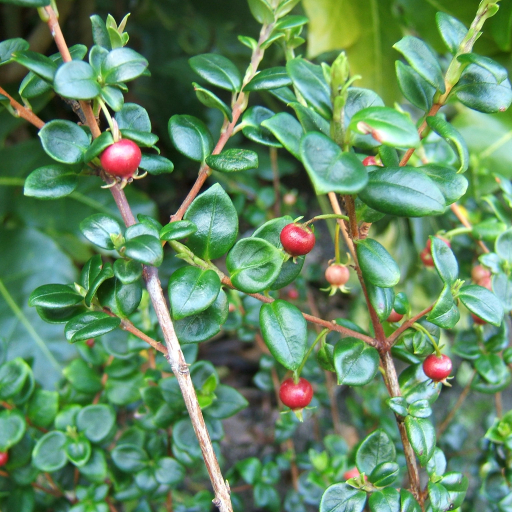
Plant Overview
Often called the "Chilean Guava" or "Strawberry Myrtle," Ugni molinae is a charming evergreen shrub that once graced the royal gardens of 19th-century England. Native to the temperate rainforests and volcanic slopes of Chile and Argentina, it is cherished for its fragrant foliage and tiny, intensely flavored berries that taste like a cross between a wild strawberry and a spicy kiwi.
🔍 How to Identify
- 🍃 Foliage: The leaves are small, oval, and leathery with a dark, glossy green finish. In colder months, the tips often take on a beautiful bronze or reddish hue.
- 🔔 Flowers: In late spring, the plant produces dainty, nodding, bell-shaped flowers. They are usually creamy white or pale pink and have a sweet, honey-like scent.
- 🍒 The Fruit: The most distinctive feature is the marble-sized, deep crimson berry. Each fruit has a tiny "crown" (persistent sepals) at the base, making it look like a miniature pomegranate.
🏡 In Your Garden
- 🪴 The Taproot Rule: This shrub is notoriously sensitive to root disturbance. Because it develops a deep taproot, it hates being transplanted; once you find a sunny, sheltered spot with acidic soil, it is best to leave it there for life.
- 💧 Fruiting Needs: While the plant is surprisingly drought-tolerant once established, it requires consistent watering while the fruit is setting. If the soil dries out too much in mid-summer, the berries may drop before they ripen.
⚠️ Safety & Toxicity
- ✅ Safe & Delicious: The berries are completely edible and highly sought after for jams, muffins, or eating fresh. They are packed with antioxidants and vitamin C.
- 🐾 Pet Note: Ugni molinae is generally considered non-toxic to dogs and cats. However, the high fiber content in the leaves can cause mild stomach upset if a pet decides to use the shrub as a snack.
✨ Fun Fact
👑 Royal Favorite: Queen Victoria was so obsessed with these berries that she attempted to make them a staple fruit in England. They were grown specifically for her at her residence on the Isle of Wight, which is why the plant is still sometimes called the "Victorian Guava."

Detailed Care Instructions
To grow Ugni molinae, commonly known as Chilean guava or strawberry myrtle, follow these steps:
- Climate requirements: Ugni molinae grows best in temperate climates with cool summers and mild winters. It can tolerate a wide range of temperatures, from -10°C (14°F) to 30°C (86°F).
- Select the right location: Choose a spot in your garden that receives full sun to partial shade. The soil should be well-draining and slightly acidic (pH 4.5-6).
- Propagation: Ugni molinae can be propagated from seeds, cuttings, or by layering. Seeds may take longer to germinate, so it's commonly propagated from cuttings.
a. Cuttings: Take 4-6 inches long hardwood or semi-hardwood cuttings in late winter or early spring. Remove the lower leaves and dip the cut ends in rooting hormone powder. Plant the cuttings in a pot filled with a well-draining mix of equal parts sand and peat moss. Keep the soil moist and place the pot in a warm area. Roots should develop within 3-4 weeks.
b. Layering: Bend a low-growing branch to the ground and secure it with a U-shaped wire. Cover the branch with soil, leaving the tips exposed. Once roots develop (usually within a few months), cut the rooted section from the mother plant and transplant it.
- Planting: Choose healthy seedlings or rooted cuttings to plant in your garden or larger pots. Dig a hole that is slightly larger than the root ball of the plant. Place the plant in the hole, ensuring the top of the root ball is level with the soil surface. Backfill the hole with soil, gently firming it around the roots. Water thoroughly.
- Watering: Keep the soil consistently moist but not waterlogged. Water deeply once or twice a week, particularly during dry spells. Ugni molinae prefers regular watering, especially during fruiting season.
- Pruning: Ugni molinae responds well to pruning, which helps maintain a more compact shape and promotes healthier growth. Prune in late winter or early spring before new growth emerges. Remove any dead, damaged, or crossing branches. Trim back long or straggly growth to encourage dense foliage.
- Fertilizing: Apply a balanced, slow-release fertilizer in early spring. Follow the manufacturer's instructions for the recommended dosage. Additionally, you can amend the soil with organic matter, like compost or well-rotted manure, to improve nutrient levels.
- Pests and diseases: Ugni molinae is generally pest and disease-resistant. However, keep a lookout for common garden pests like aphids or spider mites. Treat any infestations with organic insecticidal soap or neem oil spray.
- Harvesting: Ugni molinae produces delicious berries that resemble small strawberries. The fruits are ready to harvest when they turn deep purple or black and become slightly soft. Pick them gently and enjoy fresh or use them in various culinary applications like jams, jellies, or desserts.
By following these steps, you should be able to successfully grow Ugni molinae in your garden or container. Happy gardening!

Place in a bright room that is sun drenched almost all day. Or directly in a south-facing window.

To water this plant, it is recommended to check the soil moisture level by inserting a finger about two inches deep into the soil. If the soil feels dry, it is time to water the plant. Use room temperature water and water thoroughly to ensure that the water reaches the roots. Avoid getting water on the leaves to prevent fungal diseases. During the summer months, the plant may require more frequent watering, but be careful not to overwater as this can lead to root rot. In the winter months, reduce watering and let the soil dry out slightly between waterings.
Fertilize the plant with a balanced fertilizer, such as a 10-10-10 or 20-20-20, in early spring before new growth appears and again in mid-summer. Use a slow-release fertilizer or apply liquid fertilizer every two weeks during the growing season. Avoid over-fertilizing, as it can cause the plant to produce excessive foliage at the expense of fruit production. Water the plant thoroughly before and after fertilizing to prevent fertilizer burn.
For optimal growth of your plant, it is recommended to use well-draining soil with a pH range of 5.5 to 6.5. The soil should be rich in organic matter and have good moisture retention qualities. It is important to avoid heavy soils that could lead to waterlogging and root rot. You may need to supplement your soil with fertilizers such as nitrogen to encourage healthy growth.
Ugni Molinae plant can be propagated through seeds or cuttings. To propagate through seeds, the ripe fruit should be collected and the seeds extracted. The seeds should be cleaned and dried before sowing in a well-draining potting mix. The potting mix should be kept moist and the seeds should be placed in a warm location for germination.
To propagate through cuttings, select a healthy stem with no flowers or fruit. Cut a 4 to 6-inch section of the stem with clean and sharp pruning shears. Remove the leaves from the lower 2/3 of the stem and dip the cut end in rooting hormone. Place the cutting in a well-draining potting mix, water gently, and cover with plastic or a plastic dome to increase humidity. Keep the cutting in a bright but indirect light location. Check it regularly to make sure it remains moist.
It is important to note that Ugni Molinae plant is a slow-growing plant and can take up to two years to reach a mature size. Therefore, patience is key when propagating this plant.
Common pests of the chilean-guava include Scale insect, mealybugs, spider mites, aphids, thrips, larvae. Make a habit of checking your chilean-guava frequently for pests so that any infestations can be caught and managed early.








