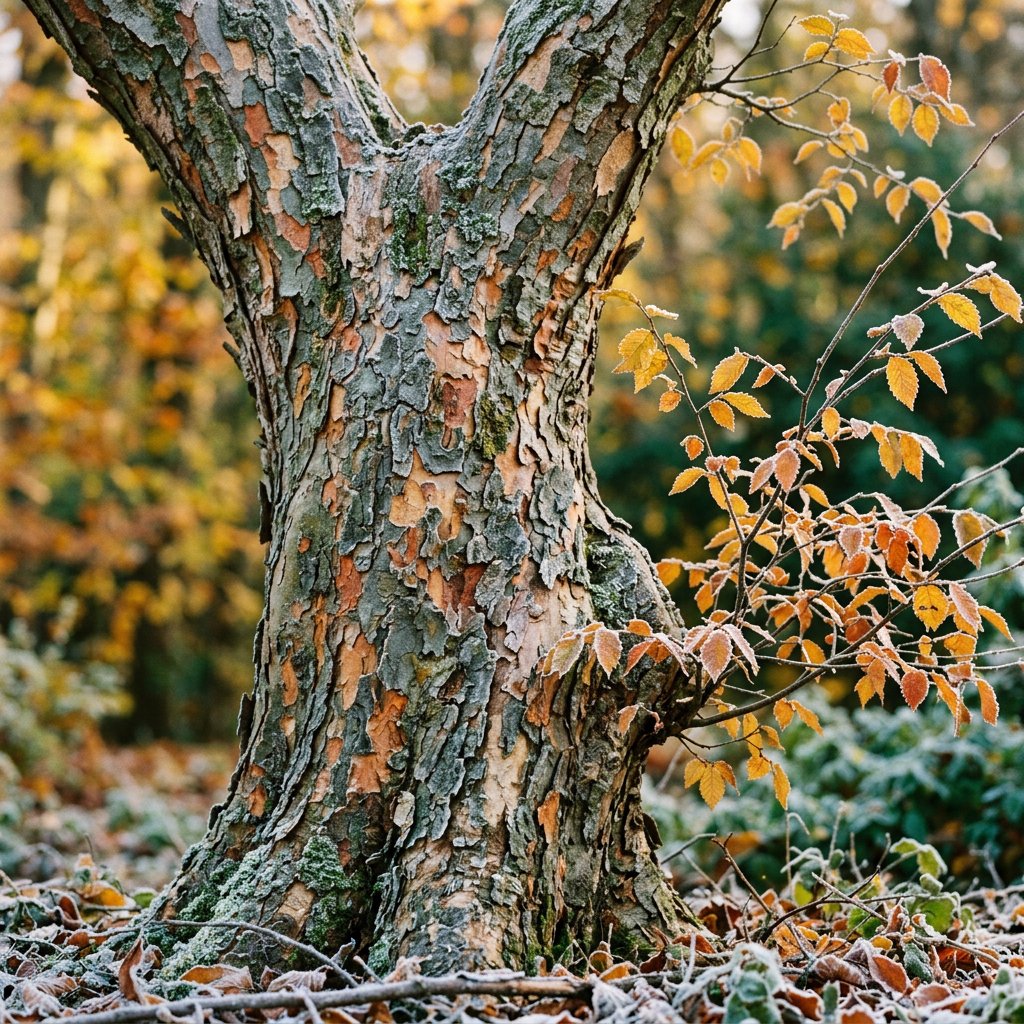
Plant Overview
Known affectionately as the "Lacebark Elm," Ulmus parvifolia is widely celebrated for its stunning, puzzle-like trunk and graceful silhouette. Unlike many of its cousins, this tree is incredibly resilient and has become a global favorite among bonsai enthusiasts for its ability to look like a miniature ancient giant. It offers a dense, weeping canopy that provides perfect dappled shade for a cozy backyard nook or a city sidewalk.
🔍 How to Identify
- 🍃 Small Serrated Leaves: The foliage is tiny, oval, and leathery, featuring neatly toothed edges that turn beautiful shades of purple, gold, or red in late autumn.
- 🧩 Lace-like Bark: As the tree matures, the bark exfoliates in irregular patches, revealing a beautiful mosaic of grey, cream, orange, and brown underneath.
- 🌳 Elegant Structure: It typically displays a rounded, spreading crown with fine, delicate branches that often weep slightly toward the ground.
🏡 In Your Garden
- 🏙️ Urban Survivor: This tree is exceptionally tough, tolerating poor soil, air pollution, and even heavy wind, making it a top choice for challenging city environments.
- ✂️ The Bonsai King: Because it grows rapidly and responds well to pruning, it is considered the "gold standard" for beginners learning the art of bonsai.
- 🛡️ Naturally Hardy: Its greatest claim to fame is its high resistance to Dutch Elm Disease, the fungal plague that devastated millions of native elm trees across North America and Europe.
⚠️ Safety & Toxicity
- 🐾 Non-Toxic: The Chinese Elm is generally considered safe and non-toxic to dogs, cats, and horses, making it a worry-free addition to a family landscape.
- 🤧 Seasonal Allergies: While not poisonous, it is a wind-pollinated tree that produces pollen in late summer or autumn, which may cause "hay fever" symptoms for sensitive humans.
✨ Fun Fact
The species name parvifolia literally translates from Latin to "small leaf." This unique trait is what allows the tree to look perfectly proportional whether it is standing 50 feet tall in a park or 10 inches tall in a ceramic bonsai pot.

Detailed Care Instructions
| Color | Reddish-Green |
| Soil Ph | Prefers Neutral Soil |
| Humidity | High |
| Lighting | Part Sun |
| Soil Type | Average, Good Drainage |
| Bloom Time | Late Summer |
| Difficulty | Hard |
| Plant Type | Tree |
| Mature Size | 40-50 Ft. Tall 25-30Ft. Wide |
| Native Area | East Asia |
| Temperature | 18°C - 24°C |
| Sun Exposure | Full Sun |
| Hardiness Zones | 4-9 |
To grow Ulmus Parvifolia, also known as Chinese Elm, follow these steps:
- Select a suitable location: Find a spot in your garden or outdoor space that receives full sunlight to partial shade. Chinese Elm can tolerate a variety of soil types but prefers well-draining soil.
- Prepare the soil: If your soil is heavy or compacted, consider amending it with organic matter such as compost to improve drainage and fertility. This will provide a healthy environment for the roots to grow.
- Planting: Dig a hole that is slightly wider and deeper than the nursery container of the plant. Gently remove the plant from its container, keeping the root ball intact. Place the plant in the hole, ensuring that the crown is level with or slightly above the soil surface. Backfill the hole with soil, firming it gently around the base of the plant.
- Watering: After planting, thoroughly water the Chinese Elm to settle the soil and provide moisture to the roots. Water regularly, especially during the first year, to keep the soil consistently moist but not waterlogged. Chinese Elm tolerates drought once established but benefits from regular watering during prolonged dry periods.
- Mulching: Apply a layer of organic mulch, such as wood chips or bark, around the base of the plant. Mulch helps retain moisture, suppresses weeds, and moderates soil temperature. Keep the mulch away from the trunk to prevent rot.
- Pruning: Chinese Elm has a graceful, spreading growth habit, and you can prune it to shape or control its size if necessary. Prune in late winter or early spring before new growth starts. Remove dead, damaged, or crossing branches. Thinning the canopy can help improve air circulation and reduce the risk of diseases.
- Fertilizing: Chinese Elm generally does not require excessive fertilization. Apply a balanced slow-release fertilizer in early spring according to the manufacturer's instructions. Avoid over-fertilizing, as it can lead to weak growth.
- Pests and diseases: Like most plants, Chinese Elm is susceptible to pests and diseases, including aphids, scale insects, and powdery mildew. Regularly inspect the plant for signs of infestations or diseases, and treat them promptly using organic or chemical controls if necessary.
- Winter care: Chinese Elm is generally hardy and can tolerate cold temperatures. However, young plants may benefit from winter protection, such as wrapping in burlap or applying a layer of mulch around the base to insulate the roots.
By following these guidelines, you can successfully grow and maintain Ulmus Parvifolia in your garden or outdoor space.

Place in a window with dappled sun or a spot in the middle of a room. Or directly in a window facing west or east.

Ulmus Parvifolia is best watered when the soil around the plant feels dry to the touch. When watering, it is important to make sure that the water is evenly distributed and that the soil is saturated. It is also important to avoid overwatering as this can lead to root rot. Watering should be done at the base of the plant to avoid getting the leaves wet, which could cause disease. It is recommended to water once a week, but this may vary depending on environmental conditions and the soil type. In hot and dry weather, the plant may require more frequent watering.
To properly fertilize this plant, you will need to apply a slow-release fertilizer during the early spring months. The fertilizer should be evenly distributed around the base of the plant, being careful not to apply too much near the trunk. It is important to water the plant thoroughly after fertilizing to ensure that the nutrients are properly absorbed. You should also avoid fertilizing during the late fall and winter months when the plant is dormant.
It is best to use a well-draining soil that has rich organic matter for this plant. The soil pH should be slightly acidic to neutral, with a range of 6.0 to 7.5 being ideal. It is also recommended to use a soil mix that has good water retention capabilities, as Ulmus Parvifolia plants prefer consistent moisture levels. Adding perlite or sand to the soil mix can increase drainage if necessary. Avoid using heavy, clay soils as they can cause the roots to become waterlogged and suffocate.
Propagation of this plant can be achieved through several methods such as cuttings, layering, and seeds. For cuttings, select healthy branches with at least two nodes and remove the lower leaves. Dip the bottom end in a rooting hormone and plant in a well-draining potting mix. Keep the soil moist and in a bright but indirect light until roots develop.
Layering involves bending a lower branch to the ground and covering part of it with soil. Once roots develop, the branch can be cut from the parent plant and transplanted.
Seeds can also be used for propagation, but they require stratification (exposure to cold temperatures) to break dormancy. Plant the seeds in a well-draining potting mix, cover lightly with soil, and keep the soil moist and in a cool location for several weeks before bringing them into a warmer environment. The germination rate is usually low, and it may take several years for the plant to reach maturity.
Regardless of the propagation method used, it is important to provide proper care, including regular watering and fertilization, to ensure healthy growth.
Common pests of the chinese elm include Scale insect, mealybugs, spider mites. Make a habit of checking your chinese elm frequently for pests so that any infestations can be caught and managed early.








