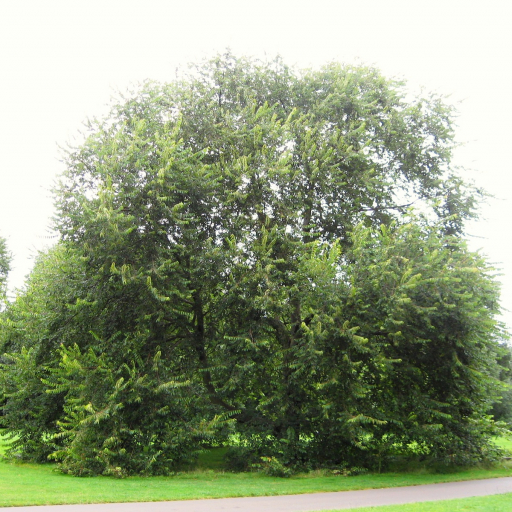
Plant Overview
Known as the Himalayan Small-leaved Elm or the Cherry Bark Elm, Ulmus villosa is a majestic survivor from the high-altitude valleys of the Himalayas. Its most enchanting feature is its bark, which mimics the glossy, horizontal-lined texture of a Cherry tree rather than the rugged, corky bark of most Elms. In its native lands, it is often treated as a sacred or vital utility tree, providing shade and sturdy wood for mountain communities.
🔍 How to Identify
- 🍒 The "Cherry" Bark: Unlike its rugged cousins, the trunk of a young Ulmus villosa is smooth and silver-grey with prominent horizontal lines (lenticels), looking remarkably like a giant Cherry tree.
- 🍃 Velvety Leaves: The species name villosa comes from the Latin for "shaggy" or "hairy." The undersides of the leaves and the young twigs are covered in soft, fine hairs that feel like velvet to the touch.
- 🌸 Early Blooms: It is one of the first trees to wake up in spring, producing clusters of tiny, petal-less flowers long before the leaves emerge, followed by small, papery winged seeds called samaras.
🏡 In Your Garden
- 💧 The Riverbank Spirit: In the wild, this tree hugs the banks of Himalayan rivers. In a garden setting, it thrives in moist, well-draining soil and will struggle in areas prone to long, parched droughts.
- 🌳 Space for Grandeur: This is not a "patio tree." It grows into a large, spreading canopy. It is best suited for large landscapes or parks where its graceful, weeping branch tips have room to sway.
- 🛡️ Resilience Note: While many Elms were wiped out by Dutch Elm Disease, Ulmus villosa has shown a fascinating, moderate resistance to the fungus, making it a favorite for conservationists and breeders.
⚠️ Safety & Toxicity
- ✅ Safe for All: Ulmus villosa is considered non-toxic to humans, dogs, cats, and horses.
- 🧤 Mild Irritation: While not poisonous, the "villous" (hairy) texture of the leaves can occasionally cause very mild skin irritation for people with highly sensitive skin if handled extensively.
✨ Fun Fact
In the remote valleys of the Hindu Kush and Himalayas, the wood of the Cherry Bark Elm is so prized for its toughness and flexibility that it has been the traditional choice for making the specialized wooden frames of Himalayan pack-saddles for centuries!

Detailed Care Instructions
To grow Ulmus villosa, also known as the Downy Elm, follow these steps:
- Choose a suitable location: Downy elms prefer full sunlight to partial shade. Select a spot with well-draining soil that is slightly acidic to neutral. Avoid areas prone to waterlogging.
- Prepare the soil: Loosen the soil and remove any weeds or grass from the planting area. Incorporate organic matter like compost or well-rotted manure to improve the soil's fertility and drainage.
- Planting: Dig a hole that is twice as wide and deep as the rootball of the sapling. Place the sapling into the hole, ensuring that the top of the rootball is level with or slightly above the surrounding soil. Backfill the hole with soil, gently pressing it down around the roots to eliminate air pockets. Water thoroughly.
- Watering: Ulmus villosa requires regular watering, especially during the initial establishment period. Water deeply, providing enough moisture to penetrate the root zone. However, avoid overwatering, as it can cause root rot.
- Mulching: Apply a layer of organic mulch around the base of the plant, leaving a few inches of space around the trunk to prevent rot. Mulching helps retain moisture, regulate soil temperature, and suppress weeds.
- Pruning: Prune the Downy Elm during the dormant season (late fall to early spring) to remove dead, diseased, or damaged branches. Avoid heavy pruning, as it may weaken the tree.
- Fertilizing: Downy elms generally do not require much additional fertilization if grown in fertile soil. However, you can apply a balanced, slow-release fertilizer in early spring if desired.
- Pest and disease control: Downy elms are relatively resistant to pests and diseases. However, keep an eye out for common issues such as Dutch elm disease, elm leaf beetles, and aphids. Regularly inspect the tree for any signs of damage or infestation and address them promptly.
Remember to check any local regulations or restrictions on planting Ulmus species, as they may be restricted in certain regions due to concerns about Dutch elm disease.
Ulmus villosa plant prefers consistently moist soil, but not soggy or waterlogged soil. It is important to water the plant deeply and thoroughly, allowing the water to reach the roots. Be sure to water the plant at the base and avoid getting water on the leaves. The frequency of watering will depend on factors such as the climate, temperature, and humidity. In general, it is best to water the plant when the top 1-2 inches of soil feel dry to the touch. During periods of hot and dry weather, the plant may require more frequent watering. It is also important to avoid over-watering, as this can lead to root rot and other issues. Watering in the morning or early afternoon is recommended, as this allows the plant time to dry off before nightfall, reducing the risk of fungal disease.
- Choose a slow-release fertilizer with a balanced ratio of nitrogen, phosphorus, and potassium.
- Apply the fertilizer in the early spring, just as the buds begin to swell.
- Scatter the fertilizer evenly around the base of the plant, being careful not to let it touch the trunk.
- Water the plant thoroughly after applying the fertilizer to help it absorb the nutrients.
- Do not fertilize again until the following spring, as over-fertilization can harm the plant.
The Ulmus Villosa plant requires a well-draining soil mix that is nutrient-rich. A soil mix that is too dense or too light may affect the plant's growth and health. It is recommended to use a mix of sandy loam, peat moss, and perlite in equal parts to create a fertile and well-draining soil. The pH level of the soil should be between 5.5 and 7.5. Additionally, it is important to avoid using soils that contain high levels of salt or heavy metals, as these can be harmful to the Ulmus Villosa plant.
Propagation of this plant can be achieved through a variety of methods such as by seed, cuttings or grafting. However, the most common method is through hardwood cutting, which is done during the winter months. Cuttings of about 8-10 inches are taken from the current growth and dipped in rooting hormone before being planted in a well-draining soil mixture.
The cuttings are then placed in a cool, shaded area and kept moist until roots form. This can take several weeks to a few months depending on the conditions. Once the cuttings have rooted, they can be transplanted into individual pots and placed in a bright location but out of direct sunlight.
Another method of propagation is through layering, which involves bending a low branch of the parent plant to the ground and burying a portion of it in soil. Once new roots have formed, the branch can be cut from the parent plant and transplanted.
Propagation by seed is also possible, but it is a less reliable method as the seed requires stratification to break dormancy. Stratification involves exposing the seed to a period of cold and moist conditions, mimicking the natural cycles of the plant. After stratification, the seeds can be planted in a well-draining soil mixture and kept moist until germination.








