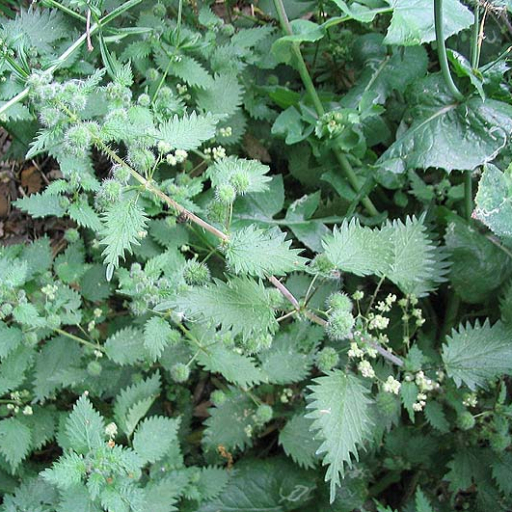
Plant Overview
Often called the "Roman Nettle," this plant carries a reputation as the most painful of all European nettle species. Legend tells us it was brought to Northern Europe by Roman soldiers who used its intense sting to stimulate circulation and keep their limbs warm in the damp, chilly climates. While it looks like a typical weed at a glance, its unique "pill-shaped" seed clusters make it stand out in the world of wild greens.
🔍 How to Identify
- 🌿 The "Pill" Clusters: Unlike common nettles with long, drooping flower spikes, this species features distinct, spherical green balls (the female flowers/seeds) that hang from the leaf axils like tiny ornaments.
- 🍃 Heart-Shaped Leaves: The leaves are dark green, deeply serrated, and grow in opposite pairs. They are typically broader and more heart-shaped than the Common Nettle (Urtica dioica).
- ⚔️ Formidable Armor: The entire plant is covered in long, translucent stinging hairs (trichomes) that act like hypodermic needles, ready to inject a cocktail of irritating chemicals upon the slightest touch.
🏡 In Your Garden
- 🌱 Opportunistic Growth: Roman Nettle thrives in disturbed, nitrogen-rich soil. If you find it in your garden, it’s often a sign that your soil is fertile and high in organic matter.
- 🦋 Wildlife Value: While humans avoid it, many butterfly species, such as the Red Admiral and Peacock butterfly, rely on nettles as a primary food source for their caterpillars. It serves as a vital "nursery" in a biodiverse garden.
⚠️ Safety & Toxicity
- 🚫 Extreme Irritant: Use extreme caution. Its sting is significantly more potent and long-lasting than the Common Nettle, often causing intense burning, redness, and itchy welts that can last for hours.
- 🐾 Pet & Child Warning: Keep children and curious pets away. The stinging hairs can easily penetrate thin clothing and fur, causing significant distress to dogs or cats who brush against them. Always wear thick gardening gloves when handling.
✨ Fun Fact
🏺 The Soldier's Secret: The specific epithet pilulifera means "bearing little pills," referring to those round seed heads. In ancient folklore, it was believed that Roman soldiers sowed these seeds wherever they camped so they would always have a fresh supply of "heating" plants for their weary legs!

Detailed Care Instructions
To grow Urtica Pilulifera, also known as Roman nettle or pill-nettle, you can follow these steps:
- Choosing a suitable location: Select a spot that receives partial shade or full sun, depending on your climate. The plant prefers moist soil, so make sure the area has good drainage.
- Sowing seeds: Sow the seeds directly into the soil in early spring or late fall, as Urtica Pilulifera is a cool-season plant. Prepare the soil by removing any weeds, rocks, or debris, and loosen it up. Scatter the seeds on the soil surface and lightly press them into the soil.
- Watering: Keep the soil consistently moist, but not waterlogged. Water the plants regularly, especially during dry spells, to ensure they receive adequate moisture. Avoid overwatering as it can lead to root rot.
- Mulching: After the seeds have germinated and seedlings have emerged, apply a layer of organic mulch around the plants to help retain moisture, suppress weed growth, and maintain an even soil temperature.
- Pruning: Trim back the plants occasionally to promote bushier growth and encourage the production of new leaves. Cut back any dead or damaged stems as needed.
- Fertilizing: Urtica Pilulifera generally doesn't require heavy fertilization. However, you can apply a balanced, slow-release fertilizer in early spring to provide some nutrients for healthy growth.
- Controlling pests and diseases: Keep an eye out for common garden pests such as aphids, scale insects, or caterpillars, which may infest the plants. Remove any affected leaves or use natural pest control methods if necessary. Urtica Pilulifera is relatively resistant to diseases.
- Harvesting: Harvest the leaves of Urtica Pilulifera throughout the growing season when they are young and tender. Use gloves to handle the leaves due to their stinging hairs. Regular harvesting promotes new growth and keeps the plants healthy.
Remember to check the specific growing requirements of Urtica Pilulifera in your region, as conditions may vary.

Place in a bright room that is sun drenched almost all day. Or directly in a south-facing window.

To water this plant, you should wait until the soil has dried out slightly before giving it a thorough watering. Use room temperature water and avoid getting water on the leaves, as they can be sensitive to moisture. Make sure the water drains properly from the pot, as the roots can rot if left sitting in standing water. In hot or dry weather, you may need to water this plant more frequently to keep the soil moist.
To fertilize this plant, you will need to use a balanced fertilizer with approximately equal ratios of nitrogen, phosphorus, and potassium. You can apply the fertilizer every 4-6 weeks during the growing season, which should be from early spring through early fall. Be sure to follow the package instructions for the amount of fertilizer to use, as well as any instructions for how to apply it (such as whether to sprinkle it on the soil surface or mix it into the soil). Avoid over-fertilizing or using too much fertilizer at once, as this can harm the plant.
Urtica Pilulifera is a plant that thrives in soil that is well-draining and rich in nutrients. The soil should be moist but not waterlogged, as excessive moisture can cause root rot and other issues. It is recommended to use a mixture of compost, peat moss, and sand to create the optimal soil environment for Urtica Pilulifera. The compost and peat moss provide the necessary nutrients, while the sand helps with drainage. It is important to ensure that the soil is slightly acidic, with a pH level of around 6.0-7.0. Additionally, it is recommended to add a slow-release fertilizer to the soil to provide long-lasting nutrients for the plant. Overall, a well-draining, nutrient-rich soil with a slightly acidic pH level is ideal for growing Urtica Pilulifera.
To propagate this plant, take softwood cuttings in the spring or summer. Select a healthy stem with no flowers or buds. Remove the lower leaves and cut the stem just below a node. Dip the cut end in rooting hormone and plant it in a well-draining potting mix. Keep the soil moist and place the pot in a bright, sheltered spot, out of direct sunlight. Mist the cutting regularly to keep it hydrated. After a few weeks, the cutting should start to produce roots. You can then transplant it into a larger container or into the ground.








