Plant Overview
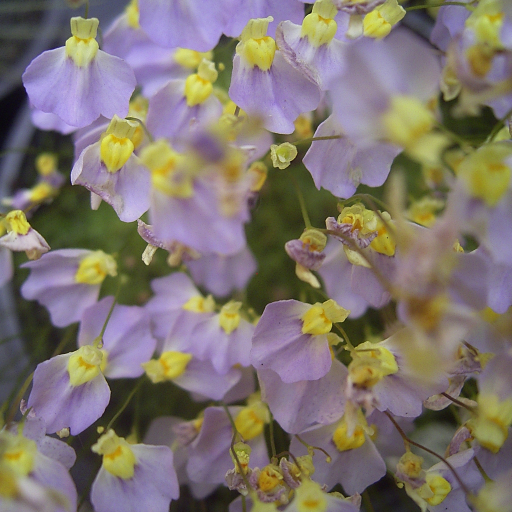
Known as the "Small Bladderwort," Utricularia bisquamata is a tiny botanical marvel that blurs the line between a delicate wildflower and a master predator. Hailing from the boggy regions of Southern Africa, this plant is famous among hobbyists for its "fried egg" flowers—miniature, orchid-like blooms with bright yellow centers and white-to-lilac petals. While it looks like a harmless blade of grass above ground, beneath the soil lies a complex network of vacuum-powered traps waiting for unsuspecting microbes.
🔍 How to Identify
- 🍳 The "Fried Egg" Bloom: The most striking feature is the flower, which stands on a thin, wiry stalk. It typically features a prominent yellow "yolk" on the lower petal, surrounded by white or pale violet.
- 🌱 Grass-like Leaves: Above the soil, you’ll see tiny, bright green, strap-shaped leaves that are so thin they are often mistaken for moss or stray blades of grass.
- 🕸️ Hidden Traps: If you were to look underground, you would see tiny, translucent bladders attached to the roots. These are sophisticated "suction traps" used to catch microscopic prey.
🏡 In Your Garden
- 💧 The Bog Life: Because it naturally grows in wet, nutrient-poor sandy soils, it requires constant moisture. In a home setting, it thrives when the pot is kept sitting in a tray of distilled or rainwater; tap water contains minerals that can "burn" its sensitive roots.
- 🚀 A Friendly "Weed": Among carnivorous plant collectors, this species is known for its incredible ability to spread. It produces a massive amount of seeds that can jump into neighboring pots. If you have a collection of rare sundews or Venus flytraps, keep an eye on this little hitchhiker!
- ☀️ Light Seekers: It needs bright, indirect light to produce its famous carpets of flowers. If the plant looks like a patch of green fuzz with no blooms, it’s likely asking for a brighter window.
⚠️ Safety & Toxicity
- ✅ Safe for All: Utricularia bisquamata is non-toxic to humans, cats, and dogs. It poses no threat to your curious pets.
- 🐜 Tiny Prey Only: While it is a carnivore, its traps are microscopic. It eats protozoa, rotifers, and tiny water organisms, meaning it won't help with your housefly problem, but it does wonders for the soil ecosystem.
✨ Fun Fact
The traps of the Bladderwort are considered one of the fastest movements in the entire plant kingdom. When a tiny organism touches a "trigger hair," the trap door swings open and sucks in the prey and surrounding water in less than a millisecond—faster than the blink of a human eye!

Detailed Care Instructions
To grow Utricularia bisquamata, or the small bladderwort, you can follow these steps:
- Select the right growing conditions: Utricularia bisquamata is an aquatic or semi-aquatic plant that grows in wet soils or shallow water. Ensure you provide the correct environment for its growth.
- Choose a suitable container: Utricularia bisquamata can be grown in a container such as a pond, a bog garden, or even a fish tank. Ensure the container has enough space for the plant to spread.
- Prepare the growing media: Utricularia bisquamata prefers a mixture of peat moss and sand as a growing medium. Mix equal parts of peat moss and sand thoroughly before filling the container.
- Planting the seeds or divisions: If you have seeds, sow them in the growing medium. Alternatively, you can divide an existing plant and place the divisions in the prepared container. Ensure you bury the seeds or divisions slightly into the growing medium.
- Maintain proper moisture levels: Utricularia bisquamata requires consistently moist soil or water conditions. Keep the container filled with water, maintaining a water level that is approximately 1-2 inches above the top of the growing medium.
- Provide adequate sunlight: Utricularia bisquamata prefers bright, indirect sunlight. Place the container in a location that receives approximately 4-6 hours of filtered sunlight daily. Avoid placing it in direct sunlight, as too much heat can harm the plant.
- Maintain appropriate temperatures: Utricularia bisquamata thrives in temperatures between 60-80°F (15-27°C). Ensure the growing environment remains within this range.
- Feed the plant: Utricularia bisquamata is carnivorous and requires a diet of small invertebrates such as insects, worms, or even aquatic crustaceans. You can feed the plant by adding small aquatic creatures to the container. However, this step is optional as the plant can survive through other means.
- Control pests: Keep an eye out for pests like aphids or mites. If you notice any infestation, remove the affected parts or treat the plant with appropriate insecticides or natural pest control methods.
- Regular maintenance: Monitor the water level, check for signs of pests or diseases, and remove any dead or decaying plant matter to maintain a healthy growing environment.
By following these steps, you can successfully grow Utricularia bisquamata. Remember to research specific care requirements for your climate and growing conditions to ensure optimal growth.

Place in a window with dappled sun or a spot in the middle of a room. Or directly in a window facing west or east.

Utricularia Bisquamata is a plant that requires moist soil to thrive. It is important to water this plant frequently, keeping the soil consistently moist but not waterlogged. When watering, it is recommended to water from the bottom by placing the pot in a tray of water and allowing the soil to absorb the water for several minutes. Avoid getting water on the leaves and flowers as this can cause damage. It is also important to make sure the soil does not dry out completely as this can harm the plant. Regularly check the moisture level of the soil and water accordingly.
To fertilize this plant, use a diluted solution of high-quality, water-soluble fertilizer. Apply the fertilizer once every two weeks during the growing season, and reduce to every four to six weeks during the dormant season. Make sure to flush the soil with water before and after fertilizing to prevent burning the roots. Avoid over-fertilizing, as this can lead to damage or death of the plant.
The Utricularia Bisquamata plant requires a soil that is free-draining and porous as it has a special root system. The soil mixture should be a blend of peat moss and perlite or sand to create a light and airy substrate that allows for water drainage. Additionally, the soil should be acidic with a pH level between 4.5 and 6.5. It is important to avoid using any soil that contains fertilizers or chemicals as this can harm the plant's delicate root system. Overall, the soil needs to be well-aerated and have good moisture retention to support the growth and development of the Utricularia Bisquamata plant.
To propagate this plant, you should carefully remove its leaves or stems and place them in a container of clean water. The container should be placed in a warm and bright location, away from direct sunlight. After a few weeks, new roots and leaves should start to appear on the cuttings, at which point they can be planted in a suitable soil mix. It is important to keep the soil moist but not waterlogged, and to mist the plants regularly to maintain high humidity. With proper care, these cuttings should grow into healthy plants over time.








