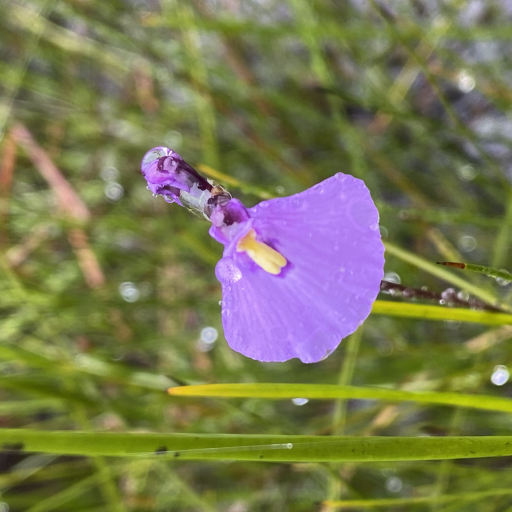
Plant Overview
Often called "Fairies' Aprons," Utricularia dichotoma is a tiny botanical gem native to the wetlands of Australia and New Zealand. Despite its whimsical appearance and dainty violet flowers, it hides a predatory secret beneath the mud or water surface. This carnivorous "bladderwort" is a silent hunter that uses high-tech vacuum traps to feast on microscopic aquatic life.
🔍 How to Identify
- 🌸 The "Apron" Flower: The most striking feature is the purple-to-lilac flower with a broad, fan-like lower lip. It often sports two or three prominent yellow ridges near the throat, looking exactly like a tiny, decorative apron worn by a forest sprite.
- 🍴 Dichotomous Stems: Its name "dichotoma" refers to the way its flower stalks often fork into pairs, creating a symmetrical and elegant display of blooms that dance in the breeze.
- 🐚 Hidden Traps: You won't see them on the leaves; the "business end" of the plant consists of tiny, translucent bladders attached to underground or submerged stems. These sacs act as high-speed suction traps for tiny organisms.
🏡 In Your Garden
- 💧 The "Wet Feet" Rule: These plants are true bog-dwellers. In a home setting, they must "sit" in a tray of distilled water or rainwater at all times. They lack traditional root systems and rely on constant moisture to maintain their internal hydraulic traps.
- 🧪 Nutrient Sensitivity: Never use standard potting soil or fertilizer. Fairies' Aprons have evolved to live in nutrient-poor environments; they "eat" tiny bugs to get their minerals. Standard plant food will overwhelm and likely kill them.
- ☀️ Bright, Soft Light: They prefer the dappled light of a marsh. While they love brightness to fuel their growth, harsh, direct midday sun can overheat their shallow water trays and "cook" the delicate bladders.
⚠️ Safety & Toxicity
- ✅ Safe Status: Utricularia dichotoma is non-toxic to humans, cats, and dogs. It is a safe choice for a "carnivorous bog" terrarium in a family home.
- 🤏 Physical Fragility: While it isn't poisonous, it is incredibly delicate. The plant's survival depends on its microscopic traps; frequent repotting or "feeling" the soil can crush these structures and starve the plant.
✨ Fun Fact
The vacuum traps of the Bladderwort are among the fastest-moving mechanisms in the entire plant kingdom. When a tiny water flea touches a "trigger hair," the trap door swings open and sucks the prey inside in less than a millisecond—that is significantly faster than the blink of a human eye!

Detailed Care Instructions

Place in a bright room that is sun drenched almost all day. Or directly in a south-facing window.

Water-loving plants flourish in wet or sloppy soil and near ponds. The extensive root system enables these plants to absorb plenty of water. The surface of the soil should be kept moist at all times. Place your pot in a container filled with water to guarantee that plants get enough water. If the ground becomes dry, it is recommended that you water it well. Plants in smaller pots will need to be watered more frequently. Water the soil in which the plant is standing thoroughly using a watering can.








