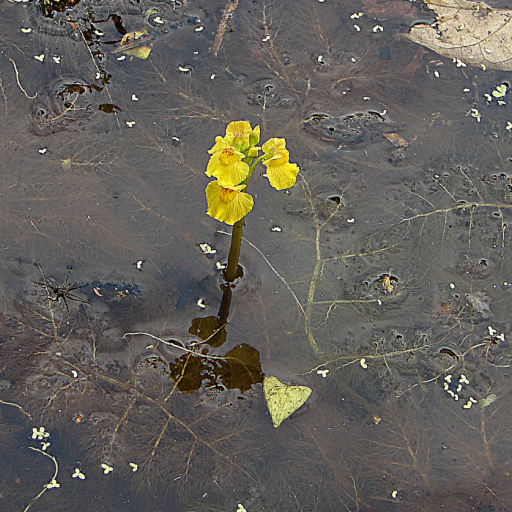
Plant Overview
Often called the Leafy Bladderwort, this aquatic wonder is nature’s very own underwater vacuum cleaner. Found floating in the slow-moving waters of the Americas and Africa, it is a master of aquatic architecture. While it appears to be a soft, feathery weed, it is actually a sophisticated predator that "inhales" its prey in the blink of an eye.
🔍 How to Identify
- 🌿 The Foliage: Unlike many plants, it lacks true roots. It features long, robust, and feathery green stems that can grow several feet long, forming dense floating mats just beneath the surface.
- 🔬 The Traps: Look closely at the leaves to find "utricles"—tiny, translucent, pear-shaped bladders. These are the mechanical traps used to catch microscopic organisms.
- 🌼 The Bloom: To reproduce, it sends up a thick stalk above the water line, sporting a cluster of bright yellow flowers that resemble miniature snapdragons.
🏡 In Your Garden
- 💧 Aquatic Habitat: If you are keeping this in a home pond or large aquarium, it prefers "still" water. It hates strong currents, which can damage its delicate feathery branches and interfere with its hunting.
- 🦟 Natural Pest Control: This plant is a gardener's friend because it actively feasts on mosquito larvae and water fleas. It doesn't require traditional fertilizer; instead, it thrives on the nutrients it gains from its "catches."
⚠️ Safety & Toxicity
- 🟢 Non-Toxic: Utricularia foliosa is generally considered safe and non-toxic to humans, cats, and dogs.
- ⚠️ Physical Fragility: While it won't hurt your pets, your pets might hurt it. It is very fragile and can be easily torn apart by curious fish or dogs splashing in a pond. It is best kept in a quiet corner of a water feature.
✨ Fun Fact
The bladderwort’s trap is one of the fastest movements in the entire plant kingdom. When a tiny creature touches the "trigger hairs" on a bladder, the door snaps open and sucks the prey inside in less than a millisecond—that is significantly faster than the blink of a human eye!

Detailed Care Instructions
| Humidity | High |
| Lighting | Part Sun |
| Difficulty | Easy |
| Temperature | 14°C - 35°C |
| Hardiness Zones | 1 - 9 |
To grow Utricularia foliosa, also known as the leafy bladderwort, you can follow these steps:
- Obtain Utricularia foliosa seeds or a mature plant from a reputable source. You may find these at specialty botanical gardens, nurseries, or online plant retailers.
- Choose a suitable growing environment for Utricularia foliosa. As a carnivorous plant, it requires a location with high humidity, plenty of sunlight, and a consistent temperature range of 70-80°F (21-27°C).
- Utricularia foliosa is an aquatic plant, so it needs to be grown in a tray of water or in a pond. Fill the container or pond with distilled or rainwater, as tap water contains minerals that can harm the plant.
- Plant the Utricularia foliosa seeds or place the mature plant in the water tray or pond. Gently press the seeds into the soil or float the plant on the water's surface. Ensure that the roots have enough space to spread out.
- Provide adequate lighting for the plant. Utricularia foliosa requires direct sunlight for at least four to six hours each day. If growing indoors, consider using fluorescent lights or LED grow lights to supplement natural light.
- Maintain high humidity levels around the plant by misting the leaves regularly or using a humidifier. This will help simulate the plant's natural habitat.
- Utricularia foliosa is a carnivorous plant that feeds on small insects and microorganisms. To encourage this behavior, avoid fertilizing the plant with traditional plant fertilizers. The plant will rely on capturing its prey for nutrients.
- Ensure that the water level in the tray or pond is constantly filled or replenished to keep it at the optimal depth for the plant.
- Pay attention to any signs of distress or disease, and address them promptly. Utricularia foliosa may experience issues such as root rot if the soil is too waterlogged or if there is insufficient airflow.
- Enjoy the growth and beauty of your Utricularia foliosa plant as it develops and captures its prey.
Remember, Utricularia foliosa is a unique and specialized plant, so it may require additional care and attention compared to other houseplants.

Place in a window with dappled sun or a spot in the middle of a room. Or directly in a window facing west or east.

The best way to water this particular plant is to fill its container with distilled or rainwater. Avoid using tap water as it may contain chlorine and minerals that can harm the plant. Ensure that the container has drainage holes, and place it in a tray of distilled water. This will allow the plant to take up water as and when needed through capillary action. It is important not to over-water the plant as it can be detrimental to its health. Check the soil moisture regularly and only water the plant when the soil is dry to the touch. Additionally, avoid getting water on the leaves as this can lead to fungal infections.
To fertilize this plant, use a highly diluted solution of a balanced, liquid fertilizer. Apply it directly to the soil in the pot or to the water in which the plant is grown. Do this every 2-3 weeks during the growing season, but avoid over-fertilizing as it can harm the plant. Always follow the manufacturer's instructions and dilution rates carefully.
The Utricularia Foliosa plant requires a specific type of soil that is well-draining and lightweight. This type of soil should have a pH level that is slightly acidic to neutral, with a range between 5.5 and 7.5. It is best to use a soil mixture that contains peat moss, perlite, and sand, or any other porous material that allows for sufficient aeration and drainage. It is important to avoid using heavy clay soils as they can lead to waterlogging, which can cause the roots of the plant to rot. Additionally, the soil should be kept moist at all times since this plant is an insectivorous plant that depends on water to trap and digest its prey.
To propagate this plant, select a healthy and mature specimen with numerous leaves. Carefully detach a small section of the stem from the main plant, ensuring that it includes a sufficient number of leaves. Place the stem cutting in a glass of water or moist soil and keep it in a well-lit location. In a few weeks, small roots will begin to form at the base of the stem. Once the roots are established, the new plant can be potted into its own container with well-draining soil and placed in indirect light. Regular watering and fertilizing will promote healthy growth.








