Plant Overview
The Evergreen Huckleberry is the coastal gem of the Pacific Northwest, beloved by foragers and landscapers alike for its glossy year-round beauty. Known for its ability to thrive in the deepest forest shadows, it produces some of the most flavorful, intense berries found in the wild. Whether it’s providing cover for songbirds or serving as an architectural backdrop for a shade garden, this shrub is a resilient native powerhouse.
🔍 How to Identify
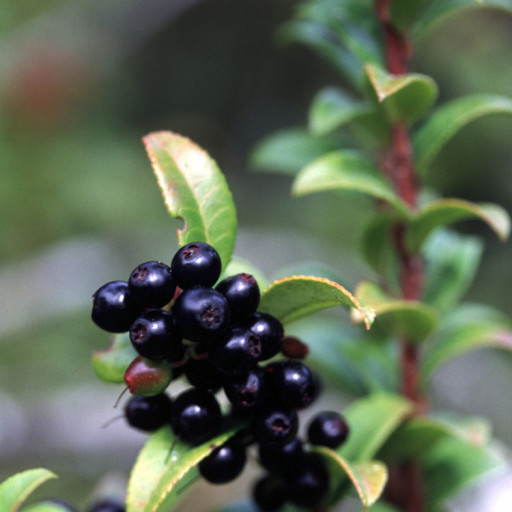
- 🍃 Ovate Leaves: Look for small, leathery, egg-shaped leaves with finely serrated edges. The new spring growth often emerges in a striking bronze or deep reddish-purple hue before turning dark green.
- 🔔 Urn-Shaped Flowers: In late spring, tiny, waxy, bell-like blossoms appear. They range from creamy white to pale pink and hang in delicate clusters beneath the stems.
- 🌑 The Berries: The fruit is small and round, transitioning from green to a deep, glossy purplish-black (or sometimes a dusty "glaucous" blue) by late summer or autumn.
🏡 In Your Garden
- 🌲 Light Adaptation: This plant is a shapeshifter depending on the light. In deep shade, it grows tall and airy (up to 10 feet); in full sun, it stays compact and bushy, which usually results in a much heavier harvest of berries.
- 🧪 Acidic Preferences: Like its cousins, the blueberry and rhododendron, this plant is an "acid-lover." It requires a low-pH, well-draining soil enriched with organic matter like pine needles or peat moss to prevent its leaves from turning yellow.
- ✂️ Patience is Key: It is a notoriously slow grower. While it makes a fantastic, formal evergreen hedge, it will take several years to reach its full height, making it a "buy for the long term" addition to your landscape.
⚠️ Safety & Toxicity
- 🍇 Edible Gold: The berries are perfectly safe and highly nutritious for humans, often described as having a more intense, tart-sweet flavor than commercial blueberries.
- 🐾 Pet Friendly: Vaccinium ovatum is generally considered non-toxic to dogs, cats, and horses, making it a safe choice for family backyards.
- 🧺 Identification Check: When foraging in the wild, always ensure the leaves are alternate (not opposite) to avoid confusion with other woodland shrubs.
✨ Fun Fact
Indigenous peoples of the Pacific Coast traditionally harvested these berries in massive quantities, often drying them into dense, sun-baked "cakes." These huckleberry cakes were a vital source of Vitamin C and sugar during the winter months when other fresh food sources were scarce.

Detailed Care Instructions
To grow Vaccinium ovatum (also known as California huckleberry or evergreen huckleberry), you can follow these steps:
- Climate: Ensure that you live in a suitable climate for growing Vaccinium ovatum. It is native to the coastal regions of California, Oregon, and Washington in the United States. It thrives in mild to cool temperatures and requires some chilling hours in order to set fruit.
- Location: Choose a suitable location for planting the Vaccinium ovatum plant. It prefers partial shade to full shade conditions, but can tolerate some sun. It also requires moist and well-draining soil.
- Propagation: You can either start growing Vaccinium ovatum from seeds or buy a young plant from a nursery. If starting from seeds, cold stratify the seeds in the refrigerator for several weeks before sowing them in a pot or directly in the ground.
- Soil preparation: Prepare the soil by adding organic matter like compost to improve moisture retention and drainage. Vaccinium ovatum prefers an acidic soil with a pH between 4.5 and 6. Make sure there is good drainage, as the plant does not like standing water.
- Planting: Dig a hole slightly larger than the rootball of the young Vaccinium ovatum plant. Place the plant in the hole and backfill with soil, firming it gently around the roots. If planting multiple plants, space them about 3-4 feet apart.
- Watering: After planting, water the Vaccinium ovatum thoroughly and deeply. Keep the soil consistently moist throughout the growing season, but avoid overwatering. Mulching around the plant can help retain moisture in the soil.
- Pruning: Vaccinium ovatum benefits from occasional pruning to maintain its shape and vigor. Prune out any dead, damaged, or diseased branches. Additionally, thin out overcrowded branches to allow for better airflow and light penetration.
- Fertilization: Vaccinium ovatum doesn't require heavy fertilization. However, you can feed it with an acidic fertilizer, such as one specifically formulated for acid-loving plants, once or twice a year in early spring and late summer.
- Pests and diseases: Monitor the plant for any signs of pests or diseases, such as aphids or powdery mildew. Use organic or chemical means to control these issues if necessary.
- Harvesting: Vaccinium ovatum produces small, dark purple berries. The berries are usually ready for harvesting in late summer to early fall. Pick the berries when they are fully ripe, as they do not continue to ripen after picking.
By following these steps, you can successfully grow Vaccinium ovatum and enjoy its tasty berries!

Place in a window with dappled sun or a spot in the middle of a room. Or directly in a window facing west or east.

To ensure the healthy growth of this plant, it is important to provide sufficient water. It is recommended to water the plant thoroughly once a week. However, the frequency of watering may vary depending on the climate and soil conditions. It is important to keep the soil consistently moist but not waterlogged. Overwatering can lead to root rot, while under watering can cause wilting and stunted growth. One way to check if the plant needs water is to stick your finger about an inch deep into the soil. If it feels dry, it is time to water. Additionally, it is recommended to water in the early morning or late afternoon to avoid evaporation and allow the plant to absorb water efficiently.
To fertilize this plant, use a fertilizer with an acidity level of 4.5 to 5.5. Apply the fertilizer in early spring before new growth appears and again in late spring or early summer after fruit has set. Avoid applying too much fertilizer, as it can burn the roots. Water the plant deeply after fertilizing to help the nutrients penetrate the soil.
Vaccinium Ovatum is a plant that thrives in well-draining, acidic soil. The soil should be rich in organic matter and have a pH level between 4.5 and 5.5. It is important to avoid using soil that is too alkaline, as this can lead to nutrient deficiencies and poor plant growth. Adding peat moss or other organic matter to the soil can help to lower the pH and create a suitable growing environment for this plant. Additionally, it is recommended to plant Vaccinium Ovatum in a location that receives partial shade, as full sun exposure can be too harsh for this plant.
Vaccinium Ovatum is a plant that can be propagated through various methods including seeds, stem cuttings, and layering. To propagate using stem cuttings, first, cut a healthy, straight stem from the parent plant in the early spring or late fall when the plant is dormant. Remove any leaves and cut the stem into small sections, each with at least one bud. Treat the cut ends with rooting hormone and plant them in moist, well-draining soil. Cover the pot with a plastic bag to maintain humidity and place it in a bright, indirect light location. After several weeks, the cuttings should start to produce roots and new growth.
To propagate using layering, select a healthy stem from the parent plant and bend it gently to the ground. Make a shallow cut on the underside of the stem where it will touch the soil. Secure the stem to the ground with a U-shaped wire and cover it with soil. Keep the area moist and provide extra water to encourage root growth. After several months, check to see if roots have developed and if so, cut the stem from the parent plant and transplant to a new location.
Propagation by seed is another option, though it may take longer for the plant to reach maturity. Collect ripe berries from the parent plant and gently crush them to remove the seeds. Soak the seeds in water for several hours and then plant them in a well-draining potting mix. Keep the soil moist and place in a bright, indirect light location. The seeds can take several weeks to germinate and may take several years to reach maturity.








