Plant Overview
Known affectionately as the Small Cranberry or Bog Cranberry, Vaccinium oxycoccos is a delicate, trailing evergreen that looks like a tiny lace embroidery across the dampest parts of the northern hemisphere. In many cultures, these berries were considered "red gold," gathered from treacherous peat bogs to provide a vital source of Vitamin C during long, harsh winters. Unlike its larger commercial cousin, this wild variety offers a much more intense, concentrated tartness.
🔍 How to Identify
- 🌿 Trailing Vines: It grows as a creeping woody vine, often hidden amongst moss, with stems that are remarkably thin—almost like copper wire.
- 🍃 Tiny Leaves: The leaves are leathery, evergreen, and incredibly small (only about 5–10mm), with edges that roll slightly inward and a silvery underside.
- 🌸 Crane-like Flowers: In early summer, it produces nodding pink flowers with petals that curve backward, exposing the stamens. This unique shape reminded early settlers of a crane’s head, giving us the name "Crane-berry."
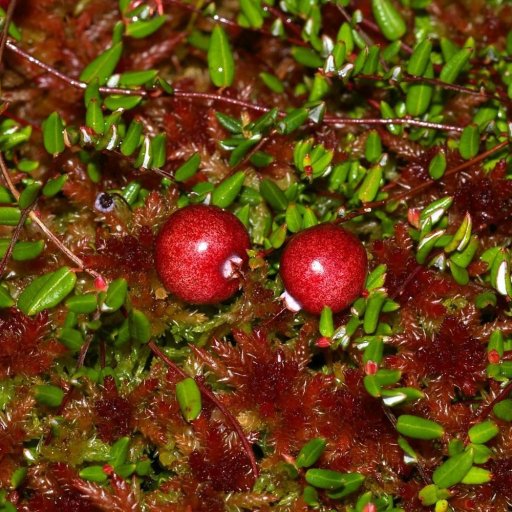
- 🔴 Jewel-like Fruit: The berries start out pale or spotted and ripen into a deep, glossy red. They are surprisingly large compared to the tiny leaves of the plant.
🏡 In Your Garden
- 💧 The Bog Mimic: If you want to grow this at home, you must replicate a peat bog. It requires extremely acidic, nutrient-poor soil and consistent moisture. It won't survive in standard potting mix or garden soil.
- ☀️ Sun and Shivers: While it loves full sun to produce fruit, it is incredibly cold-hardy. It actually benefits from a "chilling period" in the winter to reset its growth cycle for the following spring.
- 👟 No Foot Traffic: Because its stems are so delicate and it grows so low to the ground, it should be planted in a dedicated "no-step" zone or a raised bog planter where it won't be crushed.
⚠️ Safety & Toxicity
- ✅ Safe & Edible: The berries are perfectly safe for human consumption and are famous for their antioxidant properties. Be warned: they are incredibly tart when eaten raw!
- 🐾 Pet Friendly: Small Cranberries are generally non-toxic to dogs and cats. However, because they are very acidic, eating large quantities might cause a minor upset stomach for your furry friends.
✨ Fun Fact
The Vaccinium oxycoccos is a master of survival; it has a symbiotic relationship with specialized fungi in its roots. These fungi help the plant "eat" nitrogen in the harsh, acidic bog environments where most other plants would simply starve.

Detailed Care Instructions
To grow Vaccinium Oxycoccos, also known as bog cranberry, follow these steps:
- Climate: Vaccinium Oxycoccos is a cold weather plant and thrives in regions with cool summers and cold winters. It requires a moist and acidic environment, similar to that of its natural habitat in bogs and wetlands.
- Soil: The plant prefers acidic soil with a pH range of 4.0 to 5.2. If your soil is not naturally acidic, you can amend it by adding peat moss or organic matter. Ensure the soil remains consistently moist but not waterlogged.
- Planting: Obtain Vaccinium Oxycoccos seeds or small plants from a reputable nursery or online source. Plant them in early spring or late fall. Choose a location with partial shade to full sun exposure.
- Watering: Keep the soil consistently moist, as bog cranberries require high levels of moisture. Avoid allowing the soil to dry out completely.
- Mulching: Apply a layer of organic mulch, such as pine needles or acidic compost, around the plants. Mulching helps retain soil moisture and maintains an acidic environment.
- Fertilization: Vaccinium Oxycoccos does not require heavy fertilization. However, you can apply a slow-release, acidic fertilizer once a year in spring to promote healthy growth.
- Pruning: Prune any dead or damaged branches to maintain plant health. You can also prune to shape the plants or control their size, but be cautious not to remove too much of the current season's growth.
- Pest and disease control: Monitor the plants for common pests like aphids or leafhoppers. Additionally, ensure good air circulation to prevent diseases like powdery mildew. If necessary, use organic pest control methods or consult with local gardening experts for guidance.
- Harvesting: Bog cranberries are usually ready for harvest in late summer or early fall. The berries are tart and can be used in various culinary preparations, such as sauces, juices, and jams.
Remember that growing Vaccinium Oxycoccos can be challenging if you do not have access to a natural bog or wetland environment. Creating the appropriate conditions, including the required moisture levels and acidic soil, is key to its successful growth.

Place in a bright room that is sun drenched almost all day. Or directly in a south-facing window.

To properly water this plant, it is important to ensure that the soil remains consistently moist. One way to do this is to water deeply and thoroughly, allowing the roots to absorb the needed moisture. However, it is also important not to overwater the plant, as this can lead to root rot and other issues. Be sure to check the soil regularly and adjust your watering schedule as needed based on the plant's needs and the environment in which it is growing. Additionally, consider using a mulch or other soil covering to help retain moisture and protect the plant from excessive heat or cold.
- Apply a balanced fertilizer such as 10-10-10 or 20-20-20 in early spring before new growth appears.
- Use a slow-release fertilizer for longer-lasting nutrient availability.
- Apply a second round of fertilizer in early summer after the plant has finished flowering.
- Avoid excessive nitrogen fertilization as this can promote too much vegetative growth and reduce fruit yield.
- Water the plant thoroughly after fertilization to ensure proper uptake of nutrients.
The ideal soil type for this particular plant should have a slightly acidic pH level, with a pH range of around 4.5 to 5.5. It should also have good drainage capabilities, and be able to retain moisture without becoming waterlogged. A mixture of peat moss, sand, and pine bark may be suitable for this plant, as it allows for both drainage and moisture retention. Adding organic matter to the soil can also help to improve its overall quality and fertility. Additionally, it is important to avoid using soil that contains heavy metals or other toxins, as these can be harmful to the plant's growth and development.
To propagate this plant, the first step is to collect cuttings from a mature and healthy plant. These cuttings should be taken in late winter or early spring, and should be approximately 4-6 inches in length.
Once the cuttings have been taken, they should be stripped of their lower leaves and any flowers or buds. The remaining leaves should be trimmed to reduce the amount of water loss.
The cuttings should then be dipped in rooting hormone and planted in a well-draining soil mix. They should be placed in a warm and bright location, but not in direct sunlight. It is also important to keep the soil moist, but not waterlogged.
After several weeks, new growth should begin to appear on the cuttings. Once this growth has reached a height of approximately 2-3 inches, the new plants can be transplanted into individual pots and given more space to grow. Over time, they will develop into mature plants that can be planted out in the garden.
Common pests of the cranberry include Spider mites, fungus gnats, thrips, larvae. Make a habit of checking your cranberry frequently for pests so that any infestations can be caught and managed early.








