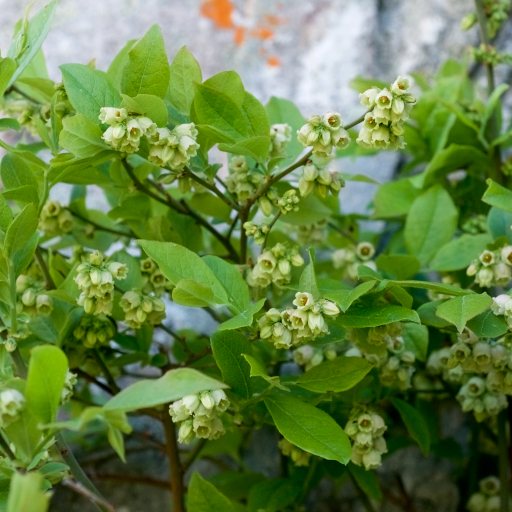
Plant Overview
Often called the Hillside Blueberry or Blue Ridge Blueberry, this resilient little shrub is a favorite of hikers and foragers throughout eastern North America. Unlike its taller cousins, this "lowbush" variety thrives on sun-drenched, rocky slopes where other plants might wither. It acts as a vital anchor for hillside ecosystems, providing both beauty and a summer feast for local wildlife.
🔍 How to Identify
- 🍃 The Foliage: Look for small, egg-shaped leaves that are a soft green on top but noticeably pale, almost whitish, on the underside—a feature that gives the plant its Latin name, pallidum.
- 🔔 The Blooms: In spring, the plant drips with clusters of dainty, urn-shaped flowers. They range from creamy white to a delicate "blush" pink.
- 🫐 The Fruit: The berries are small but mighty, ripening into a deep, dusty blue or nearly black color, often coated in a waxy, silver-blue powder called a "bloom."
- 🌿 The Stems: The young branches are often a vibrant greenish-yellow or reddish-brown and typically grow in a distinct, slightly zig-zagging pattern.
🏡 In Your Garden
- ⛰️ Tough Transitions: This plant is an "upland" specialist. It is much more drought-tolerant than commercial blueberries because it develops a deep, woody root system. It’s perfect for those "problem areas" with dry, acidic, or rocky soil.
- 🌱 Colonial Growth: It spreads slowly through underground runners (rhizomes). If you plant one, it will eventually form a low-growing, carpet-like thicket that serves as excellent groundcover for birds and small mammals.
⚠️ Safety & Toxicity
- 🍴 Status: Safe and delicious! The berries are edible for humans and are frequently cited as being sweeter and more flavorful than store-bought varieties.
- 🐾 Pets & Kids: The plant is non-toxic to dogs, cats, and children. However, as with any wild fruit, ensure they are correctly identified before consumption, and watch for thorns or briars that might be growing nearby in the wild.
✨ Fun Fact
Blueberries like Vaccinium pallidum require "Buzz Pollination." Bumblebees must grab the flower and vibrate their wings at a specific frequency (roughly a middle C note) to shake the pollen out of the tiny pores in the flower's petals!

Detailed Care Instructions
To grow Vaccinium pallidum, also known as the hillside blueberry, you can follow these steps:
- Climate and soil considerations: Vaccinium pallidum is native to North America and thrives in regions with cold winters and humid summers. It prefers well-drained, acidic soil with a pH range of 4.0-5.5.
- Obtain Vaccinium pallidum plants: You can purchase Vaccinium pallidum plants from local nurseries or online suppliers specializing in native plants. Ensure that the plants are healthy and free from any diseases.
- Planting location: Choose a location that receives full or partial sunlight. Vaccinium pallidum can tolerate shade, but it will yield a higher fruit harvest in full sun. Additionally, make sure the location has suitable soil conditions, as mentioned above.
- Prepare the soil: Before planting, prepare the planting area by removing weeds, rocks, and debris. Loosen the soil to a depth of 8-10 inches and amend with organic matter such as compost or well-rotted manure. This will improve soil fertility and drainage.
- Planting process: Dig a hole slightly larger than the root ball of the Vaccinium pallidum plant. Place the plant in the hole, ensuring that the top of the root ball remains level with the soil surface. Backfill the hole, gently firming the soil around the plant.
- Watering: Immediately after planting, water the Vaccinium pallidum thoroughly. Keep the soil consistently moist but avoid overwatering, as blueberries prefer well-drained soil.
- Mulching: Apply a layer of organic mulch, such as wood chips or pine needles, around the base of the plant. This will help conserve soil moisture and suppress weed growth.
- Pruning and maintenance: In the first year, remove any flowers or fruit that develop to allow the plant to establish a strong root system. Prune the plant during late winter or early spring to remove dead, broken, or crossing branches. This will help promote air circulation and maintain the plant's shape.
- Fertilizing: Vaccinium pallidum plants benefit from regular fertilization. Use an acidic fertilizer specifically formulated for blueberries and follow the instructions on the packaging. Apply the fertilizer in early spring and then again in mid-summer.
- Pest and disease management: Monitor the plants for common blueberry pests like aphids, mites, and fruitworms. If necessary, use organic pest control methods or consult with a local gardening expert. Also, watch out for diseases like gray mold (Botrytis), leaf spot, or powdery mildew. Proper plant spacing, good air circulation, and maintaining a clean garden environment can help prevent these issues.
- Harvesting: Vaccinium pallidum typically produces fruits in late summer. Once the berries turn bluish-gray and easily detach from the plant when gently pulled, they are ready to be harvested. Harvest the berries by gently picking them off the branches.
By following these steps, you can successfully grow Vaccinium pallidum plants and enjoy a harvest of delicious hillside blueberries.

Place in a window with dappled sun or a spot in the middle of a room. Or directly in a window facing west or east.

One should give adequate water to Vaccinium Pallidum plant, especially during the growing season. It is important to monitor the soil moisture level, ensuring it is consistently moist but not waterlogged. One can water the plant deeply, ensuring the water reaches the entire root zone. It is recommended to water the plant early in the morning or late in the evening to prevent evaporation. Once the plant is established, it may require less water than during the initial growth period. In the colder months, one should reduce watering to prevent the roots from being waterlogged. Additionally, one should avoid spraying water directly on the leaves to prevent fungal diseases.
To fertilize this plant, apply a slow-release fertilizer in the early spring before new growth appears. Use a fertilizer with a balanced ratio of nitrogen, phosphorous, and potassium, such as a 10-10-10 or 20-20-20 blend. Work the fertilizer into the soil around the base of the plant, being careful not to damage the roots. Water the plant thoroughly after fertilizing to help the nutrients reach the roots. Avoid over-fertilizing, as this can lead to excessive growth and poor fruit quality.
The ideal soil for Vaccinium Pallidum plant is acidic, well-draining and rich in organic matter. A pH level between 4.5-5.5 is best suited for this plant. It must be planted in moist soil but should not be waterlogged as it can lead to root rot. The soil should be loose and aerated, allowing oxygen and water to penetrate through easily. Highly fertile soil can stimulate excessive vegetative growth, which can be detrimental to the plant's health. Hence, a soil mix with moderate fertility is recommended. Adding peat moss or decomposed pine needles can also help to maintain soil acidity and provide organic matter.
To propagate this plant, take stem cuttings from a healthy and mature plant during the early spring when new growth appears. Use clean pruning shears or a sharp knife to cut a 4-6 inch stem from the parent plant. Remove the leaves from the bottom third of the stem. Dip the cut end of the stem in rooting hormone powder and plant it in a pot filled with well-draining soil. Water the cutting thoroughly and cover it with a plastic bag to create a humid environment. Place the pot in a bright, warm spot but out of direct sunlight. Keep the soil moist and mist the cutting occasionally. Within a few weeks, the cutting should begin to root and show signs of new growth. Once the new plant has established roots and several leaves, it can be transplanted to its permanent location in the garden.








