Plant Overview
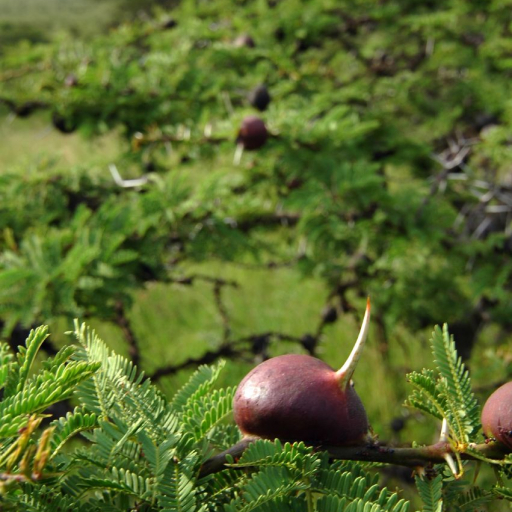
Known as the Whistling Thorn, Vachellia drepanolobium is an iconic sentinel of the East African savannah. It is famous for the eerie, flute-like sounds it produces when the wind rushes over the hollow galls at the base of its spines. This plant isn't just a tree; it’s a living apartment complex, having evolved a fascinating "housing-for-protection" contract with aggressive biting ants.
🔍 How to Identify
- 🐜 Swollen Galls: Look for the distinctive, bulbous black or deep-brown galls (domatia) at the base of the long, white thorns. These are hollowed out by ants to serve as nests.
- 🌿 Feathery Foliage: It features delicate, bipinnate leaves that give the tree a soft, airy appearance, contrasting sharply with its armor.
- ☁️ Puffball Blooms: During the flowering season, the tree is dotted with small, creamy-white or pale yellow spherical flower heads that carry a light, honey-like scent.
🏡 In Your Garden
- 🏜️ The Savannah Mimic: While rare in domestic gardens outside of Africa, enthusiasts grow it as a conversation piece or a unique bonsai. It requires a "tough love" approach—maximum sunlight and soil that mimics the heavy, cracking clays of the plains.
- 🤝 The Ant Factor: In the wild, the tree produces nectar to feed its ant bodyguards. In a garden setting without these ants, the tree can be more susceptible to common pests like aphids or scale, as it has traded some of its natural chemical defenses for its "ant army."
⚠️ Safety & Toxicity
- 🌵 Physical Hazard: The Whistling Thorn is not known to be chemically toxic to humans or common household pets. However, the thorns are a significant physical danger.
- 🩹 Sharp Spines: The thorns are incredibly sharp and rigid, easily piercing skin or light footwear. It should be planted far away from walkways, play areas, or paths where pets might run.
✨ Fun Fact
The "whistle" of the tree is actually a warning system! Ants chew holes into the hollow galls to create entrances; when the wind blows through these holes, the tree "sings," which is thought to vibrate the branches and discourage large herbivores like giraffes from browsing too long.

Detailed Care Instructions








