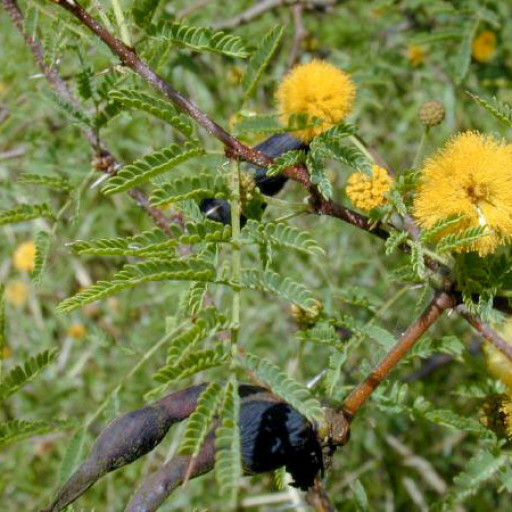
Plant Overview
Often called the Sweet Acacia or Huisache, Vachellia farnesiana is a sun-loving shrub that transforms dry landscapes into gold-dotted vistas. Its intoxicating, honey-like scent is so legendary that it has been a staple of high-end French perfumery for centuries. Though it looks delicate with its feathery foliage, this plant is a rugged survivor of the desert and scrubland.
🔍 How to Identify
- 🌼 Golden Orbs: The flowers appear as fuzzy, bright yellow "puffballs" (globose heads) that release a heavy, sweet fragrance.
- 🌿 Feathery Foliage: The leaves are "bipinnately compound," looking like tiny, intricate ferns that may fold up slightly at night or during extreme heat.
- ⚔️ Z-Shaped Twigs & Thorns: Look for the characteristic zig-zag growth pattern of the branches, armed with pairs of straight, sharp, greyish-white thorns at the base of the leaves.
🏡 In Your Garden
- ☀️ Sun Worshiper: This plant thrives in intense heat and full sun. Once established, its deep taproot makes it incredibly drought-tolerant; it actually prefers to be left alone rather than pampered with frequent watering.
- 🦋 Pollinator Magnet: The fragrant blooms are a high-priority stop for bees and butterflies, making it an excellent choice for a wildlife-friendly "xeriscape" or dry garden.
- ✂️ Structural Pruning: While it naturally grows as a sprawling, multi-stemmed shrub, it can be carefully pruned into a picturesque, airy small tree to show off its dark, peeling bark.
⚠️ Safety & Toxicity
- 📌 Physical Hazard: The primary danger is the thorns. They are sharp and sturdy, easily piercing skin or thin gardening gloves. It is best planted away from high-traffic walkways or children's play areas.
- 🐾 Pet & Livestock Safety: While not generally considered "deadly," the seed pods contain high levels of tannins and certain alkaloids. If ingested in large quantities by pets or livestock, it can cause digestive upset.
✨ Fun Fact
In the famous perfume capital of Grasse, France, the flowers are known as "Cassie." They are harvested to create "Cassie Absolute," an expensive floral extract used in some of the world’s most iconic luxury fragrances to provide a deep, violet-like scent.

Detailed Care Instructions
To grow Vachellia Farnesiana, also known as sweet acacia or cassie, you can follow these steps:
- Find a suitable planting location: Vachellia Farnesiana prefers full sun exposure, so choose a spot that receives at least 6 hours of direct sunlight per day. Ensure the soil is well-draining and has good fertility.
- Prepare the soil: Loosen the soil in the planting area by turning it over with a garden fork or tiller. Remove any weeds or rocks that may hinder growth. You can also add organic matter, such as compost or aged manure, to improve soil fertility and drainage.
- Planting: Dig a hole that is slightly larger than the root ball of the young plant. Place the plant in the hole, ensuring the top of the root ball is level with or slightly above ground level. Backfill the hole with soil, firming it gently around the base of the plant. Water thoroughly immediately after planting to settle the soil.
- Watering: Keep the soil consistently moist, but not waterlogged, during the first year of growth. Once established, Vachellia Farnesiana is drought-tolerant and requires less frequent watering. Water deeply rather than shallowly to encourage deep root growth.
- Mulching: Apply a layer of organic mulch around the base of the plant to conserve moisture, suppress weed growth, and regulate soil temperature. Keep the mulch a few inches away from the trunk to avoid trapping moisture against it.
- Pruning: Vachellia Farnesiana benefits from regular pruning to maintain its shape and encourage dense growth. Prune in late winter or early spring before new growth emerges. Remove any dead, damaged, or diseased branches. You can also lightly trim the tree to control its size if needed.
- Fertilizing: Fertilize the tree once or twice a year, in early spring and early fall, with a balanced, slow-release fertilizer. Follow the package instructions for application rates.
- Pest and disease control: Vachellia Farnesiana is generally resilient against pests and diseases. However, keep an eye out for common issues like aphids, spider mites, or leaf spot diseases. If necessary, treat pests or diseases using appropriate organic or chemical methods.
By following these steps, you can successfully grow Vachellia Farnesiana and enjoy its fragrant yellow flowers and dense foliage.

Place in a bright room that is sun drenched almost all day. Or directly in a south-facing window.

The best way to water this plant is to give it a deep watering once a week, allowing the soil to dry out slightly before watering again. Make sure to avoid getting water on the leaves and aim for the base of the plant. Ensure that the soil has good drainage and is not waterlogged, as this can lead to root rot. In hotter or drier climates, the plant may require more frequent watering.
The recommended time to fertilize the plant is during the growing season which is spring and summer. Use a balanced fertilizer with equal amounts of nitrogen, phosphorus, and potassium. Apply the fertilizer around the base of the plant and avoid applying it onto the leaves or stem. Water the plant thoroughly after fertilizing. Avoid over-fertilizing as it can lead to nutrient burn and damage to the plant.
The ideal soil for the Vachellia Farnesiana plant is a well-draining soil that is slightly acidic and rich in nutrients. The soil should be loose and loamy to allow for proper aeration and water drainage. It is important that the soil is not too compacted or heavy as this can hinder the growth of the plant's roots and lead to root rot. The pH level of the soil should be around 6 to 7.5, which can be achieved by adding organic matter such as compost or peat moss into the soil. It is also important to ensure that the soil is consistently moist but not waterlogged. Adding mulch to the top layer of soil can help retain moisture and regulate temperature.
The propagation of this plant can be done through both seeds and cuttings.
If propagating through seeds, the first step is to collect fresh ripe seeds from the parent plant. The seeds should be cleaned and soaked in water for 24 hours to remove any unwanted substances. After soaking, the seeds can be planted in a pot filled with well-draining soil and covered with a thin layer of soil. The pot should be kept in a warm environment with consistent moisture until germination occurs.
Propagation through cuttings is also possible. To do this, select a healthy stem from the parent plant and cut it at a 45-degree angle. The stem should be around 4-6 inches long and have several leaves attached. The bottom leaves should be removed, leaving only a couple of leaves at the top. The stem should be dipped in rooting hormone and planted in a pot filled with a well-draining soil mixture, placing the cutting about an inch deep. The pot should be kept in a warm, humid environment with consistent moisture until roots develop.
Once the seeds or cuttings have established roots, they can be transplanted into a larger pot or planted directly in the ground. It is important to keep the soil consistently moist but not overly saturated and to provide the plant with adequate sunlight and nutrients.








