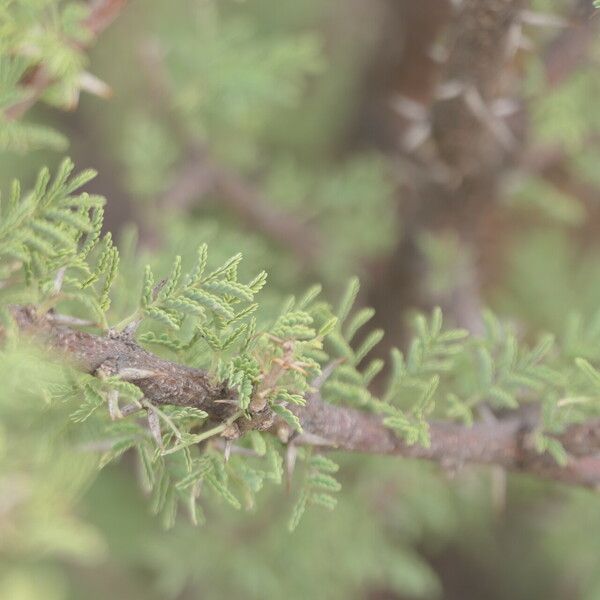
Plant Overview
Known affectionately as the Candlepod Acacia, Vachellia hebeclada is a resilient icon of the Southern African savanna. It earned its nickname from its peculiar seed pods that stand vertically like flickering candles on a branch, rather than hanging down like those of most other acacia species. This hardy shrub or small tree is a master of survival, often forming dense, protective thickets in semi-desert landscapes.
🔍 How to Identify
- 🕯️ The "Candles": The most striking feature is the upright, woody seed pods. They are thick, velvety, and cylindrical, pointing skyward from the branches.
- ⚔️ Dual Thorns: Look for pairs of sharp thorns at the base of the leaves. Interestingly, this plant often carries two types: some are short and hooked (like cat claws), while others are long and straight.
- ☁️ Creamy Puffballs: In early spring, the tree is covered in spherical, cream-to-pale-yellow flower heads that provide a soft contrast to its rugged, thorny exterior.
- 🌿 Velvety Foliage: The leaves are bipinnate (feathery) and covered in fine, greyish hairs, which help the plant reflect intense sunlight and conserve moisture.
🏡 In Your Garden
- 🏜️ A Desert Warrior: This plant is an excellent choice for xeriscaping or rock gardens. Because it is native to sandy and arid regions, it thrives in well-draining soil and requires very little supplemental watering once established.
- 🛡️ Natural Security: Due to its low-branching habit and formidable thorns, it is frequently used as a "living fence." It creates a nearly impenetrable barrier that provides excellent nesting sites for birds while keeping larger intruders out.
⚠️ Safety & Toxicity
- 🟢 Non-Toxic: Vachellia hebeclada is not known to be poisonous to humans, dogs, or cats. In the wild, its leaves and pods are a highly nutritious food source for giraffes, elephants, and goats.
- 🩹 Physical Hazard: The primary danger lies in its thorns. The "wait-a-bit" style hooked thorns can easily snag skin or clothing, and the long straight thorns can cause deep puncture wounds. Always wear heavy-duty gloves when pruning.
✨ Fun Fact
The species name hebeclada is derived from Greek words meaning "pubescent branches," referring to the soft, velvety hairs that cover the young stems and seed pods, protecting the plant from the drying effects of the wind.

Detailed Care Instructions








