Plant Overview
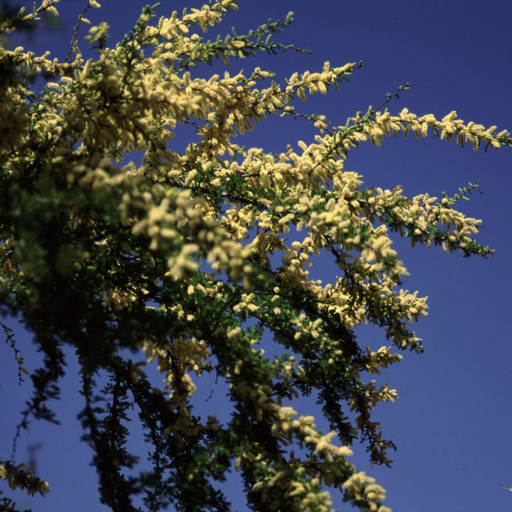
Often called the Blackbrush Acacia, this rugged native of the Chihuahuan Desert and South Texas is a master of survival. In the heat of summer, its dark, stiff branches create a striking, almost architectural silhouette against the scrubland. When spring arrives, it softens its "tough guy" persona by producing a blanket of fragrant, creamy-yellow flower clusters that smell like honey.
🔍 How to Identify
- 🌿 The Foliage: Small, dark green leaves are "bipinnately compound," meaning they look like tiny, delicate feathers arranged in pairs along the stems.
- ⚔️ The Armor: Look for stout, straight spines that grow in pairs at the base of the leaves. These thorns are sharp and effective at deterring hungry herbivores.
- 🌑 The Stems: Its branches often grow in a distinct "zigzag" pattern and are covered in dark grey to black bark, which gives the plant its "Blackbrush" name.
- ☁️ The Blooms: Small, fuzzy "puffball" flowers appear in cylindrical spikes rather than round balls, ranging from white to pale yellow.
🏡 In Your Garden
- 🏜️ Drainage is King: This plant thrives in "caliche" (heavy limestone soil) and rocky slopes. It hates "wet feet," so if your garden has heavy clay that holds water, you’ll need to amend the soil or plant it on a mound.
- 🕊️ Wildlife Magnet: If you want to attract pollinators and birds, this is a top-tier choice. Bees love the nectar, and the dense, thorny interior provides the perfect "fortress" for small birds like quail to hide from predators.
- ✂️ Pruning Caution: Because of its slow growth and rigid structure, it rarely needs pruning. If you must shape it, do so after the spring bloom, but wear thick leather gloves to protect yourself from the spines.
⚠️ Safety & Toxicity
- 🌵 Physical Hazard: The primary danger of the Blackbrush Acacia is its thorns. They are stiff and can easily puncture skin or bicycle tires, so keep it away from narrow walkways or children's play areas.
- 🐾 Ingestion: While the seeds and leaves are browsed by wild deer, they contain various alkaloids. It is generally not considered safe for domestic pets or curious children to eat, as it may cause digestive upset.
✨ Fun Fact
The Blackbrush Acacia was once at the center of a major scientific controversy. In the late 20th century, some researchers claimed the plant contained high levels of amphetamine-like compounds, leading to its use in weight-loss supplements. Later studies debunked this, suggesting the original samples may have been "spiked" or misidentified!

Detailed Care Instructions
Vachellia rigidula, also known as blackbrush acacia, is a drought-tolerant shrub native to the southwestern United States and northern Mexico. Here are some tips on how to grow this plant:
- Location: Vachellia rigidula prefers full sun and well-drained soil. Choose a planting location that receives at least 6-8 hours of sunlight per day.
- Soil: The plant grows best in sandy or rocky soil with good drainage. Avoid planting in compacted or poorly draining soil.
- Watering: Once established, Vachellia rigidula is drought-tolerant and requires minimal watering. Water deeply but infrequently, allowing the soil to dry out between waterings.
- Fertilization: This plant is not a heavy feeder and generally does not require fertilization. If desired, you can apply a balanced fertilizer in early spring.
- Pruning: Prune Vachellia rigidula in late winter or early spring to shape the plant and promote healthy growth. Remove any dead or damaged branches.
- Propagation: Vachellia rigidula can be propagated from seeds or cuttings. To grow from seeds, scarify the seed coat by nicking or rubbing the seeds with sandpaper before planting. Cuttings should be taken from semi-hardwood stems in late spring or early summer.
- Pests and diseases: Vachellia rigidula is relatively pest and disease-resistant. However, it may be susceptible to aphids, scale insects, and spider mites. Regularly inspect the plant for signs of pests and treat as needed.
By following these tips, you can successfully grow Vachellia rigidula in your garden or landscape.

Place in a bright room that is sun drenched almost all day. Or directly in a south-facing window.

Vachellia Rigidula plants should be watered thoroughly but infrequently. Allow the soil to dry out slightly between waterings to prevent root rot. When watering, saturate the soil around the plant's roots, ensuring the water reaches the entire root ball. It is important to avoid getting the foliage wet to prevent diseases. Water in the morning or early afternoon to allow the plant to dry before the temperature drops at night. Adjust watering frequency based on the plant's specific needs, environmental conditions, and season. Monitor the plant regularly for signs of overwatering or underwatering, such as yellowing leaves or wilted stems.
To fertilize the Vachellia Rigidula plant, use a balanced liquid fertilizer with equal parts nitrogen, phosphorus, and potassium. Dilute the fertilizer to half the recommended strength and apply it to the plant's root zone every 4-6 weeks during the growing season. Water the plant after fertilizing to help the nutrients penetrate the soil. Avoid over-fertilizing as it can damage the plant's roots.
Vachellia Rigidula plants thrive in well-draining soil that is slightly acidic to neutral in pH. A mixture of sandy loam soil with perlite or coarse sand is recommended to ensure good drainage. This type of soil composition allows for proper aeration and prevents root rot, which can be detrimental to the plant's health. Additionally, adding organic matter, such as compost or peat moss, can help improve soil structure and provide essential nutrients for the plant's growth. It is important to avoid using heavy clay or water-retentive soils, as they can lead to waterlogged conditions that may harm the plant. Overall, providing a well-balanced, nutrient-rich soil mixture will help support the growth and development of Vachellia Rigidula plants.
Vachellia rigidula can be propagated through both seeds and stem cuttings. When propagating through seeds, it is important to scarify the seeds before sowing them in a well-draining soil mix. This can be done by nicking the seed coat with a knife or rubbing the seeds with sandpaper to help with germination.
To propagate through stem cuttings, select a healthy stem with at least two nodes and remove any leaves from the lower part of the cutting. Dip the cut end in a rooting hormone and plant it in a well-draining soil mix. Keep the soil moist and provide indirect light for the cutting to root successfully.
Both methods of propagation require consistent moisture and humidity, so it is important to keep the soil or cutting environment moist but not waterlogged. It can take several weeks for new roots to form, so be patient and continue to care for the plant during this time. Once the plant has established roots, it can be potted up into a larger container or planted in the garden.








