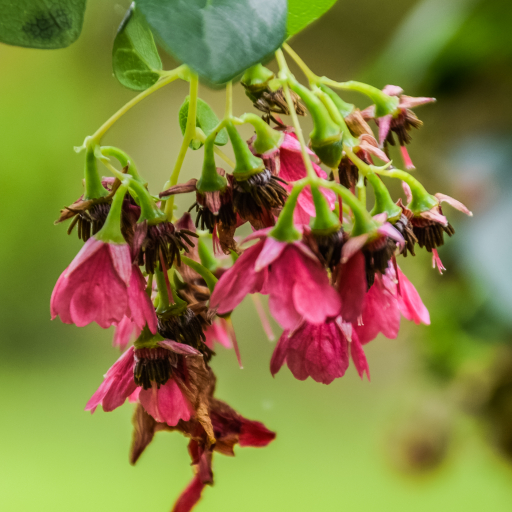
Plant Overview
Known as the "Heart-leaved Vallea" or "Granizo," this Andean beauty is a hidden gem of the high-altitude cloud forests of South America. It is a versatile evergreen that brings a touch of misty mountain elegance to gardens, characterized by its romantic, bell-shaped pink flowers and lush, heart-shaped foliage. Often found clinging to the slopes of the Andes, it has evolved to be both hardy and exceptionally graceful.
🔍 How to Identify
- 🍃 The Leaves: Look for distinct heart-shaped (cordate) leaves that are dark green on top and slightly paler underneath. They have a soft, leathery texture.
- 🌸 The Blooms: It produces charming clusters of nodding, cup-shaped flowers. These are usually a soft rose-pink to deep magenta, appearing most vibrantly in spring and summer.
- 🌿 The Stipules: A key giveaway is the presence of "stipules"—small, leaf-like appendages at the base of the leaf stalks—which is exactly what the name stipularis refers to.
🏡 In Your Garden
- ⛰️ Cool & Airy: Because it hails from high elevations, this plant thrives in temperate climates. It dislikes extreme heat and prefers "cool feet" and humid air, mimicking its native cloud forest home.
- 💧 Moisture Balance: It is somewhat picky about its roots; it loves consistent moisture but will quickly fail in heavy, waterlogged clay. Well-draining, slightly acidic soil is its best friend.
- 🌳 Growth Habit: Left to its own devices, it can grow into a large shrub or a small, multi-stemmed tree. It responds well to pruning, making it a fantastic choice for a unique privacy screen or a focal ornamental piece.
⚠️ Safety & Toxicity
- 🟢 General Status: Vallea stipularis is considered non-toxic and safe for general garden use.
- 🐾 Pets & Children: There are no recorded incidents of significant toxicity. However, as it is an ornamental plant and not a food crop, ingestion may still cause minor stomach upset in curious pets or toddlers.
✨ Fun Fact
The name Vallea was chosen to honor the 17th-century French explorer and botanist Robert de la Vallée. In its native habitat, this resilient tree can be found growing at altitudes of up to 13,000 feet—an elevation where most other tree species struggle to breathe!

Detailed Care Instructions
To grow Vallea Stipularis plant, you can follow these steps:
- Choosing the right location: Vallea stipularis plants generally prefer bright, indirect sunlight. Find a spot with partial shade or dappled sunlight, away from direct sunlight.
- Soil preparation: The plant grows best in well-draining soil with a slightly acidic to neutral pH. Prepare the soil by mixing in organic matter such as compost or peat moss. This will improve drainage and provide essential nutrients.
- Planting: Dig a hole that is slightly larger than the root ball of the plant. Place the plant in the hole, making sure it is at the same depth as it was in its previous container or nursery pot. Fill the hole with soil, firming it gently around the roots.
- Watering: Keep the soil evenly moist, but not waterlogged. Avoid overwatering, as it can lead to root rot. Water the plant when the top inch of soil feels dry, and ensure good drainage from the pot or soil.
- Fertilizing: During the growing season (spring and summer), feed the plant with a balanced, slow-release fertilizer every 4-6 weeks. Follow the instructions on the fertilizer packaging for application rates.
- Pruning: Prune Vallea stipularis plants occasionally to remove any dead or damaged branches. This will improve the overall appearance and encourage new growth.
- Propagation: Vallea stipularis can be propagated through stem cuttings. Take a 4-6 inch cutting from a healthy, established plant, remove any lower leaves, and dip the cut end into a rooting hormone. Plant the cutting in a well-draining potting mix and keep it moist until roots develop.
- Pests and diseases: Keep an eye out for common pests such as aphids, spider mites, and scale insects. Treat any infestations promptly with organic insecticides or by wiping the leaves with a mild soap and water solution. Protect the plant from extreme temperature fluctuations and ensure good air circulation to prevent fungal diseases.
Remember to research and understand the specific needs of Vallea stipularis plant for your particular location, as requirements can vary slightly.

Place in a bright room that is sun drenched almost all day. Or directly in a south-facing window.

Vallea Stipularis is a plant that requires a moderate amount of watering. To water this plant, you should first check the soil moisture level by inserting your finger into the soil about an inch deep. If the soil feels dry at this depth, then it is time to water the plant. When watering, pour the water slowly and evenly over the soil until it begins to run out of the bottom of the pot. Ensure that you do not overwater the plant as this can lead to root rot. You should also allow the soil to dry out slightly before you water the plant again. This plant prefers to be watered with room temperature or tepid water. Additionally, it is important to avoid getting water on the leaves or flowers as this can lead to fungal growth or other issues.
- Choose a balanced fertilizer with equal amounts of nitrogen, phosphorus, and potassium.
- Apply the fertilizer in early spring before new growth appears.
- Water the plant thoroughly before fertilizing to prevent burning the roots.
- Measure the recommended amount of fertilizer according to package instructions.
- Apply the fertilizer evenly around the base of the plant.
- Avoid getting the fertilizer on the leaves or stems.
- Water the plant deeply after fertilizing to help nutrients reach the roots.
- Repeat the application in late summer or early fall for optimal growth.
The recommended soil for Vallea Stipularis plant is a well-draining and nutrient-rich mix. Ideally, it should be a combination of loamy soil, perlite or sand, and compost or an organic matter such as peat moss. Avoid using heavy soils that retain too much moisture, as this can lead to root rot. The pH level of the soil should be slightly acidic to neutral, around 5.5 to 7.0. It's important to ensure that the soil is airy and loose, as the plant's roots require oxygen to grow properly. It's also recommended to add a slow-release fertilizer to the soil prior to planting, which will provide the plant with essential nutrients over time.
Vallea Stipularis plant can be propagated using a few different methods. One way is to take stem cuttings in the late spring or early summer. Cut a piece of stem with a pair of clean, sharp pruners, making sure to include a few leaves. Remove the lower leaves from the stem and dip the cut end in rooting hormone powder. Plant the cutting in moist potting soil and keep it in a warm, humid spot until it roots and begins to grow.
Another way to propagate Vallea Stipularis plant is by division. Dig up the plant in the early spring or fall and carefully separate the roots into several clumps, making sure each clump has a good amount of roots attached. Replant each clump in its own pot or in the ground.
Vallea Stipularis plant can also be propagated by layering. This involves bending a low-hanging stem down to the ground and pinning it in place with a U-shaped stake or piece of wire. After a few weeks, roots will begin to form where the stem is touching the soil. Once roots have formed, the stem can be cut away from the parent plant and transplanted.
No matter which propagation method you choose, be sure to keep the new plant well-watered and in a warm, bright spot until it becomes established.








