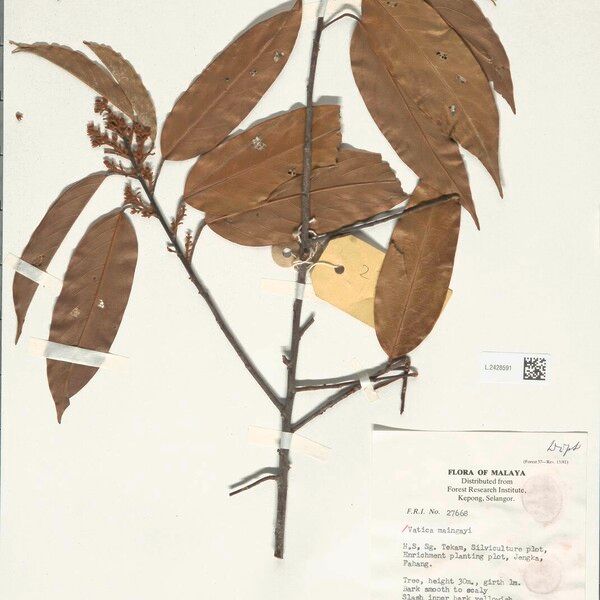
Plant Overview
Known to botanists as "Maingay’s Resak," Vatica maingayi is a silent sentinel of the Southeast Asian rainforests. It belongs to the legendary Dipterocarp family—the "skyscrapers of the jungle"—though this particular species prefers a more modest, mid-sized stature. Historically significant in the timber trade of Malaysia and Thailand, it is a tree that embodies the slow, rhythmic endurance of the ancient tropics.
🔍 How to Identify
- 🍃 Leathery Leaves: The foliage is elliptic to oblong and has a distinct "coriaceous" (leathery) texture. If you flip a leaf over, you’ll notice a prominent midrib and veins that feel like raised ridges.
- 🌸 Fragrant Clusters: During rare blooming periods, the tree produces small, star-shaped flowers that are usually cream or pale yellow, releasing a delicate scent into the humid forest air.
- 🚁 The "Helicopter" Fruit: Like its cousins, it produces a fruit equipped with specialized wings (calyx lobes). When they fall, they spin like mini-helicopters to travel far from the mother tree’s shadow.
🌲 Habitat & Ecology
- ⛰️ Hill Dweller: You will most often find this tree clinging to the well-drained soils of dipterocarp hill forests. It isn't a fan of "wet feet" and prefers the sloped terrain of ridges rather than swampy lowlands.
- 🐌 Slow-Motion Growth: This is not a plant for the impatient. It grows at a glacial pace, focusing its energy on creating incredibly dense, heavy, and durable wood that can resist rot and insects for decades.
- 🛡️ Vulnerable Status: Because it relies on primary rainforest habitats, Vatica maingayi is currently facing pressure from habitat loss, making every surviving specimen a vital part of the regional ecosystem.
⚠️ Safety & Toxicity
- ✅ Generally Safe: This tree is not known to be toxic to humans, cats, or dogs. It does not possess stinging hairs or irritating saps.
- 🚫 Non-Edible: While not poisonous, the wood, bark, and seeds are extremely fibrous and contains resins that make them inedible for humans.
✨ Fun Fact
Many trees in the Resak family engage in "Masting." They may go several years without producing a single seed, only to suddenly flower and fruit all at once in a massive, synchronized event that completely blankets the forest floor in "helicopters!"

Detailed Care Instructions








