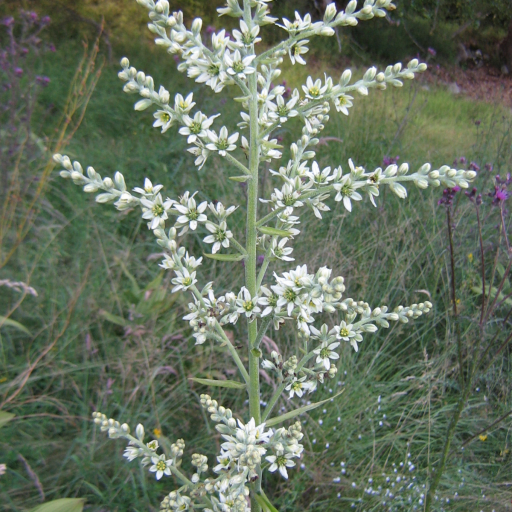
Plant Overview
Often called the "False Hellebore" or "White Veratrum," this majestic mountain perennial is a master of visual deception. With its statuesque height and accordion-pleated leaves, it commands attention in alpine meadows across Europe and Asia. While it looks like a lush, ornamental dream, it hides a dark secret—it is one of the most toxic plants in the Northern Hemisphere, often mistaken for harmless herbs with fatal consequences.
🔍 How to Identify
- 🍃 The Foliage: Large, broad, oval leaves that are deeply "pleated" or ribbed like a handheld fan. They grow in a spiral pattern densely around the central stem.
- 🌸 The Blooms: Tiny, star-shaped flowers that range from creamy white to pale greenish-yellow, densely packed on a tall, branched spike that towers over the foliage.
- 📏 The Stature: A robust, structural plant that can reach heights of up to 5 feet, making it stand out easily in a grassy field or garden border.
🏡 In Your Garden
- 💧 Moisture Lover: In its natural habitat, it thrives in damp mountain meadows and near stream banks. If grown in a garden, it demands rich soil that never fully dries out, or it will quickly wilt.
- 🌱 Deep Roots: It possesses a thick, fleshy rhizome and a deep root system. Because of this, it "sulks" and often fails to recover if transplanted; it is a plant that demands you choose its forever-home carefully.
- 🏔️ Cold Hardy: This plant is an alpine specialist. It requires a significant winter chill to reset its growth cycle and will struggle in tropical or consistently warm climates.
⚠️ Safety & Toxicity
- 🚨 Status: EXTREMELY TOXIC. Every part of this plant—especially the root—contains potent alkaloids that can be fatal to humans and livestock if even small amounts are ingested.
- 🚫 The Gentian Trap: A major safety concern for foragers is that its young, non-flowering leaves look almost identical to the "Yellow Gentian," which is used to make liqueurs. Mistaking the two is a common cause of accidental poisoning in Europe.
- 🐾 Pet Warning: Keep away from curious dogs or outdoor cats; ingestion causes rapid heart rate drop, vomiting, and respiratory failure.
✨ Fun Fact
- 🏹 Ancient Warfare: In Ancient Greece, Veratrum album was used as a primitive form of chemical warfare. During the Siege of Kirrha in 590 BC, it was reportedly used to poison the city's water supply, causing the defenders to become too ill to fight!

Detailed Care Instructions
| Color | Creamy White Flowers |
| Soil Ph | Acidic To Alkaline |
| Humidity | Normal |
| Lighting | Part Sun |
| Toxicity | Toxic |
| Soil Type | Rich, Well-Draining |
| Bloom Time | Summer |
| Difficulty | Medium |
| Plant Type | Herbaceous Perennial |
| Mature Size | Up To 5 Feet Tall |
| Native Area | United States And Canada |
| Temperature | 7°C - 18°C |
| Sun Exposure | Full Sun To Partial Shade |
| Hardiness Zones | 4-8 |
To grow Veratrum album, or white hellebore, follow these steps:
- Obtain seeds or root divisions: Veratrum album can be propagated from seeds or by dividing the plant's roots. Seeds can be purchased from a reputable seed supplier or obtained from mature plants.
- Prepare the soil: Veratrum album prefers moist, well-draining soil. Amend the soil with organic matter such as compost or well-rotted manure to improve its water retention and fertility.
- Choose a suitable location: Veratrum album thrives in partially shaded areas, so select a spot in your garden that receives morning sunlight and afternoon shade. Avoid planting it under trees or in excessively dry or sunny areas.
- Sow the seeds or plant the divisions: If using seeds, sow them in a seed tray filled with seed-starting mix. Cover the seeds lightly with soil and keep them consistently moist until germination occurs. Alternatively, plant the root divisions directly into the prepared planting hole.
- Water regularly: Veratrum album requires moist soil to grow well. Water the plants regularly, keeping the soil evenly moist but not waterlogged. Avoid allowing the soil to dry out completely between waterings.
- Mulch: Add a layer of organic mulch, such as straw or shredded bark, around the plants to help retain soil moisture and suppress weed growth.
- Fertilize: Veratrum album is not a heavy feeder and typically does not require additional fertilization. However, if your soil is poor, you can apply a balanced organic fertilizer once or twice a year in early spring or late fall.
- Provide support: As the Veratrum album plants grow, they may require support to prevent flopping. Use stakes or plant supports to prop up the tall stalks and keep them upright.
- Prune and divide: Over time, Veratrum album may become crowded and benefit from division. In early spring or fall, dig up the clumps and divide them into smaller sections, ensuring each division has roots and shoots. Replant the divisions in the desired locations.
- Watch for pests and diseases: While Veratrum album is generally resistant to pests and diseases, it can occasionally be affected by slugs, snails, or powdery mildew. Monitor your plants regularly and take appropriate measures if any problems arise.
By following these steps, you can successfully grow Veratrum album in your garden.

Place in a bright room that is sun drenched almost all day. Or directly in a south-facing window.

Watering Veratrum Album requires a regular watering schedule of moist soil, but not saturated soil. It is important to avoid letting the soil dry out completely, as this can stress the plant. The frequency of watering will depend on the amount of sunlight and temperature the plant receives, as well as the soil type and drainage. It is recommended to use a well-draining soil mix for Veratrum Album. When watering, make sure to evenly distribute the water around the base of the plant, avoiding the leaves. Over-watering this plant can lead to root rot, so it is important to monitor the soil moisture level and adjust the watering schedule accordingly. Adding a layer of mulch around the base of the plant can also help retain moisture in the soil and keep the plant healthy.
To properly fertilize this plant, it is important to use a slow-release fertilizer that is high in nitrogen. Apply the fertilizer in the early spring or late fall, when the plant is not actively growing, and be sure to water it in well. Avoid using any fertilizers that contain high levels of phosphorus or potassium, as these can promote leaf growth at the expense of the roots. Additionally, be sure to keep the plant well-mulched, as this will help to retain moisture and protect the roots from heat stress.
Veratrum Album plants prefer a well-draining soil that is rich in organic matter. The ideal soil pH range for this plant is slightly acidic to neutral. A mix of sand, loam, and peat moss is recommended for best growth. It is important to avoid using heavy clay soils as they do not provide adequate drainage for the plant's roots. Additionally, adding some well-rotted manure or compost to the soil will provide the necessary nutrients for healthy growth. It is recommended to amend the soil every year to ensure the plant continues to grow well.
To propagate this plant, you will need to collect the seeds from mature plants and plant them in a mixture of soil and sand. The seeds should be sown at a depth of about 1cm and kept moist but not waterlogged. The seeds will germinate in about 3-4 weeks and at this point can be transplanted into larger pots or into a permanent outdoor location. This plant can also be propagated by dividing the rhizomes in early spring and planting them in a new location. When dividing the rhizomes, ensure that each division has a good amount of roots and shoots to ensure successful growth. It is important to note that this plant is toxic and should be handled with care.
Common pests of the white hellebore include Aphids, thrips. Make a habit of checking your white hellebore frequently for pests so that any infestations can be caught and managed early.








