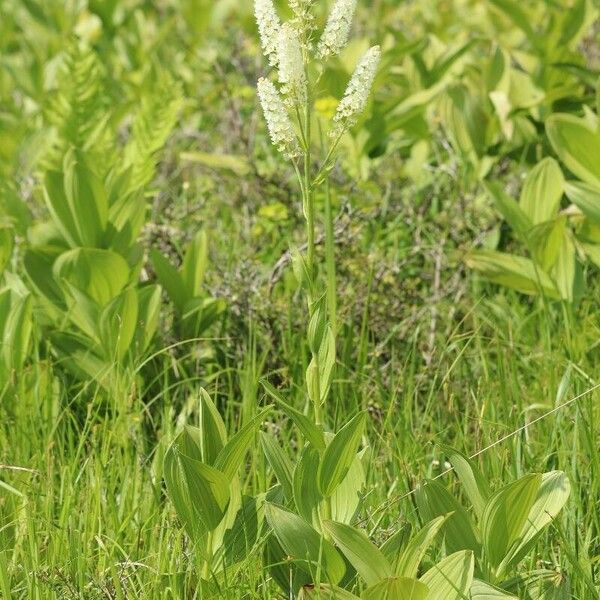
Plant Overview
Often called the Fringed False Hellebore, this plant looks like it stepped straight out of a botanical illustration from the 1800s. Its dramatic, pleated foliage and tall, architectural flower spikes make it a standout in damp, shaded corners of the landscape. While it carries an air of woodland elegance, it hides a potent chemical secret behind its lush, prehistoric greenery.
🔍 How to Identify
- 🍃 Ribbed Foliage: The most striking feature is the large, oval-shaped leaves that feature deep, parallel veins, giving them a distinct "accordion" or pleated texture.
- ❄️ Fringed Blooms: It produces tall spikes of creamy white or greenish flowers. Each tiny bloom has exceptionally long stamens that extend outward, creating a "fuzzy" or fringed appearance.
- 📏 Stature: This is a robust perennial that commands attention, often reaching heights of 3 to 5 feet when the flower stalks are fully extended in mid-summer.
🏡 In Your Garden
- 💧 The Bog Beauty: Veratrum stamineum is a "moisture glutton." It thrives in wet meadows, stream banks, or rain gardens. If the soil dries out, the edges of those beautiful pleated leaves will quickly turn brown and crisp.
- 🕰️ Patience Required: This plant is not for the impatient gardener. It is slow-growing and can take several years to reach its full flowering potential. It also possesses a sensitive root system and strongly dislikes being transplanted once it has settled in.
⚠️ Safety & Toxicity
- 🚫 Status: EXTREMELY TOXIC. This plant should be handled with caution and never consumed. It contains potent alkaloids (like veratridine) that can cause a dangerous drop in blood pressure and heart rate.
- 🐾 Pets & Foraging: It is highly toxic to cats, dogs, and livestock. A major safety concern is that its young shoots can look strikingly similar to edible wild ramps or Gentian; foragers must be 100% certain of their identification to avoid accidental poisoning.
✨ Fun Fact
- 🧬 Old World Medicine: In the past, extracts from the Veratrum genus were used in very tiny, controlled doses as a treatment for high blood pressure. However, because the gap between a "healing dose" and a "deadly dose" was so incredibly small, it was eventually abandoned for much safer modern medicines!

Detailed Care Instructions







