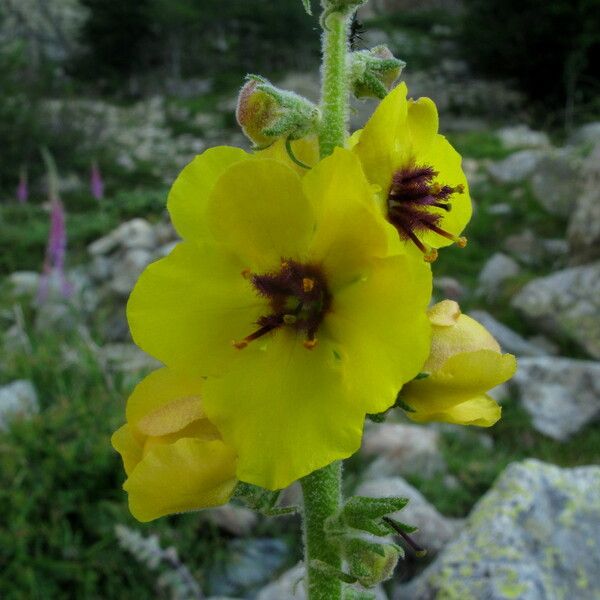
Plant Overview
Standing tall like a fuzzy golden spear, Verbascum conocarpum is a striking member of the Mullein family known for its architectural silhouette and velvet-soft foliage. Primarily found in the rocky terrains of the Mediterranean and the Middle East, this hardy perennial brings a touch of wild, sun-drenched charm to any landscape. Its name, "conocarpum," refers to its uniquely shaped fruit, which distinguishes it from its many cousins in the Verbascum genus.
🔍 How to Identify
- 🍃 Velvet Foliage: The plant features large, ground-hugging rosettes of silvery-green leaves that are densely covered in fine, felt-like hairs, giving them a soft "flannel" texture.
- 🌼 Golden Spire: It produces a dramatic, upright flower spike that can reach impressive heights, densely packed with bright yellow blossoms that open a few at a time.
- 📐 Conic Seed Pods: True to its name, once the flowers fade, the plant develops distinct cone-shaped seed capsules that persist on the stalk through the winter.
🏡 In Your Garden
- 🏜️ The Sun-Worshipper: This plant is a pioneer species that thrives in "disturbed" or poor, rocky soil where other plants might wither. It is exceptionally drought-tolerant and perfect for xeriscaping or rock gardens.
- 🚫 Deep Root Logic: It develops a long, sturdy taproot to search for deep water reserves. Because of this, it hates being moved once planted; transplanting often leads to root shock, so it's best to sow it exactly where you want it to stay.
⚠️ Safety & Toxicity
- ✅ Low Risk: Verbascum conocarpum is generally considered non-toxic to humans and common household pets like cats and dogs.
- 🧴 Fuzzy Irritation: While not poisonous, the fine hairs covering the leaves can act as a mechanical irritant. If handled frequently without gloves, these "velvet" hairs can cause mild skin itching or respiratory discomfort for sensitive individuals.
✨ Fun Fact
In ancient times, the tall, dried stalks of Mullein species were frequently dipped in suet or wax and used as torches. This earned the genus the nickname "Hag's Taper" or "Candelaria," as the dried spires could stay lit for a remarkably long time during nighttime processions.

Detailed Care Instructions

Place in a bright room that is sun drenched almost all day. Or directly in a south-facing window.

Some plants require more regular watering than others, which should be done every few days. It's critical to maintain the soil moist all of the time. The water requirements of the same plant placed in pots with varying sizes will differ. Because the water in the smaller pot evaporates faster than the water in the larger pot, it will require more watering. Regardless of pot size, the surface should constantly be maintained moist.








