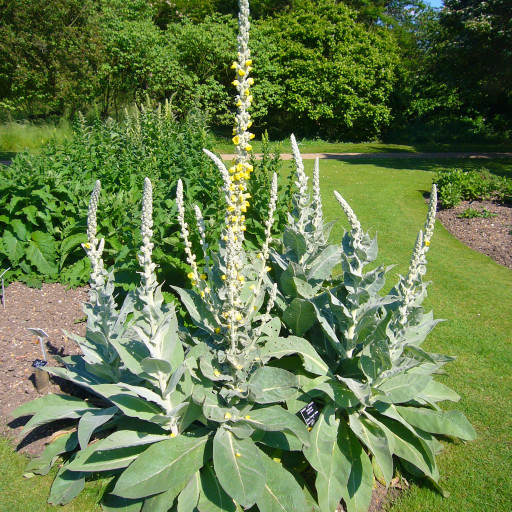
Plant Overview
Often called the "Dense-flowered Mullein" or "Torch Weed," Verbascum densiflorum is a majestic biennial that commands attention with its towering spikes of golden blossoms. In ancient folklore, these tall stalks were dipped in tallow and used as literal torches to light the way during night processions. It’s a resilient pioneer plant that turns barren, sunny hillsides into a sea of velvet and gold.
🔍 How to Identify
- ☁️ Foliage Texture: The leaves are large, silvery-green, and incredibly "woolly" to the touch, feeling almost like thick felt or velvet.
- 🏛️ Winged Stems: Unlike some of its relatives, the leaves of this species run down the stem (decurrent), creating a "winged" appearance along the main stalk.
- ☀️ Floral Spike: A massive, vertical cluster of bright yellow flowers with distinct orange-haired stamens that look like tiny, fuzzy antennae inside the bloom.
🏡 In Your Garden
- 🏜️ The Sun-Worshipper: This plant uses its fuzzy leaves as a natural sunscreen to reflect heat and trap moisture, making it an exceptional choice for xeriscaping or rock gardens.
- 🧱 Neglect is a Virtue: It thrives in "poor" soil. If you provide too much fertilizer, the plant may grow too fast and become floppy; it prefers well-drained, gravelly earth where it can anchor its deep taproot.
- ⏳ Patience Required: As a biennial, it spends its first year as a flat, soft rosette of leaves. The spectacular flowering spike—which can reach over 6 feet—only emerges in its second year of life.
⚠️ Safety & Toxicity
- 🍵 Human Use: The flowers are famously used in herbal teas to soothe coughs, but the tiny "hairs" on the leaves can be a mechanical irritant to the throat if not strained through a fine cloth.
- 🐕 Pet Safety: Generally considered non-toxic to cats and dogs, though the fuzzy texture might cause mild mouth irritation if a curious pet tries to chew on it.
- 🐟 Fish Warning: The seeds contain saponins and rotenone, which are toxic to fish. Avoid planting it directly on the edge of a decorative koi pond where seeds might fall into the water.
✨ Fun Fact
In the Middle Ages, mullein was known as "Hag's Taper." While the name sounds spooky, it actually refers to the plant's historical use as a reliable, long-burning candle for both commoners and practitioners of traditional medicine!

Detailed Care Instructions
To grow Verbascum densiflorum, also known as mullein, follow these steps:
- Choose a suitable location: Verbascum densiflorum prefers full sun but can tolerate partial shade. It can thrive in average, well-drained soil. Make sure the soil is not waterlogged to prevent root rot.
- Select the planting time: The best time to sow Verbascum densiflorum seeds is in the spring after the last frost. Alternatively, you can purchase young plants from a nursery and transplant them in the spring or fall.
- Prepare the soil: Before planting, loosen the soil with a garden fork and remove any weeds or rocks.
- Sow the seeds: If planting from seed, scatter them on the soil surface and lightly press them into the soil. Keep the seeds moist until they germinate, which usually takes 2-3 weeks. If starting indoors, sow the seeds 8-10 weeks before the last frost date and transplant them once they reach a suitable size.
- Transplanting: If you purchased young plants, dig a hole slightly larger than the root ball and place the plant in the hole. Fill the hole with soil and firm it gently around the plant.
- Watering: Water the plants regularly, particularly during dry periods. Mullein plants have long taproots and can withstand some drought, but consistent watering will promote healthy growth.
- Mulching: Apply a layer of organic mulch around the plants to help conserve moisture and suppress weed growth.
- Pruning: Verbascum densiflorum can grow quite tall, so you may need to stake or provide support to prevent it from flopping over. If desired, you can also cut back the main stem after flowering to promote branching and prolong the flowering period.
- Fertilizing: Mullein plants generally don't require much fertilization. However, you can apply a balanced, slow-release fertilizer in early spring to provide nutrients for better growth.
- Pests and diseases: While Verbascum densiflorum is relatively resistant to many pests and diseases, keep an eye out for common issues like aphids or powdery mildew. Treat these issues promptly with insecticidal soap or horticultural oil if necessary.
By following these steps, you should be able to successfully grow Verbascum densiflorum, enjoying its beautiful tall spikes of flowers in your garden.

Place in a bright room that is sun drenched almost all day. Or directly in a south-facing window.

To properly water this plant, it is important to ensure the soil remains consistently moist, but not waterlogged. One way to achieve this is to water deeply once a week, or more frequently in hot and dry weather. The soil should be allowed to partially dry out between waterings to prevent overwatering, which may lead to root rot. When watering, it is important to avoid getting water on the foliage, as this may encourage fungal growth. Additionally, it may be beneficial to water early in the morning or late in the evening to minimize evaporation and ensure the water reaches the roots.
- Choose a balanced fertilizer with equal amounts of nitrogen, phosphorus, and potassium.
- Apply the fertilizer in early spring before new growth appears.
- Mix the fertilizer with water according to the instructions on the package.
- Water the plant thoroughly before applying the fertilizer.
- Use a watering can or hose with a gentle spray nozzle to apply the fertilizer evenly to the soil around the plant.
- Avoid getting the fertilizer on the leaves or flowers of the plant.
- Repeat the fertilizer application once every four to six weeks throughout the growing season.
- Stop fertilizing in late summer to allow the plant to prepare for winter.
Verbascum densiflorum plant prefers a well-drained, sandy loam soil that is rich in organic matter. The soil should not be too alkaline, and a pH range of 6.5 to 7.5 is ideal. The plant does not tolerate waterlogged soil, so it is essential to ensure that the soil is well-draining. If the plant is being grown in a container, it is important to use a well-draining potting mix that contains perlite, sand, or vermiculite to improve drainage. Additionally, the plant should be fertilized lightly with a balanced fertilizer during the growing season to promote healthy growth.
Verbascum Densiflorum is a plant that can be easily propagated through seed dispersal. It is recommended to collect seeds from the parent plant when they are fully matured and gathered in an area that is free from pests and diseases. The seeds can be sown directly into the ground or into seed trays filled with compost and covered with a layer of fine soil. The seeds should then be watered lightly and placed in a shady area until they have germinated. Once the seedlings have grown to a size that is suitable for transplanting, they can be moved into their final growing location. Alternatively, Verbascum Densiflorum can be propagated through stem cuttings. To do this, stems should be taken from healthy non-flowering plants and placed into a soil-filled pot. The cuttings should then be kept moist and humid until roots have formed and the plant can be transplanted.








