Plant Overview
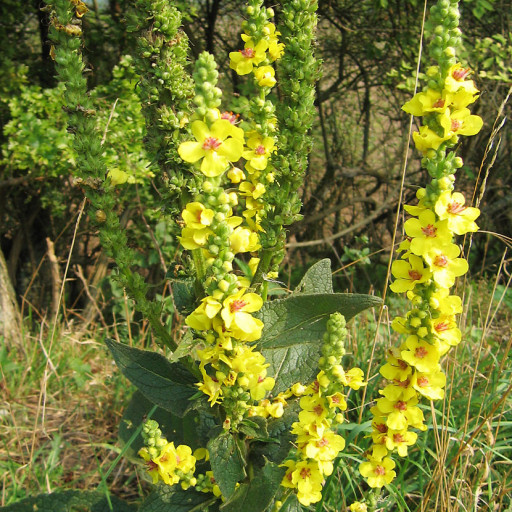
Known as the "Dark Mullein," this architectural beauty is a skyscraper of the cottage garden. Unlike its woolly, silver-leaved cousins, it boasts deep green foliage and striking yellow flowers with fuzzy, violet-purple "beards" at their centers. It’s a favorite among bumblebees, acting as a natural high-rise hotel for local pollinators looking for a nectar-rich pitstop.
🔍 How to Identify
- 🗼 The Flower Spikes: It produces tall, slender, and usually unbranched spikes that can reach up to 3 feet in height, densely packed with clusters of blossoms.
- 💜 The "Dark" Center: The name comes from the vivid violet-purple hairs (filaments) in the center of each yellow flower, creating a stunning color contrast.
- 🍃 Heart-Shaped Foliage: The leaves are dark green, slightly wrinkled, and heart-shaped at the base. Unlike Common Mullein, these leaves are mostly hairless on the top side.
🏡 In Your Garden
- 🌱 The Taproot Rule: This plant develops a long, sturdy taproot to find water deep in the earth. Because of this, it hates being moved; choose its forever-home carefully, as transplanting often leads to a "sulking" plant.
- ☀️ Sun & Drainage: It thrives in "neglected" spots. It prefers well-drained, even poor soil, and full sun. If the soil is too rich or wet, the plant may grow too fast and flop over or suffer from root rot.
⚠️ Safety & Toxicity
- ✅ Status: Generally Safe. Dark Mullein is not considered a high-risk poisonous plant for humans or common household pets.
- 🖐️ Skin Irritation: The tiny hairs on the stems and leaves can be a mechanical irritant. If you have sensitive skin, you might feel a slight "itch" after handling the plant without gloves.
- 🐟 Aquatic Caution: Historically, Mullein seeds contain saponins which were used to stun fish in still water. While not a risk to your dog, it’s best not to shake the seeds into a small backyard fish pond.
✨ Fun Fact
- 🕯️ Witches' Candles: In folklore, the tall, dried stalks of Mullein were dipped in suet or wax to be used as torches. They were often called "Hag’s Tapers" or "Witches' Candles" because they stayed lit even in windy conditions!

Detailed Care Instructions
| Lighting | Full Sun |
Here are some steps to help you grow Verbascum Nigrum (commonly known as Dark Mullein):
- Plant selection: Choose healthy and disease-free Verbascum Nigrum seeds or young plants from a reputable nursery or garden center.
- Location: Select a location that receives full sun or partial shade. Verbascum Nigrum prefers well-draining soil.
- Soil preparation: Prepare the soil by removing weeds and loosening it with a garden fork or tiller. Add organic matter such as compost or well-rotted manure to improve soil fertility and drainage.
- Sowing seeds: If starting from seeds, sow them directly in the garden in spring or early summer. Lightly cover the seeds with soil or coarse sand and keep the soil evenly moist until germination occurs (usually within 2-3 weeks).
- Plant spacing: If planting young plants, space them about 18-24 inches apart to allow room for growth.
- Watering: Water the plants regularly, especially during dry spells. Keep the soil moist but not waterlogged as Verbascum Nigrum is moderately drought-tolerant.
- Mulching: Apply a layer of organic mulch around the plants to conserve soil moisture and suppress weed growth.
- Fertilization: Apply a slow-release fertilizer or organic compost in early spring to provide necessary nutrients for healthy growth.
- Pruning: Deadhead spent flowers regularly to encourage the production of new blooms and prevent self-seeding. Cut back the flower stalks to the base of the plant after blooming to encourage new growth.
- Pest and disease control: Verbascum Nigrum is generally resistant to pests and diseases. However, keep an eye out for common garden pests like aphids or slugs, and take appropriate measures to control them if necessary.
- Propagation: Verbascum Nigrum can be propagated through division in early spring or by collecting and sowing the seeds.
Remember to check the specific requirements for the variety of Verbascum Nigrum you are growing, as there may be slight variations in care instructions.

Place in a bright room that is sun drenched almost all day. Or directly in a south-facing window.

Verbascum Nigrum requires frequent and regular watering to thrive. It is essential to ensure that the soil around the plant is moist consistently but not waterlogged, as this may cause root rot. The frequency of watering may depend on the climate and soil conditions.
Before watering, check the soil around the plant to determine whether it is dry or damp. If the soil is dry to the touch, it is time to water the plant. It is advisable to water in the morning or evening to prevent evaporation and reduce the likelihood of fungal diseases.
When watering, be sure to avoid splashing water on the leaves and flowers of the plant, as this may cause leaf spot or other damage. The best way to water is to direct the flow of water at the base of the plant and allow the water to soak into the soil.
During periods of high heat or drought, Verbascum Nigrum may need extra watering to prevent stress and ensure healthy growth. However, too much water can be just as damaging as too little, so be sure to monitor the soil and adjust the watering frequency accordingly.
Overall, providing consistent, adequate water is essential for maintaining the health and beauty of Verbascum Nigrum.
To fertilize this plant, use a balanced fertilizer blend that contains nitrogen, phosphorus, and potassium. Apply the fertilizer in early spring before new growth appears and again in mid to late summer. Be sure to follow the manufacturer's instructions for dilution and application rates. Avoid over-fertilizing, which can cause damage to the plant and harm nearby wildlife. Additionally, maintain adequate watering to ensure optimal growth.
The ideal type of soil for Verbascum nigrum is a well-draining soil that is slightly acidic to neutral with a pH range of 6.0-7.0. The soil should be rich in organic matter, such as compost, and have good moisture retention capabilities. It is recommended to mix some sand or grit into the soil to improve drainage and to prevent waterlogging. Ideally, the Verbascum nigrum plant should be grown in full sun or partial shade and should be grown in a sheltered spot to protect it from strong winds.
To propagate this particular plant, you will need to wait for the flowers to naturally produce seed pods. Once the seed pods have formed, harvest them and store them in a dry, cool place until you are ready to plant them. When planting, sow the seeds in spring or early summer in well-drained soil with full sun exposure. The seeds should be planted just under the soil surface and kept moist until they germinate, which typically takes two to three weeks. Once the seedlings have reached a height of 3-4 inches, they can be transplanted into their permanent location in the garden.








