Plant Overview
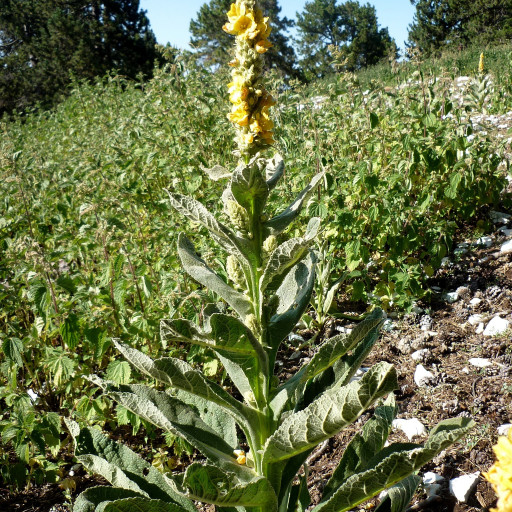
Known as the "Velvet Plant" or "Hag’s Taper," Great Mullein is a striking biennial that looks like it belongs in a fairytale landscape. In its first year, it hugs the ground as a soft, silvery rosette, but in its second year, it rockets toward the sky with a massive flowering spike. Historically, its dried stalks were dipped in wax and used as torches, and its exceptionally soft leaves have earned it the humorous nickname "Cowboy Toilet Paper."
🔍 How to Identify
- ☁️ The Foliage: Large, thick, oval leaves that are covered in dense, silver-white wooly hairs. They feel like high-quality felt or flannel to the touch.
- 🗼 The Spike: A towering, woody flowering stalk that can reach heights of 6 to 10 feet (2–3 meters).
- 🌼 The Flowers: Small, five-petaled yellow flowers that grow in a dense cluster along the top of the stalk. They bloom in a random, "patchy" pattern rather than all at once.
🏡 In Your Garden
- 🌱 Pioneer Spirit: Mullein is a "pioneer plant," meaning it thrives in disturbed, poor, or gravelly soil where other plants refuse to grow. It uses a deep taproot to find water, making it incredibly drought-resistant.
- 🦋 Pollinator Magnet: While it can be aggressive in some regions, it is a haven for bees and butterflies. The dried stalks also provide essential winter housing for beneficial insects if left standing through the cold months.
⚠️ Safety & Toxicity
- ✅ Status: Generally non-toxic to humans and pets, but requires a "handle with care" approach.
- 👁️ Irritant Alert: Those soft, velvety hairs are actually tiny hooked structures. If they get into your eyes or rub against sensitive skin, they can cause significant redness and itching.
- 🐟 Fish Toxicity: The seeds of the Mullein plant contain rotenone, a natural insecticide that is toxic to fish. Avoid planting it directly on the edge of a koi pond or sensitive waterway.
✨ Fun Fact
In ancient folklore, Mullein was believed to provide protection against evil spirits and curses. It was often planted near the doors of farmhouses to keep "mischievous magic" at bay!

Detailed Care Instructions
| Color | Yellow |
| Soil Ph | Slightly Alkaline |
| Humidity | Normal |
| Invasive | Weed |
| Lighting | Full Sun |
| Toxicity | Non-Toxic |
| Soil Type | Poor To Average, Well-Drained |
| Bloom Time | Summer |
| Difficulty | Medium |
| Plant Type | Herbaceous Biennial / Biennial Forb (A Herbaceous Flowering Plant That's Not A Grass) Or Short-Lived Perennial |
| Hibernation | Cold Period |
| Mature Size | Can Grow To More Than 6.6 Ft. |
| Native Area | Europe, Northern Africa And Asia |
| Temperature | 10°C - 24°C |
| Sun Exposure | Full Sun |
| Hardiness Zones | 5-9 |
To grow Verbascum Thapsus (commonly known as mullein), follow these steps:
- Choose a suitable location: Mullein thrives in full sun, so select a spot that receives at least 6 hours of direct sunlight per day. It is also tolerant of a wide range of soil types, but well-draining soil is preferable.
- Prepare the soil: Mullein prefers neutral to slightly alkaline soil. If your soil is acidic, you can amend it by adding lime. Loosen the soil and remove any debris or weeds.
- Planting: You can start mullein from seeds. Sow the seeds directly into the prepared soil in spring after the danger of frost has passed. Alternatively, you can start seeds indoors about 8-10 weeks before the last frost date and transplant the seedlings later.
- Watering: Water the plant regularly, aiming to keep the soil consistently moist but not waterlogged. Mullein is moderately drought-tolerant once established, but it prefers evenly moist conditions during its early growth stages.
- Fertilizing: Mullein does not require much fertilizer, but a light application of balanced slow-release fertilizer during the growing season can be beneficial. Follow the manufacturer's instructions for application rates.
- Pruning: Remove any spent flowers or stalks to encourage the growth of new blooms. You can also prune back the plant in late autumn to maintain a compact shape.
- Mulching: Apply a layer of organic mulch around the base of the plant to help retain moisture, suppress weeds, and insulate the roots.
- Pests and diseases: Mullein is generally resistant to most pests and diseases. However, keep an eye out for aphids, spider mites, or powdery mildew. If necessary, treat the affected plant parts with organic methods or consult a local horticulturist for guidance.
Remember, Verbascum Thapsus is a biennial plant, meaning it completes its lifecycle over two growing seasons. The first year, it produces a rosette of foliage, and in the second year, it sends up a tall flower spike. After the plant flowers and sets seeds, it will die back. You can collect and store the seeds for future growth or allow them to self-sow and produce new plants naturally.

Place in a bright room that is sun drenched almost all day. Or directly in a south-facing window.

1. Determine the soil type: Verbascum Thapsus thrives in well-drained soil that is not too moist. The soil should be able to hold water but not become waterlogged.
2. Watering frequency: Water the plant once a week or when the soil is dry to the touch. Overwatering can lead to root rot, which can be fatal to the plant.
3. Watering method: Use a watering can or a hose with a gentle flow to water the soil around the plant. Avoid splashing water on the leaves, as this can encourage fungal growth.
4. Watering amount: Water the plant until the soil is moist but not soaked. Allow the water to soak into the ground slowly, avoiding running water over the soil.
5. Watering time: Water the plant early in the morning or late in the evening to reduce evaporation and prevent the leaves from burning in direct sunlight.
6. Mulching: Adding a layer of organic mulch around the Verbascum Thapsus plant helps to retain moisture in the soil, reducing the need for frequent watering.
7. Monitor the plant: Check the soil moisture regularly and adjust the watering frequency and amount to suit the plant's needs. If the plant shows signs of wilting or dehydration, increase the watering frequency.
To fertilize this plant, use a balanced, all-purpose fertilizer in the spring before new growth emerges. Apply the fertilizer according to the package instructions, taking care not to over-fertilize as this can damage the plant. It is also beneficial to add organic matter such as compost or aged manure to the soil around the plant to improve soil fertility and texture. Water the plant deeply after fertilizing to promote nutrient uptake and growth. Avoid fertilizing later in the season as this can promote excessive foliage growth at the expense of flower production.
The ideal soil for this plant would be well-draining and loamy with a neutral to slightly alkaline pH level. It should also be a nutrient-rich soil with moderate moisture levels. The plant prefers to grow in areas with full sun exposure, although it can tolerate some shade. It is important to avoid planting in areas with high levels of clay or sand, as this can affect the plant's growth and development. Fertilizing with a balanced and organic fertilizer is recommended for optimal growth and health.
To propagate this plant, you can collect the seeds from the mature flower spikes in the fall and sow them directly into the soil in early spring. You can also take stem cuttings in the summer and root them in a pot of well-draining soil. Make sure to keep the soil moist and provide the cutting with plenty of light, but keep it out of direct sunlight. Once the cutting has rooted and started to grow, you can transplant it into the garden or into a larger pot.
Common pests of the common mullein include Larvae. Make a habit of checking your common mullein frequently for pests so that any infestations can be caught and managed early.








