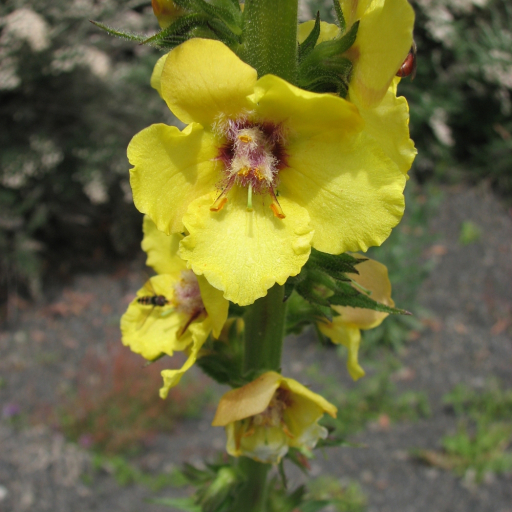
Plant Overview
Often called the Twiggy Mullein or Wand Mullein, this plant is the elegant, slender cousin of the more common, fuzzy Great Mullein. Native to Western Europe but now found wandering across various continents, it is known for its tall, scepter-like spikes that add a dramatic vertical element to any landscape. In folklore, mulleins were often called "Hag’s Tapers" because their dried stalks were dipped in tallow and used as torches.
🔍 How to Identify
- 🌼 The Flowers: Unlike its relatives, the bright yellow flowers of the Twiggy Mullein feature striking purple-hairy filaments in the center, creating a beautiful "violet-eyed" effect.
- 🍃 The Foliage: It starts as a flat rosette of dark green, crinkled leaves. As it matures, it sends up a tall, slightly branched (twiggy) stem that can reach up to 5 feet in height.
- 📏 The Stem: The stem is distinctively "wand-like"—slender but sturdy—and lacks the thick, woolly coating found on many other Verbascum species.
🏡 In Your Garden
- 🧱 The Taproot Rule: This plant develops a long, deep taproot very quickly. This makes it incredibly drought-tolerant, but it also means it hates being moved. Once you plant it, let it stay there; transplanting often leads to a "pouty" plant that may not survive.
- ☀️ Sun Seeker: It is a pioneer species, meaning it loves disturbed soil and maximum sunlight. If your garden has a dry, rocky spot where nothing else will grow, the Twiggy Mullein will likely thrive and happily self-seed for years to come.
⚠️ Safety & Toxicity
- ✅ General Status: Verbascum virgatum is considered non-toxic to humans and common household pets like cats and dogs.
- 🐟 Aquatic Warning: The seeds contain saponins, which were historically used to stun fish in still water. While safe for your dog, keep the seeds away from small garden ponds or fish tanks.
- ☁️ Skin Irritation: The fine hairs on the leaves can be a mechanical irritant to those with very sensitive skin, potentially causing a mild, itchy rash if handled frequently.
✨ Fun Fact
The seeds of the Twiggy Mullein are champions of patience; they can remain dormant in the soil for over 100 years, waiting for the ground to be disturbed and the sun to hit them before they finally decide to sprout!

Detailed Care Instructions
To grow Verbascum Virgatum plants, follow these steps:
- Planting: Choose a location with full sun exposure and well-draining soil. Verbascum Virgatum prefers neutral to slightly alkaline soil. Dig a hole slightly larger than the root ball of the plant and place it in the hole. Backfill with soil and gently firm it around the plant.
- Watering: Water the plant thoroughly after planting and keep the soil consistently moist until the plant establishes itself. Once established, Verbascum Virgatum is drought-tolerant and only requires watering during dry periods or prolonged droughts.
- Pruning: Verbascum Virgatum generally does not require much pruning. However, removing the spent flower spikes after blooming can encourage additional blooms and maintain the plant's appearance.
- Fertilizing: Verbascum Virgatum plants do not typically require much fertilization. However, you can apply a balanced slow-release fertilizer in early spring to provide nutrients for healthy growth.
- Mulching: Mulching around the base of the plant can help retain moisture, suppress weeds, and insulate the roots during extreme temperatures.
- Pests and Diseases: Verbascum Virgatum is generally resistant to pests and diseases. However, keep an eye out for common garden pests such as aphids or slugs. If necessary, treat with an appropriate pesticide or organic pest control method.
- Propagation: Verbascum Virgatum can be propagated through seeds or by dividing mature plants. Collect seeds when the flower spikes turn brown and sow them in pots or directly into the garden. To divide, carefully dig up the plant in early spring or late fall and separate the individual crowns, then replant them.
By following these steps, you should be able to grow Verbascum Virgatum plants successfully. Remember to provide sufficient sunlight, water, and appropriate care to ensure their optimal growth and blooming.

Place in a bright room that is sun drenched almost all day. Or directly in a south-facing window.

1. Choose a well-draining soil for your Verbascum Virgatum plant. It needs soil that doesn't hold onto water.
2. Water your plant deeply once or twice a week, depending on the weather conditions. In summer or during a prolonged dry spell, you can increase the frequency of watering.
3. When watering, make sure the soil is thoroughly moistened. Water at the base of the plant rather than overhead, as this can cause damage to the leaves and flowers.
4. Avoid over-watering your plant as this can lead to root rot and other fungal diseases. Check the soil moisture before watering, and wait until the top inch of soil feels dry.
5. Mulch your plant to help retain moisture in the soil. A layer of organic material like shredded bark or compost can help to keep the soil moist for longer, reducing the need for frequent watering.
6. If you live in an area with high temperatures or low rainfall, consider using a soaker hose or drip irrigation system to water your plant. This will provide a slow, even supply of water directly to the roots, minimizing water loss through evaporation or runoff.
7. Monitor your plant regularly for signs of stress, such as wilted or yellowing leaves. Adjust your watering schedule or soil amendments as necessary to keep your Verbascum Virgatum plant healthy and thriving.
For best results, fertilize the plant in early spring before new growth appears. Use a balanced, slow-release fertilizer with equal parts nitrogen, phosphorous, and potassium. Mix the fertilizer into the soil around the base of the plant, taking care not to disturb the roots. Water the plant thoroughly after fertilizing. Repeat this process once every two months during the growing season. Be careful not to over-fertilize, as this can damage the plant and cause excessive growth.
Verbascum Virgatum should be planted in a well-draining soil that is rich in organic matter. The soil should have a pH level of 6.0-7.0. The plant prefers a slightly alkaline soil, so if the soil is too acidic, it is recommended to add lime. The best soil for Verbascum Virgatum should hold moisture well but not be too wet. It is also important to avoid heavy clay soils, as the plant may struggle to establish roots in such soils. A sandy loam soil is ideal with a good layer of organic matter worked into the topsoil.
Verbascum Virgatum is a versatile and easy-to-grow plant that can be propagated in various ways. One common method is by using stem cuttings. First, select a healthy stem from the mother plant that is at least 4 inches long and without any diseases or pests. Cut the stem at a 45-degree angle using a clean and sharp pair of scissors or pruners.
Next, remove all the leaves from the lower half of the stem, leaving only 2-3 leaves at the top. Dip the cut end of the stem in rooting hormone powder or gel to encourage root growth. Plant the stem cutting in a well-draining potting mix, keeping the cutting moist but not too wet. Place the pot in a warm and bright spot but away from direct sunlight.
After several weeks, the stem cutting should start to develop roots and new growth. Once the new plant has established a strong root system and is actively growing, it can be transplanted into the ground or a larger pot.
Another way to propagate Verbascum Virgatum is by collecting and sowing seeds from the plant. To do this, wait until the flower spikes have finished blooming and the seed pods have dried out. Collect the dry pods and break them open to collect the small brown seeds inside. Sow the seeds in a shallow tray or pot filled with sterile potting soil and lightly cover them with soil. Keep the soil moist but not waterlogged. Place the tray or pot in a warm and bright spot but away from direct sunlight. The seeds should germinate within 1-2 weeks. Once the seedlings have developed a strong root system and true leaves, they can be transplanted into larger pots or directly into the ground.








