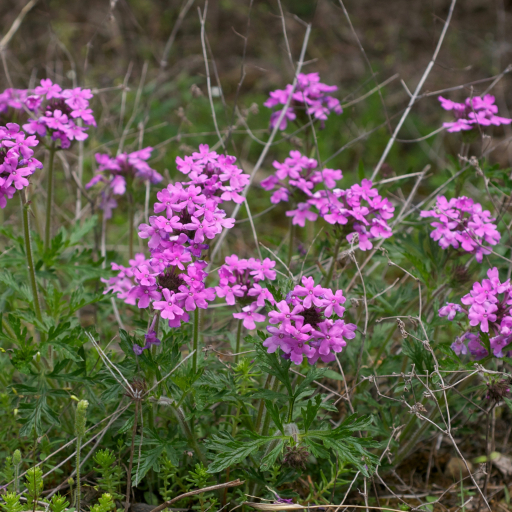
Plant Overview
Often called the Rose Mock Vervain or Clump Verbena, this North American native is a ground-hugging champion of the summer garden. Unlike many delicate ornamentals, it carries the "wild" spirit of the prairies, offering a carpet of magenta and rose that laughs in the face of intense heat. It’s the perfect plant for those who want high-impact color without the high-maintenance drama.
🔍 How to Identify
- 🌸 The Bloom: Small, five-petaled flowers grouped in flat-topped clusters (corymbs). They typically range from soft lavender to a vibrant rose-purple.
- 🍃 The Foliage: Dark green, opposite leaves that are deeply lobed or "toothed" and covered in fine, stiff hairs that give them a slightly rough texture.
- 🌱 The Habit: It grows in a decumbent fashion, meaning the stems sprawl along the ground and turn upward at the tips, creating a dense, blooming mat.
🏡 In Your Garden
- ☀️ Sun Seeker: This plant is a solar battery; it needs full sun to thrive. Without enough light, it becomes leggy and loses its ability to fight off powdery mildew.
- 🏜️ Drought Warrior: Once established, its deep root system makes it incredibly drought-tolerant. It’s often used in rock gardens or on slopes where other plants might wither.
- 🦋 Pollinator Magnet: It serves as a vital nectar station. You will frequently see Swallowtail butterflies and clearwing moths hovering over the clusters from late spring until the first frost.
⚠️ Safety & Toxicity
- ✅ General Safety: Verbena canadensis is widely considered non-toxic to humans, dogs, and cats. It is a "safe bet" for busy family backyards.
- 🧤 Mild Irritant: While not poisonous, the bristly hairs on the stems and leaves can cause very mild mechanical skin irritation (itching) for some gardeners. Wearing gloves during heavy pruning is a good idea.
✨ Fun Fact
- 📜 A "Passalong" Tradition: Because the stems of Rose Verbena naturally root wherever they touch the soil, it has been a favorite "passalong plant" in the American South for generations—gardeners simply snip a rooted runner and hand it over the fence to a neighbor!

Detailed Care Instructions
Here are some steps to help you grow Verbena canadensis:
- Select a suitable location: Choose a spot in your garden that receives full sun or partial shade. The soil should be well-drained.
- Prepare the soil: Before planting, prepare the soil by loosening it with a garden fork or tiller and remove any weeds or large rocks. Adding organic matter such as compost can help improve the soil's fertility and drainage.
- Choose healthy plants: Purchase Verbena canadensis plants from a reputable nursery or garden center. Look for healthy plants with vibrant green leaves and no signs of pests or diseases.
- Planting: Dig a hole slightly larger than the root ball of the plant. Gently remove the plant from its container and place it in the hole. Backfill the hole with soil, firming it gently around the plant's base. Space the plants about 12-18 inches apart to allow for proper airflow and growth.
- Watering: After planting, water the plants thoroughly to help settle the soil and promote root growth. Afterward, water regularly, keeping the soil slightly moist but not waterlogged. Avoid overwatering, as Verbena canadensis prefers slightly drier conditions.
- Mulching: Apply a layer of mulch around the plants to help retain moisture, suppress weeds, and insulate the roots. Use organic mulch like wood chips or straw and spread it evenly around the base of the plants, leaving a small gap around the stems.
- Fertilizing: Verbena canadensis usually doesn't require heavy fertilization. However, applying a balanced slow-release fertilizer during the growing season can help promote healthy growth. Follow the package instructions for application rates.
- Pruning: Prune the plants after the first flush of flowers to encourage bushier growth and more blooms. Remove any dead or damaged stems, and trim back the plants by about one-third. This will also help prevent the plants from becoming leggy.
- Pests and diseases: Verbena canadensis is generally resistant to pests and diseases. However, keep an eye out for common issues like aphids or powdery mildew. Regularly inspect the plants for any signs of damage or infestation and take appropriate action if needed.
By following these steps, you should be able to successfully grow Verbena canadensis plants in your garden. Remember to provide proper care and maintenance to ensure healthy and vibrant blooms.

Place in a bright room that is sun drenched almost all day. Or directly in a south-facing window.

To properly water the Verbena Canadensis plant, follow these steps:
1. Determine the moisture needs: Verbena Canadensis prefers slightly moist soil but does not tolerate waterlogged conditions. It is important to water the plant when the soil starts to dry out but before it becomes completely parched.
2. Check the soil: Before watering, check the moisture level in the soil by inserting your finger or a trowel about one inch deep into the soil. If it feels dry, it's time to water. However, if it feels moist, wait a few more days before watering.
3. Watering technique: When watering, ensure that the water reaches the plant roots. You can achieve this by watering at the base of the plant, close to the soil, rather than spraying the foliage. This helps prevent diseases and ensures the plant effectively absorbs the water.
4. Time of day: It is generally best to water Verbena Canadensis in the morning as this allows excess moisture on the leaves to dry before evening, minimizing the risk of fungal diseases. However, if morning watering is not possible, watering in the late afternoon is an acceptable alternative.
5. Water quantity: Water the plant until the soil is consistently moist throughout the root zone. Avoid overwatering, as this can lead to root rot and other moisture-related issues. Always allow the soil to dry out slightly before watering again.
6. Watering frequency: The frequency of watering will depend on various factors such as climate, weather conditions, and soil type. In general, water Verbena Canadensis deeply but infrequently, allowing the top inch or two of soil to dry out between waterings. This encourages the plant to develop a deep and robust root system.
7. Monitor the plant: Keep an eye on the plant's overall appearance to identify signs of under or overwatering. Drooping leaves or a dull color can indicate insufficient water, while yellowing or wilting leaves might suggest overwatering. Adjust your watering practices accordingly.
Remember, every plant's watering requirements may slightly differ, so it’s essential to observe the individual needs of your Verbena Canadensis throughout its growing season.
To fertilize Verbena Canadensis plant, follow the instructions below:
- Choose a well-draining soil mixture or potting mix suitable for flowering plants.
- Begin fertilizing in the early spring, once new growth starts to appear.
- Dilute a balanced liquid fertilizer, such as a 10-10-10 or 20-20-20, according to package instructions.
- Apply the diluted fertilizer directly to the soil around the base of the plant. Avoid getting the fertilizer on the leaves or stems.
- Water the plant thoroughly after fertilizing to help distribute the nutrients to the roots.
- Repeat the fertilization process every two to four weeks throughout the growing season.
- Adjust the frequency and amount of fertilizer based on the plant's growth and appearance. If it appears healthy and vigorous, reduce the frequency, but if it looks weak or pale, increase the amount and frequency of fertilizer application.
- Generally, it is recommended to stop fertilizing in late summer or early fall to allow the plant to prepare for winter dormancy.
- Monitor the plant for any signs of nutrient deficiencies or excesses, such as yellowing leaves or burnt leaf tips. Adjust the fertilizer application accordingly.
- Always follow the specific instructions and recommendations provided by the fertilizer manufacturer for the best results.
When selecting soil for the Verbena Canadensis plant, it is important to consider its natural habitat and growing conditions. This species tends to prefer well-draining soils that are rich in organic matter. It thrives in a variety of soil types, including loam, sandy, or rocky soils.
The ideal soil should have a pH level ranging from slightly acidic to neutral, ideally between 6.0 and 7.5. This will ensure proper nutrient uptake and overall plant health.
To improve the soil quality, you can incorporate organic matter such as compost or well-rotted manure. This will increase fertility, moisture retention, and promote beneficial microbial activity in the soil.
Since Verbena Canadensis plants prefer well-draining soil, it is crucial to avoid heavy clay soils or those that retain excessive moisture. Poor drainage can lead to root rot and other water-related issues. If you have heavy clay soil, you can enhance drainage by adding coarse sand or perlite to the planting area.
Additionally, the soil should have good aeration to allow oxygen movement around the roots. Regularly loosening the soil around the plant can help prevent compaction and ensure sufficient air circulation.
Overall, providing a well-draining, nutrient-rich, and slightly acidic to neutral soil will promote optimal growth and thriving conditions for the Verbena Canadensis plant.
Verbena Canadensis is a beautiful perennial plant that can be easily propagated through various methods. Here is a detailed explanation of how to propagate Verbena Canadensis:
- Propagation by Seeds:
- Collect the seeds from mature Verbena Canadensis plants. Look for dried flower heads with small brown seeds.
- Prepare a seed tray or small pots with well-draining soil mix. Moisten the soil without making it too wet.
- Sow the seeds on the surface of the soil and gently press them in, ensuring they are in contact with the soil.
- Place the tray or pots in a warm and well-lit area, preferably under grow lights or near a sunny window.
- Keep the soil consistently moist until the seeds germinate, which usually takes 7-21 days.
- Once the seedlings have grown a few sets of true leaves, transplant them into individual pots or a suitable outdoor location.
- Propagation by Division:
- Choose a healthy and mature Verbena Canadensis plant for division.
- Begin by carefully digging up the plant, being cautious not to damage the roots.
- Gently shake off excess soil to expose the root system.
- Determine where to divide the plant. Look for natural divisions in the plant, such as separate clumps or distinct shoots.
- Use a sharp and sterilized knife or gardening tool to separate the plant into smaller sections, ensuring each division has its own set of roots and shoots.
- Plant each division into prepared pots or directly into the ground in a suitable location.
- Water the newly divided plants thoroughly and keep them in a shaded area for a few days to minimize transplant shock.
- Propagation by Stem Cuttings:
- Choose a healthy, non-flowering stem from a mature Verbena Canadensis plant. Ideally, the stem should be about 4-6 inches long.
- Using a clean and sharp pair of gardening shears, make a cutting just below a leaf node.
- Remove the lower leaves from the cutting, leaving a few leaves at the top intact.
- Dip the cut end of the stem into a rooting hormone powder or gel, if desired, to enhance the success rate.
- Insert the cutting into a container or a pot filled with well-draining soil mix or a rooting medium such as perlite or vermiculite.
- Water thoroughly to ensure the soil is evenly moist but not waterlogged.
- Place the container in a warm and well-lit area, but out of direct sunlight.
- Mist the cutting regularly to maintain humidity and prevent wilting.
- Within a few weeks, the cutting should develop roots. You can gently tug on the cutting to check for resistance, indicating that roots have formed.
- Once the roots are established, transplant the cutting into a larger pot or directly into the ground.
By following these propagation methods, you can easily propagate Verbena Canadensis and enjoy the beauty of this plant in your garden or landscape.
Common pests of the rose vervain include Spider mites, aphids, thrips, whiteflies. Make a habit of checking your rose vervain frequently for pests so that any infestations can be caught and managed early.








