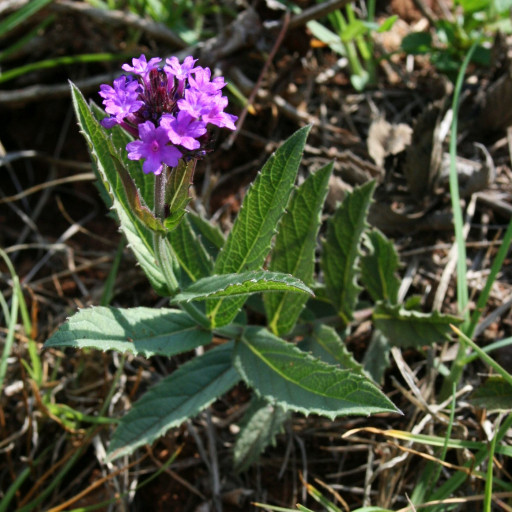
Plant Overview
Known as the "Slender Vervain" or "Tuberous Verbena," this South American native is the rugged, scrappy cousin of the common garden Verbena. It is a favorite among "lazy gardeners" and butterfly enthusiasts alike because it transforms dry, neglected patches into a sea of electric purple. In ancient folklore, Verbenas were often associated with protection and divine intervention, sometimes referred to as "tears of Isis."
🔍 How to Identify
- 🌸 Cluster Blooms: Small, tubular flowers of intense violet or purple are packed into dense, flat-topped clusters that sit atop stiff, square stems.
- 🍃 Sandpaper Foliage: The dark green leaves are stalkless, oblong, and have a distinctively rough, sandpaper-like texture with sharply toothed edges.
- 📏 Low-Profile Growth: It typically reaches about 1 to 2 feet in height but spreads horizontally, forming a dense, carpet-like groundcover.
🏡 In Your Garden
- ☀️ The Sun Worshiper: This plant thrives in "hell strips"—those hot, dry areas between sidewalks and streets—where other plants might wither. It requires full sun to prevent the stems from becoming floppy.
- 💧 Tuberous Resilience: Because it grows from underground tubers (rhizomes), it stores water and energy remarkably well. This makes it incredibly drought-tolerant once established, though it hates "wet feet" or soggy winter soil.
- 🦋 Pollinator Cafe: It is a high-traffic destination for Swallowtail butterflies and bees. Unlike some hybrid Verbenas, Rigida remains a potent nectar source throughout the mid-to-late summer.
⚠️ Safety & Toxicity
- 🐾 Non-Toxic: Verbena rigida is generally considered non-toxic to dogs, cats, and horses, making it a safe choice for pet-friendly landscapes.
- 🤚 Skin Irritation: While not poisonous, the stiff, bristly hairs on the leaves and stems can cause mild mechanical skin irritation. If you have sensitive skin, it’s best to wear gloves when pruning or dividing the plant.
✨ Fun Fact
Despite its delicate-looking flowers, this plant is so tough that it has been known to survive being paved over, only to push its way back up through cracks in the asphalt years later!

Detailed Care Instructions
| Humidity | Normal |
| Lighting | Full Sun |
| Difficulty | Medium |
| Temperature | 5°C - 25°C |
| Hardiness Zones | 7A - 9B |
To grow Verbena Rigida plant, follow these steps:
- Choose the right location: Verbena Rigida prefers full sun but can tolerate partial shade. Select a spot with well-draining soil.
- Prepare the soil: Loosen the soil in the selected area and remove any weeds, rocks, or debris. Enrich the soil with organic matter like compost or well-rotted manure to improve its fertility.
- Sow the seeds: You can either sow Verbena Rigida seeds directly into the ground or start them indoors 6-8 weeks before the last frost date. Sow the seeds around 1/8 inch deep and keep them moist until germination.
- Watering: Once the seeds are planted, water the area gently and keep the soil consistently moist but not waterlogged. Watering from the bottom (using a drip irrigation system or soaker hose) can help prevent overwatering or waterlogging.
- Transplanting (if started indoors): After the danger of frost has passed and the seedlings have developed a few true leaves, transplant them outdoors. Space the seedlings around 12-18 inches apart to allow room for growth.
- Mulching: Apply a layer of mulch around the plants to help retain moisture, suppress weed growth, and regulate soil temperature.
- Maintenance: Regularly water the plants, especially during dry periods. Avoid overhead watering as Verbena Rigida plants are prone to powdery mildew. Deadhead faded flowers to encourage continuous blooming.
- Fertilizing: Feed the plants with a balanced, water-soluble fertilizer every 4-6 weeks during the growing season. Follow the instructions on the fertilizer packaging for the appropriate amount to use.
- Pruning: If the plants become leggy or overgrown, you can prune them back to promote bushier growth and more prolific blooming.
- Pest and disease control: Keep an eye out for common pests like aphids, spider mites, and whiteflies. Treat infestations promptly with appropriate organic or chemical controls. Prevent powdery mildew by ensuring good air circulation around the plants and avoiding overhead watering.
By following these steps, you can successfully grow Verbena Rigida plant and enjoy its colorful blooms.

Place in a bright room that is sun drenched almost all day. Or directly in a south-facing window.

To water this particular plant species, it is important to ensure that the soil is sufficiently moist but not waterlogged. This can be achieved by watering the plant deeply and allowing the excess water to drain away. It is best to water in the early morning or late evening when the sun is not too strong to avoid unnecessary evaporation. Care should be taken to avoid getting water on the foliage as this increases the risk of fungal infections. Additionally, it is important to monitor the plant for signs of over or under watering, such as wilted or yellowing leaves, and adjust the watering schedule accordingly.
To fertilize this plant, use a balanced fertilizer with equal amounts of nitrogen, phosphorus, and potassium. Apply the fertilizer once a month during the growing season, which typically begins in early spring and continues through fall. Be sure to follow the manufacturer's instructions for diluting and applying the fertilizer. Avoid over-fertilizing, as this can lead to excessive growth and reduced flowering.
Verbena Rigida requires well-draining soil that is loamy and nutrient-rich. The soil pH should be slightly acidic to neutral, ideally between 6.0 and 7.5. The plant can grow well in a variety of soil types, including sandy, clay, or rocky soils. However, the soil must have excellent drainage to prevent waterlogging, which can lead to root rot. It is recommended to mix organic matter, such as compost or aged manure, into the soil before planting to improve soil fertility and drainage.
To propagate this plant, take a cutting of a healthy stem during the early summer months. Ensure the cutting is about 4-6 inches in length and remove the lower leaves. Dip the cutting in rooting hormone and plant it in a well-draining soil mix. Water the cutting and cover it with a clear plastic bag or dome to create a humid environment. Place the cutting in a warm, bright location with indirect sunlight. Monitor the soil moisture and mist the cutting occasionally to maintain humidity. After about 4-6 weeks, the cutting should have rooted and can be transplanted into a larger container or directly into the ground.
Common pests of the veined verbena include Scale insect, spider mites, aphids, thrips, whiteflies. Make a habit of checking your veined verbena frequently for pests so that any infestations can be caught and managed early.








