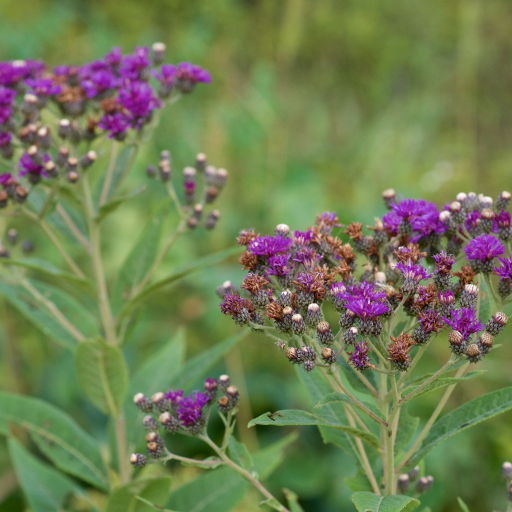
Plant Overview
Commonly known as Baldwin’s Ironweed, this plant is a rugged, purple-crowned monarch of the North American prairies. Its name isn't just for show—the "Ironweed" moniker refers to its incredibly tough, rigid stems and the rusty color of its fading flowers. It is a late-summer hero, providing a high-octane nectar source for butterflies when other blooms have started to wither.
🔍 How to Identify
- 💜 Royal Clusters: It produces dense, fuzzy clusters of vivid purple-to-magenta florets. Unlike daisies, these flowers lack outer "petals," looking more like tiny explosions of color.
- 🌿 Rough Foliage: The leaves are lance-shaped, sharply serrated (like a saw blade), and have a distinctively rough, hairy texture on the undersides.
- 🏗️ Iron Stature: The plant grows tall and strictly upright, usually reaching 3 to 5 feet, with stems so strong they rarely require staking even in high winds.
🏡 In Your Garden
- 🦋 Pollinator Magnet: This is a must-have for "wildlife gardens." It is specifically favored by the Monarch butterfly and several species of long-tongued bees who rely on its late-season energy.
- ⚓ Taproot Toughness: Baldwin’s Ironweed develops a deep, tenacious taproot system. While this makes it incredibly drought-tolerant and "unkillable" once established, it also means it hates being moved. Pick its permanent home carefully!
- 🌾 Naturalizing: In a home landscape, it works best at the back of a border or in a meadow setting. It can be aggressive in small spaces, so deadheading (removing spent flowers) is recommended if you want to prevent it from seeding everywhere.
⚠️ Safety & Toxicity
- ✅ Generally Safe: Baldwin’s Ironweed is considered non-toxic to humans, dogs, and cats.
- 👅 Bitter Defense: While not poisonous, the plant contains bitter compounds that discourage deer and rabbits from munching on it. It’s a great choice if you have local wildlife that usually eats your garden.
- 🧤 Skin Sensitivity: Some sensitive gardeners might experience mild skin irritation from the tiny hairs on the stems; wearing gloves while pruning is a good precaution.
✨ Fun Fact
The "Iron" in its name doesn't just refer to the stem's strength; it also refers to the rusty-brown color of the seed clusters that persist into the winter, looking like weathered metal against the snow.

Detailed Care Instructions
To grow Vernonia baldwinii, also known as Baldwin's ironweed, follow these steps:
- Determine the ideal planting time: Vernonia baldwinii is typically planted in the spring or fall. Choose a time when the temperature is mild and the soil is workable.
- Find a suitable location: Select a spot in your garden that receives full sun to partial shade. The soil should be well-draining, fertile, and rich in organic matter.
- Prepare the soil: Remove any weeds or grass from the planting area. Loosen the soil using a garden fork or tiller, and amend it with compost or aged manure to improve its fertility and drainage.
- Sow the seeds: Sprinkle the Vernonia baldwinii seeds on the prepared soil surface. Lightly press them into the soil, but do not cover them with more soil, as they require light to germinate.
- Water the seeds: Gently water the seeds using a misting nozzle or a fine spray to avoid displacing them. Keep the soil consistently moist until the seeds germinate, which usually takes around 7-14 days.
- Thin the seedlings: Once the seedlings have emerged and grown their first set of true leaves, thin them to provide ample space for healthy growth. Space them around 6-12 inches apart to allow for adequate air circulation and prevent overcrowding.
- Maintain the plants: Water the Vernonia baldwinii regularly, providing supplemental irrigation during dry spells. Mulching around the plants can help retain moisture and control weeds. Monitor for pests and diseases and address any issues promptly.
- Support taller plants: Vernonia baldwinii can grow to a height of 2-4 feet, so consider providing support if they become top-heavy or prone to flopping. Stake or cage the plants to maintain their upright growth.
- Deadhead flowers: To encourage prolonged blooming, remove faded flowers by cutting them back to a healthy lateral bud or node. This will redirect the plant's energy to produce new blooms.
- Harvest seeds (optional): If you want to collect seeds for future planting, allow the flowers to fully mature and dry on the plant. Harvest the dried seed heads and store them in a cool, dry place until ready to sow.
By following these steps, you should be able to successfully grow Vernonia baldwinii in your garden and enjoy its beautiful flowers.

Place in a bright room that is sun drenched almost all day. Or directly in a south-facing window.

To water this particular plant, it is important to first consider the environmental conditions and overall health of the plant. It is crucial to not overwater, as this can lead to root rot and other problems. Instead, wait until the top inch of soil is dry before watering.
When watering, use room temperature or slightly warm water and aim to saturate the soil evenly. Be careful not to get water on the foliage, as this can cause fungal diseases.
During the growing season, which typically extends from spring to fall, water once a week or as needed based on the soil moisture level. During the dormant season, reduce watering frequency to once every two to three weeks.
It is also important to be mindful of the quality of the water being used. Avoid using chlorinated water or water that has been treated with fluoride, as they can harm the plant. Instead, use rainwater or filtered water.
Overall, it is important to regularly monitor the soil moisture levels, adjust watering frequency as needed, and provide the plant with good quality water.
To fertilize this plant, apply a slow-release fertilizer in the early spring and again in the mid-summer. Use a balanced fertilizer with equal amounts of nitrogen, phosphorus, and potassium. Avoid over-fertilizing, as excessive nutrients can harm the plant. Water thoroughly after fertilizing to help the nutrients reach the roots.
The ideal soil for the Vernonia Baldwinii plant is a well-draining soil with a pH range between neutral to slightly acidic. It should be rich in nutrients, especially in nitrogen and phosphorus, to support the plant's growth. Additionally, the soil should be able to retain moisture, but not become waterlogged as this can lead to root rot. The addition of organic matter such as compost or well-rotted manure can improve soil structure and fertility. It is recommended to avoid using heavy clay soils or sandy soils that drain too quickly. The use of a balanced fertilizer during the growing season can also benefit the health and vigor of the plant.
To propagate this plant, you will first need to take a stem cutting from a healthy and mature plant. The cutting should be approximately 4-6 inches in length and taken from the top of the plant. You will then need to remove the leaves from the bottom 2 inches of the stem.
Next, dip the cut end of the stem into rooting hormone powder, which will encourage the development of roots. Place the stem cutting into a pot filled with a well-draining soil mix, such as a mixture of peat moss and perlite.
Water the cutting thoroughly and place it in a warm and bright location, but not in direct sunlight. It is important to keep the soil moist but not waterlogged, as this can lead to rotting.
After about 4-6 weeks, you should start to see roots developing from the cutting. Once roots have formed, you can transplant the new plant into a larger pot or into your garden, taking care not to disturb the roots too much.
With proper care, your new plant should continue to grow and thrive, and may even produce its own stems for future propagation.








