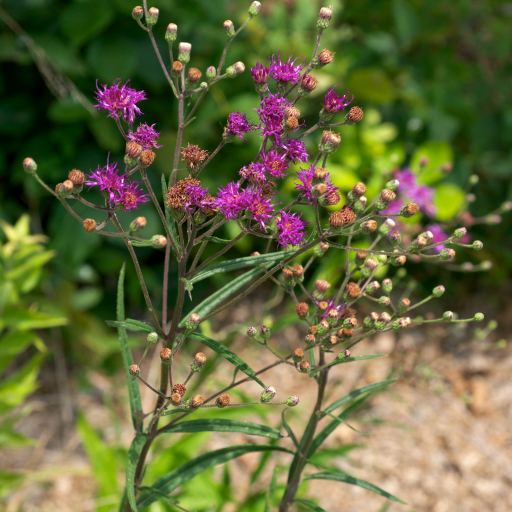
Plant Overview
Known as the Texas Ironweed, this resilient perennial is a true "tough nut" of the southern prairies. Named for its incredibly sturdy, iron-like stems, it stands tall against the heat of mid-to-late summer when other plants begin to wilt. Its deep royal-purple blossoms are a favorite among local pollinators, acting as a vibrant neon sign for migrating butterflies.
🔍 How to Identify
- 💜 The Flowers: Unlike daisies, these blooms lack outer petals. They consist of fluffy, fringed clusters of deep purple or lavender "disk florets" that look like tiny exploding stars.
- 🌿 The Leaves: Long, narrow, lance-shaped leaves grow alternately along the stem. If you run your finger over them, they often feel rough or slightly "sandpapery."
- 🏗️ The Stature: It typically grows between 2 to 5 feet tall on a single, unbranched stem that is remarkably rigid and difficult to break or bend.
🏡 In Your Garden
- ☀️ Sun & Soil: This is a sun-worshiper that thrives in full light. It is particularly adapted to sandy or rocky soils, making it a perfect choice for "wild" or xeriscape gardens where water might be scarce.
- 🦋 Wildlife Magnet: If you want a butterfly sanctuary, this is your plant. It is a major nectar source for Swallowtails, Monarchs, and native bees during the hottest months of the year.
- ⚓ Deep Roots: It develops a significant taproot to survive droughts. Because of this, it hates being moved once established—pick its "forever home" in your garden carefully!
⚠️ Safety & Toxicity
- ✅ Status: Generally considered non-toxic.
- 🐾 Details: Texas Ironweed is safe around pets and livestock. In fact, it is often left untouched by deer and cattle because the leaves are quite bitter, making it a naturally "pest-resistant" addition to your landscape.
✨ Fun Fact
The "Ironweed" name isn't just about the strength of the stem; it also refers to the rusty-colored seed heads that appear after the purple flowers fade, looking like weathered iron in the autumn sun.

Detailed Care Instructions
To grow Vernonia Texana plant, also known as Texas tickseed, you can follow these steps:
- Choose the right location: Vernonia Texana prefers full sun to partial shade. Make sure the chosen spot receives at least 6 hours of direct sunlight per day.
- Prepare the soil: Ensure that the soil is well-draining and fertile. Amend the soil with organic matter, such as compost, to improve its fertility and drainage.
- Planting: Dig a hole slightly larger than the rootball of the plant. Place the plant in the hole, ensuring that the top of the rootball is level with the surrounding soil. Fill the hole with soil, gently firming it around the plant.
- Watering: Water the plant thoroughly after planting and then regularly afterward, especially during dry spells or hot summer months. Vernonia Texana prefers consistently moist soil but can tolerate short periods of drought once established.
- Mulching: Apply a layer of organic mulch around the base of the plant to help retain moisture, suppress weeds, and regulate soil temperature.
- Pruning: Vernonia Texana doesn't require regular pruning. However, you can trim back any dead or damaged stems in early spring to encourage healthy growth.
- Fertilizer: Apply a balanced slow-release fertilizer in early spring to promote vigorous growth. Follow the manufacturer's instructions for the appropriate dosage.
- Pests and diseases: Vernonia Texana is generally not prone to significant pest or disease issues. However, keep an eye out for common garden pests such as aphids or spider mites and treat them accordingly if necessary.
- Propagation: You can propagate Vernonia Texana by collecting and sowing the seeds in early spring or by dividing established clumps in early fall.
Overall, Vernonia Texana is a hardy perennial that is relatively low maintenance and thrives in the right conditions.
To water this plant, you should make sure the soil is dry to the touch before watering it. When watering, you should aim to thoroughly moisten the soil, but avoid overwatering as this can lead to root rot. It is best to water at the base of the plant rather than overhead, and you should avoid wetting the leaves if possible. If the plant is in a container, make sure there is proper drainage to prevent water from accumulating at the bottom. During hotter or drier periods, you may need to water more frequently, while during cooler or wetter periods, less water may be required.
To fertilize this plant, apply a balanced fertilizer with a ratio of 10-10-10 or 12-12-12 in early spring before new growth begins. Apply the fertilizer to the soil around the base of the plant, being careful not to get it on the leaves or stems. Water deeply after fertilizing to help the nutrients reach the roots. Repeat this process once or twice during the growing season if necessary, following manufacturer's instructions for application rates.
Vernonia Texana plant requires a well-draining, slightly acidic soil, with a pH level ranging from 5.5 to 6.5. It prefers soils that are rich in organic matter and nutrients. Sandy loam or loamy soils are ideal for this plant. It is important to avoid heavy, clay soils that retain water for prolonged periods. Adequate drainage is essential to prevent waterlogging, which can harm the roots of the plant. The soil should retain moisture, but excess water should drain away quickly. A mixture of compost, peat moss, and perlite or sand can be used to amend the soil for this plant. Additionally, regular application of balanced fertilizer, such as 10-10-10, can help to support the growth of the plant.
Vernonia Texana can be propagated by taking stem cuttings from a healthy, mature plant. Choose a stem that is around 4-6 inches long and free of any diseases or damage. Using a sharp, clean pair of pruning shears, cut the stem at a 45-degree angle just below a leaf node. Remove any leaves or flowers from the bottom 2 inches of the stem.
Dip the cut end of the stem into a rooting hormone, to encourage root growth. Fill a small container with a well-draining potting mix, such as a mix of peat moss, vermiculite, and perlite. Make a hole in the soil with the end of a pencil or your finger, and insert the stem cutting into the soil, making sure that the bottom 2 inches of the stem are buried.
Water the soil well, until it is evenly moist but not soggy. Cover the container with a plastic bag or plastic wrap to create a greenhouse effect, to retain moisture and warmth. Place the container in a warm, bright location with indirect sunlight.
Check the cutting frequently, and mist the leaves with water to keep them hydrated. After a few weeks, check for signs of new growth, such as fresh leaves or roots growing out of the bottom of the pot. Once the cutting has established roots, remove the plastic bag and gradually expose the plant to more sunlight.
Once the plant is large enough, it can be transplanted into a larger pot or into the garden. Water the plant regularly and fertilize as needed to encourage healthy growth.








