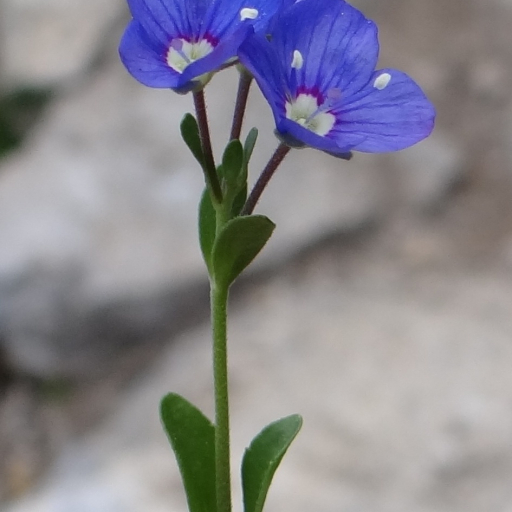
Plant Overview
Known as the Rock Speedwell, this charming alpine native looks like a tiny fragment of the summer sky dropped onto a rugged mountain ledge. While many speedwells are sprawling meadow plants, Veronica fruticans is a refined, woody-based beauty that thrives in the harsh, rocky heights of Europe. Its striking "bullseye" flowers and resilient nature make it a prized gem for rock gardeners and hikers alike.
🔍 How to Identify
- 🌸 The "Red Eye": The most distinct feature is the brilliant deep blue flower with a vivid reddish-pink ring circling a white center, creating a target-like appearance.
- 🍃 Leathery Foliage: The small, dark green leaves are glossy, oval, and slightly thickened, helping the plant retain moisture in windy, exposed environments.
- 🪵 Subshrub Habit: Unlike its softer cousins, this species develops a slightly woody base. It grows in low, neat tufts that rarely exceed 4-6 inches in height.
🏡 In Your Garden
- 🏔️ Mountain Mimicry: To thrive, this plant demands "alpine" conditions. It requires exceptional drainage; planting it in heavy, soggy clay will cause the roots to suffocate. It is best tucked into stone walls, gravel screes, or cracks between paving stones.
- ☀️ Cool Sun: While it loves bright light, it dislikes extreme heat. In its natural habitat, it enjoys "cool feet" provided by the shadows of rocks, so placing a decorative stone over its root zone can help it survive hot summers.
⚠️ Safety & Toxicity
- ✅ Non-Toxic: Veronica fruticans is generally considered safe and is not listed as a poisonous plant for humans, cats, or dogs.
- 🦋 Wildlife Friendly: While safe for pets, it is highly attractive to small pollinators, particularly hoverflies and solitary bees that frequent rocky outcrops.
✨ Fun Fact
The common name "Speedwell" is an old English way of saying "farewell" or "goodbye." In the past, travelers were often gifted these flowers to wish them a "speedy" and safe journey on their travels!

Detailed Care Instructions
To grow Veronica fruticans, also known as dwarf speedwell, you can follow these guidelines:
- Selecting a planting location: Veronica fruticans prefers full sun to partial shade. Choose a well-draining soil that is rich in organic matter. The plant is hardy and can thrive in various soil types, including sandy or clay soils.
- Planting: In early spring or fall, prepare the planting area by loosening the soil and removing weeds. Dig a hole slightly larger than the root ball.
- Soil preparation: Amend the soil with compost or organic matter before planting. This will improve drainage and nutrient availability.
- Planting depth: Place the plant in the hole, making sure the top of the root ball is level with the soil surface.
- Spacing: Space multiple plants about 12 to 18 inches apart to allow for healthy growth and airflow.
- Watering: After planting, water the Veronica fruticans well. It prefers regular watering but can tolerate some drought once established. Be careful not to overwater, as it can cause root rot.
- Mulching: Apply a layer of organic mulch around the base of the plant, leaving space near the stem to avoid excess moisture buildup. Mulch helps retain moisture and suppress weeds.
- Fertilizing: Veronica fruticans doesn't typically require heavy fertilization. However, you can apply a balanced slow-release fertilizer in spring or early summer. Follow the package instructions for the recommended amount.
- Pruning: It's generally not necessary to prune Veronica fruticans. However, to maintain a compact and tidy appearance, you can trim back any dead or straggly stems in early spring.
- Pests and diseases: Veronica fruticans is relatively pest and disease-resistant. However, occasional issues may include aphids or powdery mildew. Regular inspection and proper care will help prevent and manage these problems.
- Propagation: You can propagate Veronica fruticans through division or by taking stem cuttings in late spring or early summer. Ensure the new plants receive appropriate care after propagation.
By following these steps, you can successfully grow Veronica fruticans and enjoy its beautiful flowers and foliage in your garden.

Place in a bright room that is sun drenched almost all day. Or directly in a south-facing window.

Veronica Fruticans is a plant that requires regular watering to grow and thrive. The best way to water this plant is to use a watering can or a hose with a gentle, slow stream of water. It is important not to overwater or underwater this plant, as either condition can cause damage or death.
To determine when to water, it is important to check the soil moisture level. Stick your finger about an inch into the soil near the base of the plant and if it feels dry, it is time to water. The frequency of watering will depend on the climate and conditions where the plant is located. In hot, dry climates, the plant may need to be watered more frequently than in cooler, more humid climates.
When watering, it is important to avoid getting water on the leaves or flowers as this can lead to fungal diseases. Instead, water at the base of the plant and allow the water to soak into the soil. Once the soil is damp, stop watering and allow the excess water to drain away.
It is also important to ensure that the soil is well-draining, as Veronica Fruticans does not tolerate soggy soil. If the soil does not drain well, consider amending it with sand, perlite, or vermiculite to improve drainage.
Overall, watering Veronica Fruticans requires attention to the soil moisture levels and careful, gentle watering techniques to keep the plant healthy and thriving.
To fertilize this plant, use a balanced fertilizer with equal amounts of nitrogen, phosphorus, and potassium. Apply the fertilizer in early spring before the plant begins actively growing. Apply the fertilizer around the base of the plant, avoiding getting it on the foliage. Water the plant immediately after fertilizing to help distribute the nutrients to the roots. Repeat the fertilization once a month during the growing season, up until mid-summer. Avoid fertilizing the plant in late summer and fall to prevent new growth from being damaged by frost.
The ideal soil type for the Veronica Fruticans plant is a well-draining, loamy soil with a slightly acidic pH level between 6.0 and 6.8. The soil should be rich in organic matter and nutrients, but not too heavy or dense to prevent proper drainage. Additionally, the plant prefers soil that is moist but not waterlogged. It is recommended to amend the soil with compost or aged manure prior to planting, and to fertilize with a balanced, slow-release fertilizer throughout the growing season. The plant is not tolerant of salty or alkaline soils, so it is important to avoid using these soil types.
To propagate this plant, first take a healthy stem cutting from the parent plant. Make sure the cutting is approximately 4-6 inches in length and has at least 2-3 leaves. Next, carefully remove the lower leaves from the bottom 1-2 inches of the stem to give room for new roots to grow. Dip the cut end into rooting hormone powder to encourage new root growth. Then, plant the cutting into a well-draining potting mix or soilless mixture and water it thoroughly. Place the pot in a bright and indirect light location and keep the soil moist, but not waterlogged. Over time, the cutting will develop new roots and leaves as it establishes itself independently of the parent plant.








