Plant Overview
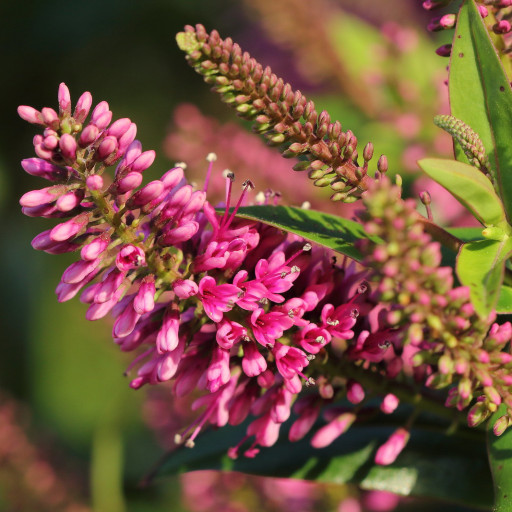
Known widely as the Showy Hebe or Napuka in its native New Zealand, Veronica speciosa is a coastal superstar. This evergreen shrub is famous for its lush, glossy foliage and dramatic "bottlebrush" flowers that seem to glow in the late afternoon sun. It is a favorite for gardeners looking to attract bees and butterflies while adding a touch of the South Pacific to their landscape.
🔍 How to Identify
- 🌿 Leathery Leaves: The foliage is exceptionally thick, glossy, and dark green. The leaves are broad ovals, often measuring up to 4 inches long, and are arranged in neat, opposite pairs along the stems.
- 🍇 Vibrant Racemes: It produces dense, upright flower spikes (racemes) packed with tiny florets. While the most common color is a deep magenta or royal purple, some cultivars lean toward reddish-pink.
- 🌳 Bushy Habit: It naturally forms a tidy, rounded mound. If left unpruned, it can reach about 3 to 5 feet in height and width, creating a dense screen of greenery.
🏡 In Your Garden
- 🌊 Salt Spray Hero: Because it evolved on New Zealand cliffsides, this plant is incredibly salt-tolerant. It thrives in seaside gardens where harsh winds and salty air would wither more delicate species.
- ✂️ The "Leggy" Struggle: This plant has a tendency to become "woody" and bare at the bottom over time. To prevent this, give it a light pruning immediately after the flowers fade; this encourages new, lush growth from the base and a potential second bloom.
- ☀️ Climate Nuance: While it loves the sun, it prefers "cool roots." In very hot inland climates, it appreciates a thick layer of mulch and a bit of afternoon shade to prevent its glossy leaves from scorching.
⚠️ Safety & Toxicity
- 🐾 Pet Friendly: Veronica speciosa is generally considered non-toxic to dogs, cats, and horses. It is a safe addition to a backyard where curious pets roam.
- 👶 Human Safety: There are no known toxic effects for humans. It does not have thorns or irritating sap, making it a "worry-free" plant for households with young children.
✨ Fun Fact
In the mid-19th century, this plant became a "botanical celebrity" in England. It was one of the first New Zealand species to be cross-bred extensively, leading to the hundreds of colorful Hebe hybrids found in garden centers across the world today!

Detailed Care Instructions
To grow Veronica Speciosa plant, also known as Showy Veronica, you can follow the steps below:
- Obtain seeds or starter plants: You can find seeds or starter plants from local nurseries, online sellers, or by collecting seeds from existing plants.
- Choose a suitable location: Veronica Speciosa thrives in full sun to partial shade. Select a well-draining location with loamy or sandy soil.
- Soil preparation: Prepare the soil by removing any weeds, rocks, or debris. Mix in organic matter like compost to improve fertility and drainage.
- Planting seeds or starter plants: If starting from seeds, sow them directly in the garden bed after the last frost date. Lightly cover the seeds with soil. Water gently and keep the soil moist until germination.
- If using starter plants, dig a hole twice the size of the root ball. Place the plant in the hole, fill it with soil, and firm lightly. Water thoroughly after planting.
- Watering: Water the plant regularly to keep the soil moist but not waterlogged. Ensure the soil dries out between watering sessions to avoid overwatering.
- Mulching: Apply a layer of organic mulch, such as wood chips or straw, around the base of the plant to help retain moisture and suppress weed growth.
- Fertilizer: Apply a slow-release, balanced fertilizer once in early spring and again in midsummer to promote healthy growth and blooming.
- Pruning: Trim back any dead or damaged plant material regularly. After blooming, you can prune the plant to encourage bushier growth and more flowers.
- Pests and diseases: Veronica Speciosa is relatively resistant to pests and diseases. However, keep an eye out for snails, slugs, and powdery mildew. Use appropriate pest control methods if necessary.
- Winter care: In colder regions, provide a protective layer of mulch around the plant during winter to help insulate the roots.
By following these steps, you can grow Veronica Speciosa successfully and enjoy its beautiful showy flowers.

Place in a window with dappled sun or a spot in the middle of a room. Or directly in a window facing west or east.

To water this particular plant, it is recommended to thoroughly water the soil until water drips out from the bottom of the pot. It is important to allow the soil to dry out slightly in between watering, as the plant does not tolerate waterlogged soil. Be mindful not to let the soil completely dry out, as the plant may wilt and suffer from dehydration. Additionally, it is important to avoid getting water on the leaves and stems, as this may encourage disease or rot. Instead, water the soil directly at the base of the plant. It is also beneficial to mist the plant occasionally to increase humidity.
To fertilize Veronica Speciosa plant, you can follow these instructions:
- Select a balanced, water-soluble fertilizer for flowering plants.
- Dilute the fertilizer according to the manufacturer's instructions.
- Begin fertilizing in early spring when new growth appears.
- Apply the fertilizer around the base of the plant, avoiding direct contact with the foliage.
- Water the plant thoroughly after applying the fertilizer to ensure it reaches the roots.
- Repeat the fertilization every 4-6 weeks throughout the growing season.
- Adjust the frequency and dosage of fertilization based on the plant's response and the surrounding growing conditions.
- As the plant starts to decline during the fall, reduce or stop fertilizing to allow for natural dormancy.
Remember to always read and follow the instructions provided by the specific fertilizer you choose, as different brands may have slightly different guidelines.
Veronica Speciosa plants prefer well-draining soil that is rich in organic matter. They do well in a soil that is slightly acidic to neutral with a pH between 5.5 to 7.0. Loamy or sandy soil is preferable, but clay can be used if it is amended with organic matter. It is important to avoid using heavy soil that retains too much moisture, as this can lead to root rot. This plant requires a soil that is moist, but not waterlogged, and it should be kept consistently moist during the growing season. Adding a layer of mulch can help retain moisture in the soil and prevent weed growth. Fertilizing the soil with a balanced fertilizer once a month can also help promote healthy growth.
To propagate Veronica Speciosa, follow these steps:
- Start by selecting a healthy and mature plant for propagation. Look for a plant that has strong stems, vibrant leaves, and is free from pests or diseases.
- Prepare a pot or container with well-draining soil mix. You can also use perlite or vermiculite mixed with some peat moss to ensure adequate drainage.
- Take a stem cutting from the parent plant using clean and sharp garden shears. Choose a stem that is around 4-6 inches long and has several leaf nodes. Leaf nodes are the points on the stem where the leaves emerge.
- Remove the lower leaves on the stem, leaving only a few leaves intact at the top. This will encourage the cutting to focus its energy on root development rather than supporting excessive foliage.
- Dip the cut end of the stem into a rooting hormone powder or gel. This will stimulate root growth and increase the chances of successful rooting.
- Make a small hole in the prepared potting mix and insert the cutting into it. Gently press the soil around the base of the cutting to secure it in place.
- Lightly water the cutting, ensuring that the soil is moist but not overly saturated. Excess water can lead to rotting of the cutting.
- Create a mini-greenhouse effect by covering the pot with a clear plastic bag or a propagator dome. This will help retain moisture and create a humid environment that promotes rooting.
- Place the pot in a warm and bright location, but away from direct sunlight. Indirect light will provide the necessary energy for the cutting to grow while avoiding the risk of scorching or overheating.
- Check the moisture level of the soil regularly and water as needed to maintain a consistently moist environment. Avoid overwatering, as it can cause root rot.
- After a few weeks, gently tug on the cutting to check for resistance, indicating root development. Once roots have formed, remove the plastic covering and gradually expose the plant to normal conditions over a week or so.
- Once the cutting has established a strong root system and is displaying healthy growth, it can be transplanted into a larger pot or directly into the garden, depending on your preference.
Remember to regularly monitor and care for the propagated plant, providing it with adequate light, water, and nutrients to encourage its growth and development.
Note: Please be cautious when handling plants, as some may have toxic or allergenic properties.








