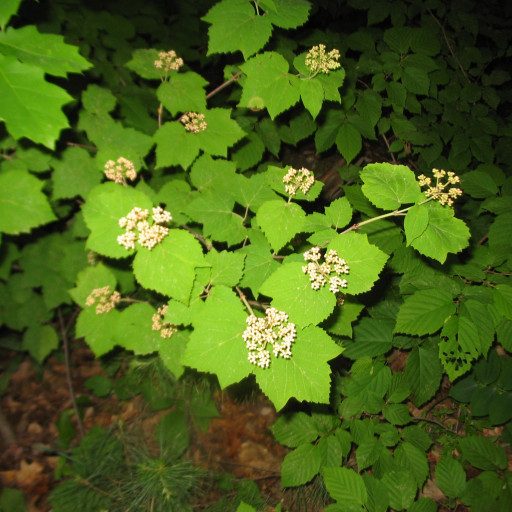
Plant Overview
Known affectionately as the "Mapleleaf Viburnum" or "Dockmackie," this native North American shrub is a master of disguise. At first glance, you might mistake it for a young Maple tree due to its iconic leaf shape, but its multi-stemmed growth and delicate floral clusters tell a different story. It is a quiet hero of the woodland understory, famous for its ability to turn deep shades of velvet purple and pastel pink when autumn arrives.
🔍 How to Identify
- 🍁 Foliage Mimicry: The leaves are three-lobed and strikingly similar to a Red Maple, but they are arranged in opposite pairs along the stem and have a soft, fuzzy texture on the underside.
- ☁️ Flat-Topped Blooms: In late spring, the plant produces "cymes"—flat, fuzzy clusters of tiny, creamy-white flowers that look like lace doilies resting on the branches.
- 🫐 Color-Changing Berries: Small, oval fruits emerge in late summer. They transition through a beautiful color palette, starting as bright crimson before ripening into a waxy, blue-black hue.
🏡 In Your Garden
- 🌳 The Shade Solution: This is one of the few flowering shrubs that actually prefers the shade. It thrives in the "dry shade" found under large canopy trees, making it the perfect solution for those difficult, dark corners of your yard where grass won't grow.
- 🦋 A Pollinator Party: Because it is a native species, it is a vital resource for local wildlife. It serves as a primary host plant for the Spring Azure butterfly and provides high-fat fruit that migratory birds depend on during the fall.
- 🍂 Low Maintenance: Unlike many garden viburnums, this species is incredibly "set it and forget it." It doesn't require heavy pruning and is highly resistant to many common garden pests.
⚠️ Safety & Toxicity
- 🐾 Mildly Toxic to Pets: While the berries are a favorite for birds, they contain tannins that can cause stomach upset, vomiting, or drooling in cats and dogs if ingested in significant amounts.
- 👶 Human Caution: The berries are technically edible and were historically used for jams, but they are quite bitter and can cause mild nausea if eaten raw by children. It is best enjoyed as a visual treat rather than a snack.
✨ Fun Fact
The Mapleleaf Viburnum is a "color rebel" in the autumn forest. While most plants turn yellow, orange, or bright red, this shrub is famous for its unique "fluorescent" fall palette, often turning shades of electric lavender, creamy pink, and pale violet that look almost glowing in the dim forest light.

Detailed Care Instructions
To successfully grow Viburnum acerifolium, a native plant commonly known as mapleleaf viburnum, follow these steps:
- Planting location: Choose a suitable location that provides partial to full shade and well-drained soil. The plant can tolerate a wide range of soil types, including clay. Avoid areas prone to waterlogging.
- Planting time: The best time to plant Viburnum acerifolium is in the early spring or fall when the weather is cooler.
- Prepare the soil: Clear away any weeds or grass from the planting area. Dig a hole that is slightly larger than the root ball of the plant. Loosen the soil and amend it with organic matter if necessary.
- Planting process:
- Place the plant in the hole, ensuring that the top of the root ball is level with or slightly above the soil surface.
- Backfill the hole with soil, gently firming it around the roots.
- Water the plant thoroughly after planting.
- Place the plant in the hole, ensuring that the top of the root ball is level with or slightly above the soil surface.
- Watering: Provide regular water to the plant, especially during the first year after planting. Aim to keep the soil consistently moist, but not waterlogged. However, the plant is somewhat drought tolerant once established.
- Mulching: Apply a layer of organic mulch around the base of the plant, leaving a gap between the mulch and the stem. This helps retain moisture, suppress weeds, and protect the roots from extreme temperatures.
- Pruning: Viburnum acerifolium does not require extensive pruning. However, prune any dead or diseased branches in early spring to maintain the plant's health and appearance.
- Fertilizing: This plant generally does not require much fertilization. However, you can lightly apply a balanced, slow-release fertilizer during the early spring to encourage growth if necessary.
- Protection from wildlife: Viburnum acerifolium berries are attractive to birds, so protect the plant from excessive consumption by installing netting or other deterrents if desired.
- Pest and disease control: Viburnum acerifolium is generally resistant to most pests and diseases. However, keep an eye out for signs of common issues such as aphids, scale insects, and powdery mildew. Treat them with suitable organic or chemical controls if necessary.
By following these guidelines and providing suitable care, you should be able to successfully grow Viburnum acerifolium and enjoy its beautiful foliage and berries.

Place in a window with dappled sun or a spot in the middle of a room. Or directly in a window facing west or east.

Viburnum Acerifolium is a shrub that belongs to the Viburnum genus. It is a deciduous plant that has leaves that resemble those of the maple tree. To water this plant, you should first make sure that the soil around it is dry to the touch. This will indicate that the plant is in need of water. You can then water it at the base of the plant using a watering can or hose. Be careful not to get any water on the leaves, as this can promote the growth of fungal diseases. Water the plant deeply, allowing the water to soak into the soil around the roots. After watering, check the soil around the plant again to make sure it is moist but not waterlogged. Water the plant when needed but do not overwater it.
To fertilize the Viburnum Acerifolium plant, start in the early spring before new growth appears. Use a balanced, slow-release fertilizer with an NPK ratio of 10-10-10 or 20-20-20. Apply the fertilizer evenly around the base of the plant, taking care not to sprinkle it on the leaves or stems. Water the plant thoroughly after fertilizing to help the nutrients penetrate the soil. Repeat the fertilization process every 6-8 weeks during the growing season, but avoid fertilizing during hot summer months or in late fall when the plant is entering dormancy.
The Viburnum Acerifolium plant prefers well-draining soil that is acidic to neutral in pH, with a range of 4.5-7.5. It thrives in partially shaded areas, making it ideal for growing in woodland gardens or under a canopy of trees. The soil should be rich in organic matter and moist but not waterlogged. Adding a layer of organic mulch around the base of the plant can help to retain moisture and regulate soil temperature. It is also important to ensure that the soil is free from herbicides and pesticides, as these can harm the plant.
To propagate this plant, start by taking a 4-6 inch cutting from a healthy stem. Make sure to cut just below a node, where the leaves meet the stem. Remove any leaves from the bottom inch of the stem.
Next, dip the cut end of the stem into rooting hormone powder, which will encourage the growth of roots. Place the stem into a container filled with moist, well-draining soil.
Cover the container with a plastic bag to create a humid environment for the cutting. Keep the soil moist but not saturated, and place the container in a location that receives indirect light.
After a few weeks, the cutting should start to develop roots. Once roots have formed, the plant can be transplanted into a larger container or directly into the ground. It may take a few months for the plant to establish itself, so be patient and continue to care for it properly.








