Plant Overview
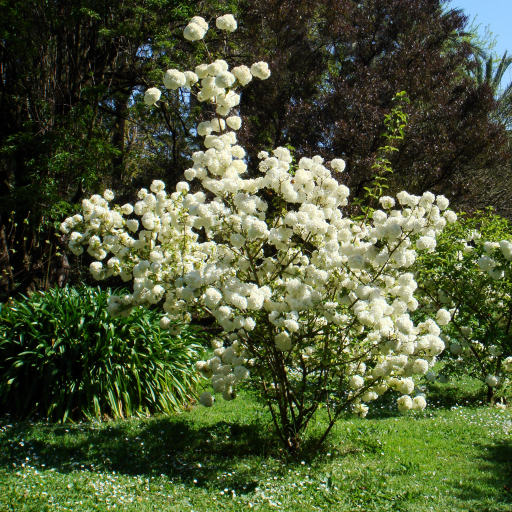
Known as the "Chinese Snowball Viburnum," this spectacular shrub is the ultimate master of disguise. It is frequently mistaken for a giant Hydrangea due to its massive, spherical white flower clusters that can reach the size of a grapefruit. Originating from China, it has become a staple in romantic, cottage-style gardens where it acts as a dramatic focal point in late spring.
🔍 How to Identify
- 🌸 The Snowballs: Dense, globose clusters of flowers that start a trendy lime green before maturing into a brilliant, pure white. Unlike some viburnums, these are unscented.
- 🍃 Quilted Foliage: The leaves are oval, dull green, and have a distinctively rough, "quilted" texture with finely serrated edges.
- 🌳 Growth Habit: A large, multi-stemmed shrub with an upright, spreading shape. It can reach heights of 12 to 20 feet, making it much larger than your average hydrangea bush.
🏡 In Your Garden
- ✂️ Pruning Nuance: This plant blooms on "old wood," meaning it sets its flower buds during the previous summer. If you prune it in late winter or early spring, you will accidentally cut off all of this year's "snowballs." Always prune immediately after the flowers fade.
- 💧 Thirsty Roots: While established plants are somewhat hardy, they prefer consistently moist, well-draining soil. If the soil stays too dry for too long, the leaves may droop dramatically to tell you they are thirsty.
⚠️ Safety & Toxicity
- 🐾 Mildly Toxic: Like many ornamental shrubs, the Chinese Snowball contains compounds that can cause stomach upset if the leaves are eaten in large quantities.
- 🐶 Pet Caution: Keep an eye on curious dogs or cats. Ingestion can lead to vomiting or drooling, though it is not typically considered life-threatening. The berries (which are rare on this sterile cultivar) should also be avoided.
✨ Fun Fact
The flowers of the Chinese Snowball Viburnum are entirely sterile! Because they don't spend any energy producing pollen or seeds, the blooms stay fresh and vibrant on the branch for a much longer period than most other flowering shrubs.

Detailed Care Instructions
Because of its size, the Chinese snowball viburnum is great as a border plant or a living privacy fence, and it can even be trained as a small tree. After the flowering period, this dense, round shrub is fairly understated, blending easily into the rest of the landscape and allowing the summer flowers to steal the show.
My climate is too cold; is there a similar species that I can use?
If you want the huge white flowers of Chinese snowball viburnum but live in a climate that is too cold, then try fragrant snowball (Viburnum x carlcephalum), a hybrid cross between Viburnum macrocephalum and V. carlessii. Its blossoms are not quite as large as those of Chinese snowball, but fragrant snowball is reliably hardy in zones 4 to 8.
How long does a Chinese snowball viburnum live?
In a good growing location and with routine care, including rejuvenation pruning every few years, this shrub will live for many decades; 50-year-old shrubs are common.
To help your Viburnum Macrocephalum plant grow, here are some tips:
- Choose the right location: Viburnum Macrocephalum prefers full sun to partial shade. Ensure they receive at least six hours of direct sunlight each day.
- Soil preparation: Plant your Viburnum Macrocephalum in well-draining, fertile soil. Before planting, amend the soil with organic matter such as compost or aged manure to improve its quality.
- Planting: Dig a hole that is twice as wide and deep as the root ball of the plant. Place the plant in the hole, ensuring that the top of the root ball is level with or slightly above the soil surface. Backfill the hole with soil, gently firming it around the roots.
- Watering: Initially, water the plant deeply to help establish the root system. Afterward, water regularly, especially during dry periods. Avoid overwatering, as it can lead to root rot.
- Mulching: Apply a layer of organic mulch around the base of the plant to help retain moisture and suppress weed growth. Keep the mulch a few inches away from the plant's stem to prevent rot.
- Fertilizer: In early spring, apply a slow-release, balanced fertilizer according to the manufacturer's instructions. This will provide the necessary nutrients for healthy growth.
- Pruning: Viburnum Macrocephalum does not require extensive pruning, but you can shape it or remove dead or damaged branches. Prune after flowering to encourage new growth.
- Pests and diseases: Keep an eye out for common pests like aphids, spider mites, and scale insects. Use appropriate insecticidal soaps or oils to control them. Ensure good air circulation around the plant to prevent fungal diseases.
- Winter protection: If you live in a cold climate, consider providing winter protection such as mulching the base of the plant to insulate the roots.
Remember to regularly monitor the plant's growth, provide adequate care, and make adjustments as necessary.

Place in a bright room that is sun drenched almost all day. Or directly in a south-facing window.

To water this flowering plant, first check the soil moisture level by sticking your finger about an inch into the soil. If it feels dry, it's time to water. Give the plant a thorough watering, making sure the water reaches the roots. Avoid getting the leaves wet, as this can lead to disease. Allow the water to soak into the soil and drain out of the bottom of the pot or soil. Aim to water deeply about once a week, but adjust as needed based on the plant's specific needs and environmental conditions.
To fertilize this plant, spread a controlled-release fertilizer around the base of the plant in the spring or early fall. Use a fertilizer with a balanced N-P-K ratio, such as 10-10-10 or 20-20-20. Water the plant after applying the fertilizer to help it absorb the nutrients. Avoid applying fertilizer during periods of drought or extreme heat, and follow the manufacturer's instructions for application rates.
The ideal soil for Viburnum Macrocephalum is well-draining with a pH level ranging from neutral to slightly acidic. The soil should also be rich in nutrients and organic matter. It is recommended to mix compost or other organic matter into the soil prior to planting to improve soil quality. Additionally, the plant prefers a soil that is moist but not waterlogged. It is important to avoid using heavy clay soil or soil that is too sandy as they can negatively impact the plant's growth and health. Proper soil preparation and maintenance is crucial for the optimal growth and blooming of Viburnum Macrocephalum.
Propagation of this plant can be done through several methods including softwood cuttings, semi-hardwood cuttings, and layering. Softwood cuttings are taken from young, tender shoots in the early summer. Semi-hardwood cuttings are taken from partially matured stems in mid to late summer.
To propagate through softwood cuttings, select a healthy stem from the top of the plant, and remove the leaves from the bottom third of the stem. Dip the cutting in rooting hormone powder, and plant it in a well-draining potting mixture. Place the pot in indirect sunlight and keep the soil moist.
Propagation through layering involves bending a low-growing stem down to the soil and making a small cut in the stem. Place a small amount of soil on top of the cut and hold it down with a rock or wire. Over time, new roots will grow from the stem that is in contact with the soil. Once the new roots have formed, cut the stem from the parent plant and plant the new plant in a well-draining mixture.
Propagation through semi-hardwood cuttings involves taking a cutting from a partially matured stem and following the same steps as for softwood cuttings, except that the cuttings should be placed in a shaded location until they have formed new roots.
Propagation of Viburnum Macrocephalum through any of these methods is easy and rewarding, as this plant adds beauty and fragrance to any garden landscape.








