Plant Overview
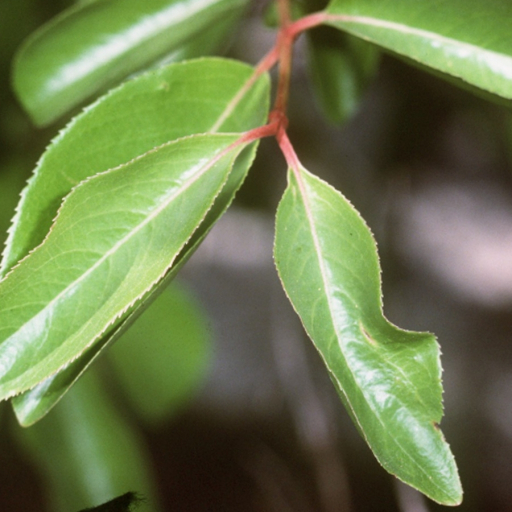
Often called the Blackhaw or Sweet Haw, Viburnum prunifolium is a versatile North American native that bridges the gap between a sturdy shrub and a graceful small tree. It earned its botanical name because its glossy, finely-toothed foliage looks remarkably like that of a plum tree (Prunus). Whether it's providing a lacy white canopy in the spring or a feast of dark berries in the fall, this plant is a storyteller of the changing seasons.
🔍 How to Identify
- 🍃 The Leaves: Glossy, oval-shaped leaves with finely serrated edges. They emerge with a reddish tint in spring, turn a deep forest green in summer, and shift to a breathtaking crimson-purple in autumn.
- 🌼 The Blooms: Showy, flat-topped clusters (cymes) of tiny, creamy-white flowers that appear in late spring, creating a "snow-covered" effect across the branches.
- 🪵 The Bark: On older specimens, the bark breaks into small, square blocks, resembling the rugged texture of an alligator’s hide.
- 🔮 The Fruit: Drooping clusters of berries that transition from yellow-green to pink, eventually maturing into a dusty blue-black color.
🏡 In Your Garden
- 🐦 A Wildlife Magnet: This is one of the best choices for a bird-friendly garden. The dense branching provides excellent nesting sites, while the late-season berries are a high-energy food source for migrating songbirds.
- ✂️ Shape Shifter: Because it has a "suckering" habit (sending up new shoots from the base), it naturally forms a thicket. If you prefer a single-trunk tree look, you’ll need to be diligent about pruning those base sprouts early in the season.
- 💪 Adaptable Nature: While it thrives in moist, well-drained soil, Blackhaw is surprisingly drought-tolerant once established and can handle the "tough love" of urban environments better than many other ornamental shrubs.
⚠️ Safety & Toxicity
- ✅ Safe Status: Viburnum prunifolium is generally considered non-toxic to humans, dogs, and cats.
- 🍇 Edible Nuance: The berries are technically edible for humans and are often described as tasting like raisins or dates. However, they contain large flat seeds, and eating large quantities of raw fruit may cause mild stomach upset in sensitive individuals. Always ensure positive identification before tasting.
✨ Fun Fact
In the 19th century, the bark of the Blackhaw was a staple in American pharmacies. It was widely used in traditional medicine as a "uterine tonic" and antispasmodic to treat various aches, earning it the folk nickname "Cramp Bark."

Detailed Care Instructions
| Color | White |
| Soil Ph | Any |
| Soil Type | Any Type, Well-Drained |
| Bloom Time | Spring |
| Plant Type | Perennial Shrub |
| Mature Size | 15 Feet Tall And 12 Feet Wide |
| Native Area | Eastern And Midwestern United States |
| Sun Exposure | Full Sun To Partial Shade |
| Hardiness Zones | 3–9 |
To grow Viburnum prunifolium, also known as Blackhaw Viburnum, follow these steps:
- Choose a suitable location: Blackhaw Viburnum prefers full sun to partial shade and well-draining soil. It can tolerate a range of soil types but prefers moderately fertile soil.
- Prepare the soil: Clear the area of any weeds or grass. Dig a hole twice as wide as the root ball and slightly deeper. Amend the soil with organic matter such as compost to improve fertility and drainage if needed.
- Planting: Remove the plant from its container and gently loosen the roots. Place the plant in the hole and backfill with soil, firming it lightly around the roots. Make sure the top of the root ball is level or slightly above the surrounding soil.
- Watering: Water the plant thoroughly after planting to settle the soil around the roots. Keep the soil consistently moist but not waterlogged during the first growing season.
- Mulching: Apply a layer of organic mulch, such as wood chips or shredded bark, around the base of the plant to help retain moisture and suppress weeds. Leave a gap around the stem to prevent rot.
- Pruning: Prune Viburnum prunifolium after it finishes flowering in spring if necessary. Remove any dead, damaged, or crossing branches to maintain a healthy structure.
- Fertilizing: Apply a balanced, slow-release fertilizer in early spring to encourage healthy growth. Follow the manufacturer's instructions for application rates.
- Maintenance: Regularly monitor the plant for pests or diseases. Viburnum prunifolium is generally pest-resistant, but occasional issues may arise. Keep the soil consistently moist, especially during dry periods.
- Propagation: Viburnum prunifolium can be propagated from seeds or through softwood cuttings taken in early summer.
With these steps, you can successfully grow Viburnum prunifolium and enjoy its beautiful foliage and late-season berries.

Place in a window with dappled sun or a spot in the middle of a room. Or directly in a window facing west or east.

To water this plant, ensure that the soil is moist but not waterlogged. The frequency of watering will depend on the weather conditions and the plant's growth stage. During hot and dry weather, the plant will require more frequent watering. However, during cooler weather or when the plant is established, watering can be reduced. Water at the base of the plant, taking care not to wet the foliage or flowers. Use a watering can or hose with a watering wand for a gentle and controlled water flow. Always check the soil moisture level before watering to prevent overwatering, which can lead to root rot.
To properly fertilize this plant, you should use a slow-release, balanced fertilizer in early spring before new growth appears. Be sure to follow the recommended application rate on the fertilizer packaging, and water deeply after applying. Avoid fertilizing after mid-summer to prevent stimulating new growth that will be susceptible to frost damage in winter.
It is recommended to use a loose, well-draining soil with moderate fertility for this plant. The pH should be slightly acidic to neutral. The soil should be moist, but not waterlogged, and should provide good aeration to the roots. Adding organic matter, such as compost or aged manure, to the soil can help improve its structure and nutrient content. Avoid using heavy, clay soils or soils that are prone to waterlogging, as this can lead to root rot and other problems.
To propagate this plant, you will need to obtain a stem cutting from a healthy mature plant. The cutting should be about 6 inches long and taken from the current year's growth. Remove the lower leaves of the cutting, leaving only a few leaves at the top. Dip the cut end into rooting hormone powder and plant it in a small pot filled with a well-draining soil mix. Water the cutting thoroughly and place it in a warm, bright location with indirect sunlight. Keep the soil moist but not waterlogged and mist the cutting regularly to maintain humidity. After a few weeks, roots should begin to develop and new growth should appear. Once the cutting has established a good root system, it can be transplanted into a larger pot or directly into the garden.








