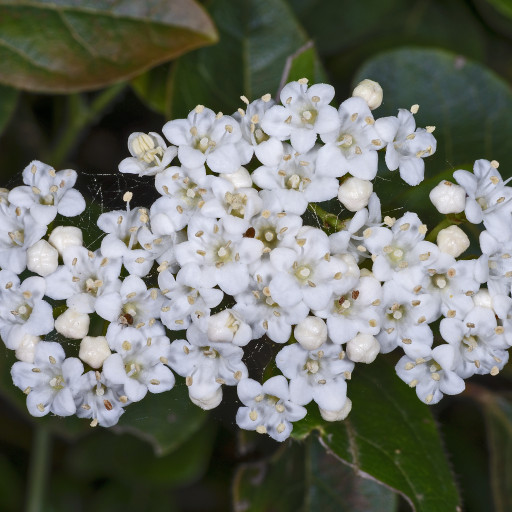
Plant Overview
Known as the Laurustinus, this Mediterranean native is the unsung hero of the winter garden. While most plants retreat into dormancy, this evergreen shrub prepares for its main event, bursting into a cloud of delicate, honey-scented blossoms just as the cold sets in. It is widely prized by gardeners as a "backbone" plant because it provides reliable structure and color when everything else looks bare.
🔍 How to Identify
- 🍃 Foliage: Dense, glossy, dark-green leaves that are oval-shaped and feel slightly leathery to the touch.
- 🌸 Flower Clusters: Tight, rounded clusters (cymes) of tiny pinkish buds that gradually open into star-shaped, fragrant white flowers.
- 🫐 Berries: Unusual metallic, dark blue-black fruits that follow the flowers and often persist on the branches for months.
🏡 In Your Garden
- 🧱 The Privacy Master: Because of its thick, upright growth habit, it is one of the most popular choices for a "living wall" or privacy hedge.
- ⛅ Versatile Lighting: While it flowers most prolifically in full sun, it is famously tolerant of deep shade, making it a perfect "problem solver" for dark corners of the yard.
- 🪴 Low Maintenance: Once established, it is remarkably drought-tolerant and rarely suffers from pests, though it dislikes "wet feet" (poorly draining soil) which can lead to root rot.
⚠️ Safety & Toxicity
- 🐾 Pet Safety: The berries are considered mildly toxic to dogs and cats. Ingestion of large quantities can lead to stomach upset, vomiting, or diarrhea.
- 👶 Human Caution: The fruit is not edible for humans. While not life-threatening, eating the berries can cause nausea and digestive discomfort in children.
✨ Fun Fact
In the Victorian "Language of Flowers," Laurustinus was a symbol of constant devotion or the phrase "I die if neglected." This likely stems from its hardy, evergreen nature—it stays loyal to the garden even in the harshest winter months.

Detailed Care Instructions
To grow Viburnum Tinus, follow these steps:
- Choose the right location: Viburnum Tinus prefers a location that receives full sun to partial shade. It also thrives in well-draining soil. Ensure that the soil is moist but not waterlogged.
- Planting: Dig a hole that is slightly larger and deeper than the root ball of the plant. Place the plant in the hole and backfill with soil, gently tamping it down to remove air pockets. Water the plant thoroughly.
- Watering: Keep the soil consistently moist but not saturated. Water the plant deeply whenever the top 1-2 inches of soil feel dry. During hot and dry periods, it may require more frequent watering.
- Mulching: Apply a layer of organic mulch around the plant to help retain moisture and suppress weed growth. Keep the mulch a few inches away from the plant's base to avoid rotting.
- Fertilizer: In early spring, apply a balanced slow-release fertilizer according to the package instructions. This will provide necessary nutrients for healthy growth.
- Pruning: Viburnum Tinus can be pruned in late winter or early spring to maintain its shape and promote optimum growth. Remove dead, damaged, or crossing branches, and thin out overcrowded areas. Trim any desired shape or height at this time.
- Pests and Diseases: Viburnum Tinus is generally resistant to pests and diseases. However, occasionally, aphids and scale insects can be a problem. Monitor your plant regularly and treat any infestations promptly with insecticidal soap or horticultural oil.
- Propagation: Viburnum Tinus can be propagated through hardwood cuttings or by collecting the seeds. Take semi-ripe cuttings in late summer or collect seeds in autumn. Plant the cuttings or seeds in a well-draining potting mix, keep it evenly moist, and provide them with bright, indirect light. They should root or germinate within a few weeks.
By following these guidelines, you should be able to successfully grow Viburnum Tinus plant.

Place in a window with dappled sun or a spot in the middle of a room. Or directly in a window facing west or east.

To water this plant, you should first ensure that the soil is completely dry before watering again. When watering, gently pour water around the base of the plant, being careful not to let any water sit on the leaves or flowers. Give the plant enough water to moisten the soil to a depth of at least 6 inches, but do not let it become waterlogged. Outdoor plants may require less frequent watering during periods of rainfall, while indoor plants may need more frequent watering if the air in your home is dry. Always monitor the moisture level of the soil to avoid over or under-watering the plant.
- Choose a balanced fertilizer that contains equal amounts of nitrogen, phosphorus, and potassium.
- Apply the fertilizer in the early spring, before new growth begins.
- Avoid over-fertilization, as excessive nutrients can damage the plant.
- Spread the fertilizer evenly around the base of the plant, taking care not to let it come into contact with the foliage.
- Water the plant thoroughly after fertilization to help the nutrients penetrate the soil.
- Repeat fertilization once or twice a year, depending on the growth rate and health of the plant.
- Monitor the plant for signs of nutrient deficiencies, such as yellowing leaves or stunted growth, and adjust the fertilization schedule as needed.
The ideal soil type for Viburnum Tinus plant is a well-draining soil that is rich in organic matter. It should have a pH level of about 5.5 to 6.5. Sandy loam is the best soil type for this plant as it allows for adequate drainage while retaining moisture. The soil should also be fertile and capable of holding nutrients. To improve soil quality, add organic matter such as compost, manure, or peat moss to the soil before planting. This will help to increase soil fertility and improve water retention. It is also advisable to mulch around the base of the plant to help retain moisture and suppress weed growth.
To propagate this plant, take semi-ripe cuttings in late summer or early autumn. Make a clean cut with sharp, sterile pruning shears just below a node. Remove any flowers or berries on the cutting, leaving only leaves. Dip the cut end into rooting hormone powder and plant it into a container filled with a mixture of equal parts peat moss and perlite.
Water the cutting thoroughly and cover it with a plastic bag to create a humid environment. Place it in a bright, but indirect light location and keep the soil moist. After roots have formed, usually in 4-6 weeks, remove the bag and gradually expose the plant to the outside environment. Once established, transplant the plant into a larger container or outside in well-draining soil.
Common pests of the laurestine include Aphids, larvae. Make a habit of checking your laurestine frequently for pests so that any infestations can be caught and managed early.








