Plant Overview
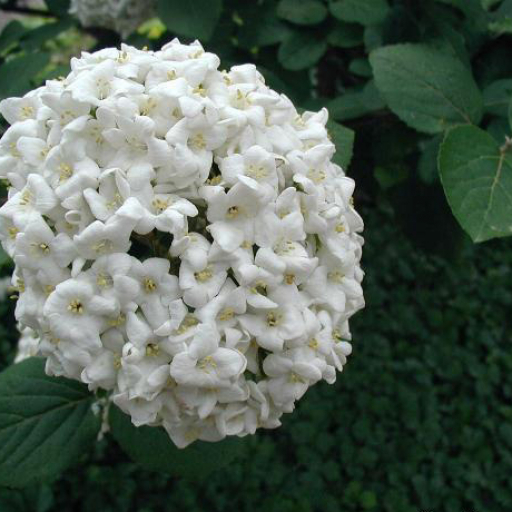
Known as the Fragrant Snowball Viburnum, this shrub is a springtime sensation. It is a prized hybrid celebrated for one thing above all else: an intoxicatingly sweet, spicy perfume that can drift across an entire yard. With its massive, globe-shaped flower clusters, it looks like a collection of late-season snowballs caught in the transition to summer.
🔍 How to Identify
- 🌸 The Blooms: Large, 5-inch wide "snowballs" made of dozens of tiny white tubular flowers. They emerge from striking reddish-pink buds in late spring.
- 🍃 The Leaves: Heart-shaped to oval, grayish-green leaves with a slightly rough, wrinkled texture and finely serrated edges.
- 🌳 The Shape: A sturdy, multi-stemmed deciduous shrub that naturally grows into a tidy, rounded dome, typically reaching 6 to 10 feet in height.
🏡 In Your Garden
- 🌬️ Scent Placement: Because of its intense clove-like fragrance, this plant is best placed near a patio, window, or garden walkway where the breeze can carry the aroma toward your living spaces.
- 🪴 Soil Nuance: While it is a hardy survivor, it hates "wet feet." It requires well-drained soil to thrive; in heavy clay or boggy areas, the roots may struggle. Once established, it is remarkably low-maintenance and rarely needs heavy pruning.
- 🍂 Autumn Interest: Beyond the spring flowers, it provides a second show in the fall when its dusty green leaves turn a deep, wine-red or burgundy purple.
⚠️ Safety & Toxicity
- 🐾 Status: Mildly toxic to pets and humans.
- 🫐 Details: The berries (which appear after flowering) and the foliage contain saponins that can cause stomach upset, vomiting, or diarrhea if eaten in large quantities. While not usually life-threatening, it is best kept away from curious puppies or toddlers who like to "forage" in the garden.
✨ Fun Fact
This plant is a "celebrity hybrid" born in 1932! It was created in England by crossing the Viburnum carlesii (for its scent) with the Viburnum macrocephalum (for its massive flower size), successfully capturing the best traits of both parents in one spectacular shrub.

Detailed Care Instructions
To grow Viburnum x Carlcephalum, also known as fragrant viburnum, you can follow these steps:
- Select a suitable location: Viburnum x Carlcephalum prefers full sun to partial shade, so choose a spot in your garden that receives at least 4-6 hours of direct sunlight per day. Ensure the soil is well-draining and rich in organic matter.
- Planting: Dig a hole that is two to three times wider and as deep as the root ball of the plant. Place the plant in the hole, making sure it is level and centered. Gently backfill the hole with soil, firming it down around the roots.
- Watering: After planting, give the viburnum a thorough watering to settle the soil around the roots. Keep the soil consistently moist, especially during the first year, but avoid overwatering as it can lead to root rot.
- Mulching: Apply a layer of organic mulch, such as wood chips or shredded bark, around the base of the plant. This will help conserve moisture, suppress weed growth, and provide some insulation.
- Fertilizing: In early spring, apply a slow-release or balanced fertilizer according to the package instructions. Additionally, you can use compost or well-rotted manure to enrich the soil and promote healthy growth.
- Pruning: Prune the plant after it has finished flowering to encourage a compact, tidy shape. Remove dead or damaged branches, and thin out crowded areas to improve air circulation.
- Pest and disease control: Viburnum x Carlcephalum is generally resistant to pests and diseases, but you should still monitor the plant for any signs of issues. If necessary, treat any problems with an appropriate insecticide or fungicide, following the instructions on the label.
- Winter protection: Depending on your climate, you may need to protect the plant during colder months. Applying a layer of mulch around the base of the plant and covering it with burlap or a frost blanket can help prevent winter damage.
Remember to regularly monitor the plant's growth, provide adequate water and nutrients, and address any issues promptly to ensure the health and vigor of your Viburnum x Carlcephalum plant.
To provide adequate moisture for the Viburnum X Carlcephalum plant, it is recommended to water it deeply and regularly during its growing season. This can be achieved by gently pouring water at the base of the plant until the soil surrounding the roots is thoroughly moist. It is important to avoid overwatering, which can lead to root rot and other plant health issues. To determine when to water, it is recommended to check the moisture level of the soil by touching the top inch of soil surface. If it feels dry to the touch, it is time to water. Additionally, providing a layer of organic mulch around the base of the plant can help to retain moisture and regulate soil temperature, which can be beneficial for overall plant health.
The best time to fertilize this plant is in late winter or early spring before new growth appears. Use a slow-release fertilizer with a balanced N-P-K ratio, such as 10-10-10, and apply according to the manufacturer's instructions. Avoid fertilizing during the summer months as this can promote excessive vegetative growth and make the plant more susceptible to pests and diseases. Water the plant thoroughly after fertilization to help distribute the nutrients.
The ideal soil for this particular plant is one that is well-draining and rich in organic matter. It should have a pH level ranging from mildly acidic to neutral, between 5.5 and 7.0, as this will encourage healthy growth and prevent diseases. It is important to avoid heavy, clay soils as they can retain too much water and suffocate the roots of the plant. A mix of soil and compost is recommended to provide the necessary nutrients and moisture. The soil should also be loose and airy to allow for good root development. Adding a layer of mulch around the base of the plant can help to retain moisture and regulate the temperature of the soil. Regular fertilization with a balanced N-P-K (nitrogen, phosphorus, potassium) fertilizer will promote vigorous growth and blooming.
Propagation of this particular plant species can be done through various methods including stem cuttings, layering, and seed propagation.
To propagate the plant using stem cuttings, select a healthy stem from the parent plant and cut it off at around 6 inches in length. Remove the lower leaves and dip the cut end in rooting hormone. Place the stem cutting in moist potting soil and keep it in a warm, bright location with adequate humidity. With proper care, the cutting should root within several weeks.
Another method of propagation is through layering. This involves pinning a low-growing branch to the ground and burying the stem portion beneath. Once roots have formed, the new plant can be cut away from the parent and transplanted.
Lastly, seed propagation is another option for propagating this particular plant species. Seeds can be collected from the parent plant and sown in a seed starting mix. Keep the soil moist and in a bright location until the seedlings emerge and can be transplanted to their permanent location.








