Plant Overview
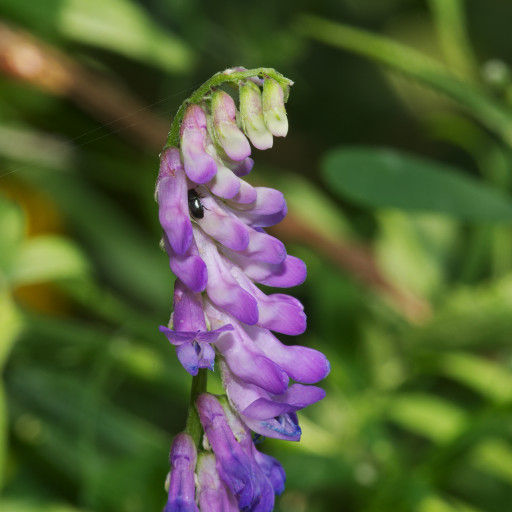
Often called the Tufted Vetch or Bird Vetch, this vibrant member of the pea family is a master of the vertical world. It is famous for its "one-sided" spikes of violet flowers that look like tiny, elegant combs decorating the edges of meadows and hedgerows. While it may look like a delicate wildflower, it is a hardy traveler that has successfully spread from its native Europe and Asia across much of North America.
🔍 How to Identify
- 🪻 Flower Spikes: Dense, one-sided clusters (racemes) of 10 to 40 drooping, violet-blue flowers that all point in the same direction.
- 🌿 Tendril Tips: The feathery, compound leaves end in branching, curly tendrils that the plant uses to "hook" and climb surrounding vegetation.
- 🌱 Vining Habit: A scrambling growth pattern where the weak stems lean on neighbors to reach heights of up to 4 or 5 feet.
🏡 In Your Garden
- 🐝 Pollinator Buffet: This plant is a high-value nectar source, specifically evolved for long-tongued bees and butterflies who are the only ones strong enough to "unlock" the pea-like petals.
- 🛠️ Soil Architect: As a legume, it performs "nitrogen fixation." It hosts special bacteria in its roots that turn atmospheric nitrogen into natural fertilizer, enriching the soil for future generations of plants.
- 🚜 Assertive Grower: Be mindful of where you let it roam; its deep taproot and spreading rhizomes make it difficult to relocate once it decides to call a spot home.
⚠️ Safety & Toxicity
- 🐾 Low Risk: Tufted Vetch is generally considered non-toxic to livestock and common household pets like cats and dogs.
- 👶 Seed Caution: While not considered "poisonous," the raw seeds (peas) contain small amounts of cyanogenic glycosides and should not be ingested by humans or children, as they can cause mild digestive upset.
✨ Fun Fact
📜 The genus name Vicia is derived from the Latin word vincio, which means "to bind." It’s a perfect description for a plant that spends its entire life tying itself to its neighbors with its tiny, green lassos!

Detailed Care Instructions
To grow Vicia cracca, also known as Tufted Vetch, you can follow these steps:
- Select a suitable location: Vicia cracca prefers full sunlight but can tolerate partial shade. Choose an area with well-draining soil.
- Prepare the soil: Loosen the soil and remove any weeds or rocks. Mix in some organic compost to improve fertility and drainage.
- Sow the seeds: Vicia cracca can be grown from seeds. Sow the seeds directly into the soil in early spring or early fall. Lightly cover the seeds with soil, as they require some exposure to light for germination.
- Watering: Keep the soil moist but not waterlogged, especially during the germination period. Once the plants are established, Vicia cracca can tolerate some drought.
- Support: Vicia cracca is a climbing vine and will require support as it grows. Install trellises or other structures for the plant to climb on.
- Mulching: Apply a layer of organic mulch around the base of the plants to help retain moisture and suppress weed growth.
- Pruning: Regularly trim back any excessive growth to keep the plant tidy and encourage branching.
- Fertilizing: Vicia cracca is a nitrogen-fixing plant, which means it can absorb nitrogen from the air. However, if the soil is nutrient deficient, you can apply an organic fertilizer, especially one high in phosphorus and potassium, during the growing season.
- Pests and diseases: Vicia cracca is generally resistant to pests and diseases. However, keep an eye out for aphids or powdery mildew and treat as necessary.
- Harvest: Vicia cracca produces clusters of beautiful purple flowers in summer. You can allow the plants to fully develop, attracting pollinators and adding aesthetic value to your garden.
Remember, Vicia cracca is considered invasive in some regions, so check local regulations before growing this plant.

Place in a bright room that is sun drenched almost all day. Or directly in a south-facing window.

Water should be given to the plant every 2-3 days or when the top inch of soil feels dry to the touch. It is important to avoid overwatering as this can lead to root rot and other issues. When watering, it is best to aim for the base of the plant rather than the leaves or flowers to prevent water from pooling and causing damage. If using a watering can, pour slowly and evenly around the base of the plant. Alternatively, a drip irrigation system can be used to provide consistent and controlled watering. In periods of heavy rain or high humidity, reduce the frequency of watering to prevent waterlogging.
- Identify the appropriate fertilization period for the plant based on its growth stage and environmental factors.
- Choose a balanced fertilizer that contains equal amounts of nitrogen, phosphorus, and potassium.
- Apply the fertilizer at a rate recommended for the plant's specific needs.
- Water the plant thoroughly after fertilizing to help the nutrients reach the roots.
- Avoid over-fertilization, which can damage the plant and harm the surrounding ecosystem.
- Monitor the plant's growth and adjust fertilization as needed to promote healthy growth and development.
The ideal soil for Vicia Cracca plant must have adequate drainage and be rich in organic matter. It should be well-aerated and have a slightly acidic pH level, ideally between 6.0 and 7.0. The soil should provide the plant with the necessary nutrients, including nitrogen and phosphorus, but not be excessively fertile as Vicia Cracca does not thrive in soil that has overly high fertility. It is also essential to ensure that the soil does not have compacted layers, as this can limit root growth, which will affect the health and growth of the plant. It is recommended to use a loamy soil mix that includes materials such as compost, perlite, and sand. Avoid using soil that is too water-retentive, as excess moisture can damage the plant's root system and disrupt its growth.
To propagate the plant, select a healthy mature plant with a good root system. Cut a stem about 6 inches long with a sharp and clean knife or scissors. Remove any leaves from the bottom 4 inches of the stem. Place the stem in a glass of water and cover with a plastic bag to create a humid environment. Change the water every few days to keep it fresh and add a rooting hormone to encourage root growth. Once the roots have developed, transplant the stem into potting soil and keep it well-watered. In a few weeks, the plant should take root and begin to grow.
Common pests of the bird vetch include Spider mites, aphids, thrips. Make a habit of checking your bird vetch frequently for pests so that any infestations can be caught and managed early.








