Plant Overview
The Vicia faba, famously known as the Fava Bean or Broad Bean, is a heavyweight of the ancient world. Unlike most garden beans that hail from the Americas, this hardy legume originated in the Mediterranean and has been a dietary staple since the Bronze Age. Often called the "Windsor Bean," it is beloved by gardeners not just for its buttery seeds, but for its incredible ability to "heal" the soil it grows in.
🔍 How to Identify
- 🌿 Square Stems: Unlike the round, twining stems of green beans, the Fava bean grows on thick, hollow, upright stems that are distinctly square to the touch.
- 🍃 Glaucous Foliage: The leaves are a beautiful matte grey-green (glaucous) and grow in pairs. Unusually for a member of the pea family, they lack the curly climbing tendrils seen on snap peas.
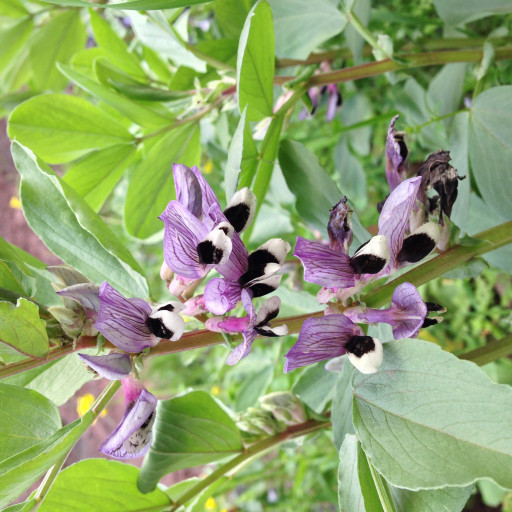
- 🌸 Orchid-like Blooms: The flowers are strikingly beautiful—white, pea-like blossoms featuring a bold, velvety black or deep purple spot on each wing.
🏡 In Your Garden
- 🌱 The Soil Builder: These plants are "nitrogen fixers." Their roots host specialized bacteria that pull nitrogen from the air and store it in the ground, making them the perfect "green manure" to plant before heavy feeders like tomatoes.
- ❄️ The Cool-Weather Warrior: Most beans crave summer heat, but the Fava bean is a rebel. It thrives in the chilly dampness of early spring or late autumn and can even survive light frosts that would kill other garden vegetables.
- 📏 Structural Needs: Because the plants are top-heavy with large pods and lack climbing tendrils, they often require "corral staking" (twine wrapped around stakes) to keep them from flopping over in the wind.
⚠️ Safety & Toxicity
- 🩺 Favism Risk: While delicious for most, Fava beans contain "vincine" which can trigger a serious condition called Favism in people with a specific genetic enzyme deficiency (G6PD). If you have this condition, both the beans and the pollen can be dangerous.
- 🐾 Pet Safety: The plant is generally non-toxic to cats and dogs, but consuming large quantities of raw beans can cause gastrointestinal upset or gas due to high fiber and complex sugars.
✨ Fun Fact
In Ancient Rome, Broad Beans were used as ballots in elections. A white bean signified a "yes" vote, while a black bean meant "no." This tradition is the origin of the term "blackballed" when someone is rejected from a group!

Detailed Care Instructions
| Color | Green, Beige, Brown, Black, Purple |
| Soil Ph | 6.2-6.8 |
| Humidity | Dry |
| Lighting | Part Sun |
| Toxicity | Poisonous |
| Soil Type | Loamy, Moist, Well-Drained |
| Bloom Time | Spring, Summer |
| Difficulty | Medium |
| Plant Type | Annual |
| Mature Size | 2 To 6 Feet Tall |
| Native Area | Asia, Mediterranean |
| Temperature | 18°C - 27°C |
| Sun Exposure | Full Sun |
| Hardiness Zones | 9-12 |
To grow Vicia faba plants, also known as broad beans or fava beans, follow these steps:
- Choose a suitable location: Select a sunny spot in your garden with well-drained soil. The pH level should be between 6 and 7.
- Prepare the soil: Clear the area of any weeds or grass. Loosen the soil using a garden fork or tiller to a depth of around 8-10 inches. Remove stones, debris, and large clumps.
- Planting:
a. Sow the seeds in early spring, as soon as the soil can be worked, or in late winter in mild climates.
b. Make a row or furrow about 2 inches deep. Space the seeds about 4-6 inches apart.
c. Cover the seeds with soil and gently firm it down.
- Watering: Water the planted area thoroughly, ensuring the soil remains moist. Avoid overwatering, as it may cause rotting.
- Care:
a. Mulching: Apply a layer of organic mulch around the plants to retain moisture, suppress weeds, and regulate soil temperature.
b. Support: Once the plants grow to a few inches tall, consider providing support with stakes or trellises, especially if you're growing taller varieties.
c. Fertilizer: Faba beans usually do not require much fertilization if the soil is well-prepared. However, if needed, apply a balanced fertilizer during their growth.
- Pest and disease management: Keep an eye out for pests, such as aphids or black bean aphids, and address them accordingly. Additionally, monitor for diseases like chocolate spot or rust and take appropriate measures if necessary.
- Harvesting: Vicia faba plants usually mature in around 90-110 days. Harvest the beans when the pods are plump and the beans inside are fully developed. Remove the pods from the plant, and either shell the beans or leave them in their pods until ready to use.
Remember to rotate the planting location every year to prevent disease buildup and maximize soil fertility.

Place in a bright room that is sun drenched almost all day. Or directly in a south-facing window.

When irrigating this plant, it is important to ensure that the soil remains consistently moist throughout the growing season. Adequate watering will help to promote healthy growth and maximize yield. To water this plant, it is advisable to use a soaker hose or drip irrigation system that applies water directly to the base of the plant. This will help to prevent excessive moisture from accumulating on the leaves and stems, which can cause fungal diseases. If using a watering can or hose, it is important to avoid getting water on the plant's foliage. Watering should be done early in the morning or late in the afternoon, when temperatures are cooler and evaporation rates are lower. Additionally, it is important to avoid overwatering, as this can lead to root rot and other issues. By monitoring the moisture levels in the soil regularly and adjusting your watering schedule accordingly, you can help ensure that your Vicia Faba plants receive the optimal moisture levels they need to thrive.
To fertilize Vicia Faba plants, you can follow these instructions:
- Start fertilizing when the plants have reached a height of about 4-6 inches.
- Choose a balanced, slow-release granular fertilizer with a ratio of approximately 10-10-10 or similar.
- Apply the fertilizer around the base of the plants, ensuring it is evenly spread within the drip line.
- Use a rake or garden fork to lightly work the fertilizer into the topsoil.
- Water the plants thoroughly after fertilizing to help the nutrients penetrate the soil.
- Repeat the application every 4-6 weeks during the growing season.
- Monitor the plants closely for any signs of nutrient deficiencies or excessive fertilizer burn, and adjust the fertilizer application accordingly.
- In addition to regular fertilization, consider incorporating organic matter such as compost into the soil before planting to provide additional nutrients.
- Remember to follow the manufacturer's instructions for the specific fertilizer you are using, as application rates and frequency may vary depending on the product.
Note: Vicia Faba plants, commonly known as fava beans or broad beans, are known to benefit from nitrogen-rich fertilizers due to their ability to fix atmospheric nitrogen.
The ideal soil for growing Vicia Faba plants should be well-draining and fertile, with a pH level between 6.0 and 7.5. The soil should also be rich in organic matter and have good moisture retention properties. It is recommended that the soil be prepped with a balanced fertilizer before planting the seeds. The use of compost or manure can further improve the soil's quality and nutrient levels. Additionally, adding a layer of mulch to the soil can help retain moisture and protect the plant's roots.
Vicia Faba can be propagated through seeds. First, harvest the mature pods from the plant and allow them to dry completely. Once dried, remove the seeds from the pods and store them in a cool, dry place until ready to plant.
To plant the seeds, prepare a well-draining soil in a sunny spot. Sow the seeds at a depth of about 2 inches and water them well. Keep the soil moist but not waterlogged and ensure the plants receive adequate sunlight.
As the plants grow, thin them out to ensure they have enough space to develop properly. Once the plants have matured, they will produce their own seed pods, which can be harvested and used for future planting.
Common pests of the broad bean include Aphids, whiteflies. Make a habit of checking your broad bean frequently for pests so that any infestations can be caught and managed early.








