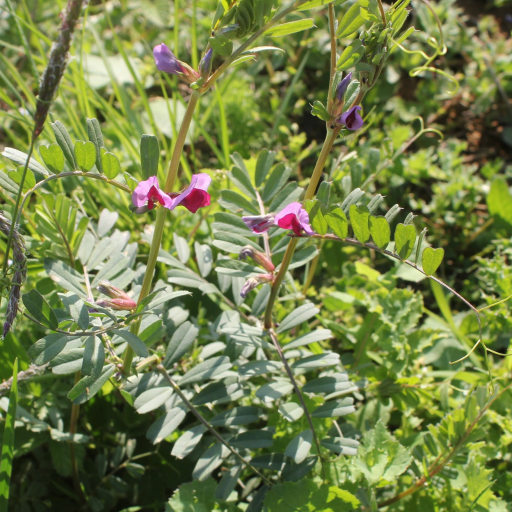
Plant Overview
Often called the Common Vetch or "Garden Vetch," this versatile legume is the unsung hero of the soil. While some gardeners view its wandering stems as a persistent weed, others intentionally cultivate it as a "green manure" to breathe life back into tired earth. It has a charming, scrambling personality, using its tiny, thread-like "fingers" to climb over neighboring plants in search of the sun.
🔍 How to Identify
- 🌿 The Foliage: Feathery, pinnate leaves that grow in opposite pairs. At the very tip of each leaf stem, you’ll find slender, curling tendrils that act like grappling hooks to help the plant climb.
- 🌸 The Flowers: Small, classic pea-like blossoms that typically appear in shades of vibrant magenta, deep purple, or soft lilac. They usually grow in pairs tucked into the "armpit" (axil) where the leaf meets the main stem.
- 🫛 The Pods: As the flowers fade, they are replaced by narrow, flattened green pods. As they ripen, they turn a dark brown or black and will eventually "pop" to scatter their seeds.
🏡 In Your Garden
- 🌱 The Soil Architect: Common Vetch is a nitrogen-fixer. It forms a partnership with soil bacteria to pull nitrogen from the air and "pump" it into the ground, making it a perfect natural fertilizer for your next crop of heavy-feeders like tomatoes or corn.
- 🧗 The Scrambling Habit: Because it loves to climb and spread, it can easily smother smaller, delicate seedlings. If you are using it for soil health, it is best to chop it back before it sets seed, or you may find it popping up in every corner of your garden next spring.
⚠️ Safety & Toxicity
- 🐾 Moderate Risk: While the foliage is generally harmless to touch, the seeds contain cyanogenic glycosides and other compounds that can be toxic if eaten in large quantities.
- 👶 Keep Away from Kids: Ensure children do not mistake the seed pods for edible garden peas, as ingestion can lead to digestive upset or more serious symptoms if consumed in bulk.
- 🐴 Livestock Note: While used as forage, some livestock (particularly horses) can develop "vetchism"—a toxic reaction—if they consume too much of the seed.
✨ Fun Fact
✨ An Ancient Staple: Long before it was considered a common weed, Vicia sativa was gathered by prehistoric humans. Archeological evidence shows that these seeds were part of the human diet in the Near East as far back as the Neolithic period, nearly 10,000 years ago!

Detailed Care Instructions
To grow Vicia sativa, also known as common vetch or spring vetch, follow these steps:
- Choose the right location: Vicia sativa prefers full sun to partial shade, so select a spot that receives at least 6 hours of sunlight per day. The soil should be well-drained and fertile.
- Prepare the soil: Clear the area of any weeds or debris. Loosen the soil with a garden fork or tiller to improve drainage and break up any compacted soil. Add organic matter such as compost or well-rotted manure to enrich the soil.
- Sow the seeds: The best time to sow Vicia sativa seeds is in spring or early fall. Scatter the seeds evenly over the prepared soil. You may need to mix the seeds with sand or potting soil to ensure even distribution. Alternatively, you can sow the seeds in rows, spacing them about 6 inches apart.
- Cover the seeds: Lightly rake the soil over the seeds, covering them with a thin layer of soil. Vicia sativa seeds require exposure to light to germinate, so avoid burying them too deep.
- Water regularly: Keep the soil consistently moist but not waterlogged. Water the plants regularly, especially during dry periods. Avoid overhead watering to prevent the spread of diseases.
- Support if needed: Vicia sativa has tendrils that help it climb, but if you want to encourage it to grow upright, you can provide trellises or stakes for support.
- Control weeds: Regularly remove any weeds that compete with Vicia sativa for nutrients and water. Be careful not to disturb the plant's roots while weeding.
- Watch for pests and diseases: Monitor for common garden pests like aphids or slugs. Use eco-friendly pest control methods if necessary. Additionally, keep an eye out for diseases like powdery mildew or rust and take appropriate measures, such as applying fungicides if needed.
- Harvesting: Vicia sativa can be harvested when the pods are mature and dry. Harvest the seeds by cutting the plant at the base and hang it upside down in a dry, well-ventilated area. Once the pods are fully dry, remove the seeds by threshing or gently rubbing them.
Remember to always refer to specific growing instructions on the seed packet or consult local gardening resources for more detailed information on growing Vicia sativa in your specific climate and conditions.

Place in a bright room that is sun drenched almost all day. Or directly in a south-facing window.

To properly water this plant, be sure to moisten the soil thoroughly but avoid overwatering. Allow the soil to dry out slightly before watering again, as this plant prefers moist but well-draining soil. When watering, apply water gently to the base of the plant, avoiding the leaves and flowers. It is best to water in the early morning or late evening to avoid evaporation and to minimize water loss through transpiration. Additionally, be mindful of the amount of water applied during different seasons and adjust as necessary to meet the plant's needs.
- Start by testing the soil to determine the pH level. Vicia Sativa prefers a slightly acidic soil with a pH of 6.0-7.5.
- Apply a balanced fertilizer to the soil before planting the seeds. Use a fertilizer that contains equal amounts of nitrogen, phosphorus, and potassium.
- After the first true leaves have emerged, apply a nitrogen-rich fertilizer to the soil. Nitrogen is essential for leafy growth, and Vicia Sativa requires higher levels of nitrogen than other nutrients.
- Top-dress the soil with compost or well-rotted manure to enrich the soil with organic matter. This will provide a slow-release supply of nutrients that will improve soil structure and fertility.
- Water the plant regularly and deeply, especially during dry spells. Moist soil is essential for the proper uptake of nutrients.
- Avoid over-fertilizing the plant, as this can lead to excessive growth and reduced yield. Follow the manufacturer's instructions for application rates and frequency.
- Monitor the plant for signs of nutrient deficiencies, such as yellowing leaves or stunted growth. Adjust the fertilizer application accordingly to ensure optimal growth and health.
When cultivating the plant with the scientific name Vicia Sativa, it is recommended to use a loose and well-draining soil. It should have a neutral to slightly alkaline pH level and should be rich in organic matter. The soil should be able to retain moisture while also allowing excess water to drain away easily. Additionally, it is important to avoid using soil that is too heavy or compact as this can lead to poor root development and stunted growth. High-quality potting soil or a mixture of garden soil and compost can be suitable options for growing Vicia Sativa plants.
One way to propagate this plant is through seed propagation. First, collect mature seeds from the parent plant and remove any dead or damaged seeds. Soak the seeds overnight in water to soften the seed coat. Then, plant the seeds at a depth of approximately 2-3 times their size in a pot or container filled with well-draining soil. Water the soil thoroughly and place the pot in a warm, bright location to encourage germination.
Another method of propagation is through vegetative propagation, specifically through stem cuttings. Choose a healthy stem from the parent plant and cut it at an angle, making sure the cutting is at least 3-4 inches long. Remove any leaves from the bottom 2 inches of the stem and dip the cut end in rooting hormone powder. Plant the cutting in a pot filled with well-draining soil, water thoroughly, and cover the pot with a plastic bag or cloche to provide high humidity for rooting. Keep the cutting in a bright, warm location and remove the cover once roots have formed and new growth is visible.








