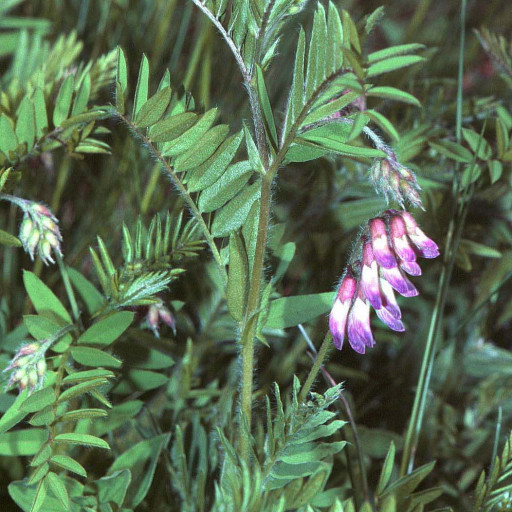
Plant Overview
Known as the "Vetch," these hardy climbers are the unsung heroes of meadows and farmsteads alike. With their delicate, curling tendrils and vibrant pea-like blossoms, members of the Vicia genus have been used for centuries to restore tired soil and provide fodder. Whether you see them as a charming wildflower or a persistent garden "hitchhiker," they play a vital role in the ecosystem by feeding both the earth and the bees.
🔍 How to Identify
- 🌿 The Foliage: Look for "pinnate" leaves that resemble tiny green feathers. These leaves almost always end in a thin, wiry tendril that the plant uses to "lasso" and climb nearby stalks.
- 🌸 The Bloom: They produce classic pea-shaped flowers, often in shades of violet, magenta, or soft blue, usually arranged in one-sided clusters or pairs where the leaf meets the stem.
- 🫛 The Pods: After flowering, they develop small, flattened seed pods. When ripe, these pods often twist and pop open to catapult their seeds away from the mother plant.
🏡 In Your Garden
- 💪 The Nitrogen Fixer: Vetch is a "green manure" superstar. It hosts special bacteria on its roots that pull nitrogen from the air and turn it into plant food, naturally fertilizing your soil as it grows.
- 🧗 The Scrambler: While beneficial, its climbing habit means it can quickly "smother" smaller, delicate seedlings. If it pops up in your flower beds, it is best to provide a trellis or keep it away from low-growing prize blooms.
⚠️ Safety & Toxicity
- 🐾 Pet Safety: Most common vetches are generally safe to touch, but the seeds of certain species contain cyano-compounds that can be harmful to pets and livestock if consumed in large quantities.
- 🍽️ Human Consumption: While the Broad Bean (Vicia faba) is a famous edible member of this family, many wild vetches are not fit for human consumption and can cause digestive distress or more serious reactions (like favism) in sensitive individuals.
✨ Fun Fact
🏛️ The famous Roman orator Cicero actually derived his name from this plant family! "Cicer" is the Latin word for chickpea (a close relative of the vetch), and legend says one of his ancestors had a cleft in his nose that looked just like a vetch seed.

Detailed Care Instructions
To grow Vicia plants, follow these steps:
- Choose a suitable location: Select an area where the Vicia plants can receive full or partial sunlight. The soil should be well-draining and fertile.
- Prepare the soil: Remove any weeds, rocks, or debris from the planting area. Loosen the soil using a garden fork or tiller, and add organic matter (such as compost) to improve soil fertility and drainage.
- Planting: Sow the Vicia seeds directly into the prepared soil. Space the seeds about 3-4 inches apart and plant them about 1 inch deep. If you are planting a large number of seeds, you can also create rows with a spacing of about 12-18 inches between each row.
- Watering: The soil should be kept consistently moist but avoid over-watering. Water the plants regularly, especially during dry periods, to help with germination and growth. Aim to provide about 1 inch of water per week.
- Support: As Vicia plants grow, they often require support to help them climb and stay upright. You can use trellises or stakes to provide support to the plants, especially if they are of a climbing variety.
- Mulching: Apply a layer of organic mulch, such as straw or wood chips, around the base of the plants. This helps to conserve moisture, suppress weed growth, and protect the plants' roots.
- Fertilization: Vicia plants are nitrogen-fixing legumes, meaning they convert atmospheric nitrogen into a usable form for themselves and soil. Therefore, they generally do not require additional nitrogen fertilizers. However, if the plants show signs of nutrient deficiencies, you can apply a balanced organic fertilizer according to the package instructions.
- Pruning: Vicia plants do not usually require pruning. However, if they become too leggy or spread excessively, you can trim the plants to maintain shape and control growth.
- Harvesting: Vicia plants produce edible pods containing beans that can be harvested once they have matured. Harvest the pods when they are full, but before they dry on the plant. To encourage more pod production, remove mature pods regularly.
By following these steps, you can successfully grow Vicia plants. However, it's always a good idea to consult regional gardening guides or contact local agricultural extension services for specific recommendations based on your location and climate.

Place in a bright room that is sun drenched almost all day. Or directly in a south-facing window.

It is recommended to water this plant deeply and infrequently, allowing the soil to dry out slightly between waterings. When watering, it is important to ensure that the water reaches the root zone of the plant, rather than just the surface of the soil. Over-watering can lead to root rot and other issues, so it is important to monitor the moisture level of the soil and adjust watering accordingly. Additionally, this plant may benefit from being watered from the bottom rather than the top, as this can help prevent issues with fungal growth.
To fertilize Vicia plants, you should apply a nitrogen-rich fertilizer in the early spring. To avoid over-fertilizing, it's best to use a slow-release fertilizer. You can also use organic fertilizers, such as compost or aged manure. Apply the fertilizer evenly around the base of the plants, being careful not to disturb the roots. Water the plants thoroughly after fertilizing. Avoid fertilizing during hot and dry weather, as this can damage the plants.
The soil used for Vicia plants should be well-draining with a pH level that is slightly acidic to neutral. The soil should also have good natural fertility and be enriched with organic matter. It is recommended to avoid using soil that is heavy or compacted, as this can restrict root growth and result in poor plant growth. Additionally, the soil should be damp but not waterlogged, ensuring that excess water can drain away easily. A suitable soil mix can be created by combining equal parts of compost, sand, and loam.
There are different ways to propagate Vicia plants, including seed propagation, stem cuttings, root cuttings, and layering. Here are some general instructions for each method:
Seed propagation:
- Collect mature seeds from the parent plant.
- Soak the seeds in water overnight to soften the seed coat.
- Sow the seeds in well-draining soil in a sunny location.
- Keep the soil moist but not waterlogged.
- Germination may take 7-21 days depending on the species and conditions.
Stem cuttings: - Select healthy stems from the parent plant that are at least 10 cm long and have several nodes.
- Cut each stem just below a node using a clean, sharp knife or pruner.
- Remove the lower leaves from the cutting, leaving only 2-3 leaves at the top.
- Dip the cutting in rooting hormone powder or gel.
- Plant the cutting in well-draining soil or a rooting medium such as peat moss or sand.
- Keep the soil moist and place the cutting in a warm, bright location out of direct sunlight.
- Roots should develop in 3-6 weeks.
Root cuttings: - Dig up the parent plant and carefully remove some of the roots.
- Cut the roots into sections that are 2-5 cm long.
- Plant the root cuttings horizontally in a well-draining soil mix.
- Cover the cuttings with a thin layer of soil and water them.
- Keep the soil moist but not waterlogged.
- New shoots should emerge from the cuttings in a few weeks.
Layering: - Identify a healthy branch on the parent plant that is close to the ground.
- Remove the leaves and small shoots from the lower section of the branch.
- Make a small wound in the bark of the branch where it contacts the soil.
- Bury the wounded part of the branch in well-draining soil, leaving the top of the branch above the soil surface.
- Secure the branch to the soil with a U-shaped wire or stake.
- Water the soil around the branch and keep it moist.
- Roots should develop from the wounded section of the branch in a few weeks.
- Once the new roots are well-established, cut the branch from the parent plant and transplant it to a new location.







