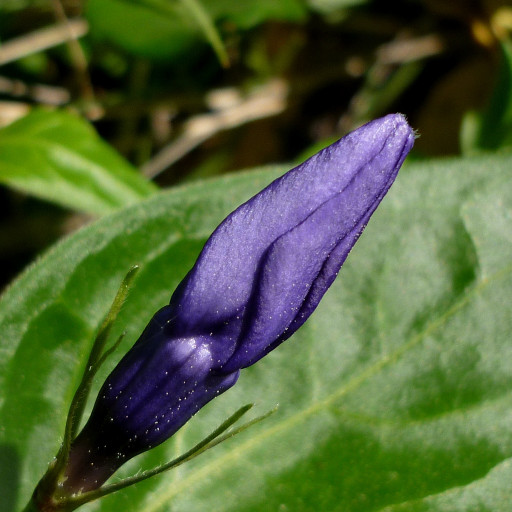
Plant Overview
Often called the "Greater Periwinkle" or "Blue Buttons," this Mediterranean native is a resilient, trailing evergreen that has found its way into gardens worldwide. Known historically as the "Sorcerer’s Violet," it was once believed to protect against evil spirits and was frequently used in folklore charms. Its ability to thrive in deep shade where other plants wither makes it a favorite for woodland gardens and "problem" corners.
🔍 How to Identify
- 🍃 Lush Foliage: The leaves are large, shiny, and dark green, typically shaped like broad ovals or hearts with a slightly hairy edge.
- 🌸 Pinwheel Blooms: It produces striking violet-blue (sometimes white) flowers with five petals that flare out like the blades of a pinwheel.
- 🏃 Trailing Stems: The plant spreads via long, arching stems (stolons) that crawl along the ground, rooting wherever they touch the soil to create a dense mat.
🏡 In Your Garden
- 🌱 The Ultimate Shade Cover: Unlike many flowering plants, Vinca major isn't shy about the dark. It is perfect for suppressing weeds under large trees or covering steep banks where mowing is impossible.
- 🚜 Management is Key: Because it roots at every node, it can become "too successful." In some regions, it is considered invasive. To keep it contained, it’s best to plant it in areas with natural borders or in large containers where its trails can spill over the edges.
- 💧 Drought Resistance: Once its root system is established, it is remarkably tough. While it prefers moist soil, it can survive periods of neglect and dry spells that would kill more delicate groundcovers.
⚠️ Safety & Toxicity
- 🚫 Status: Toxic to ingest.
- 🐾 Pet Warning: Vinca major contains vinca alkaloids which are toxic to dogs, cats, and horses. If eaten, it can cause upset stomachs, tremors, or low blood pressure.
- 👶 Human Safety: While not usually fatal to humans, ingestion can cause intestinal distress. It is best to wear gloves when pruning if you have sensitive skin, as the sap can occasionally cause mild irritation.
✨ Fun Fact
In medieval England, Vinca major was often woven into the hair of those being led to the gallows. This macabre tradition earned it the nickname "Flower of Death," though in later centuries, it reclaimed a more romantic meaning as a symbol of "everlasting memory."

Detailed Care Instructions
| Color | Showy, Violet Flowers |
| Humidity | High |
| Invasive | Weed |
| Lighting | Part Sun |
| Toxicity | Poisonous |
| Soil Type | High Organic Matter And Loam |
| Bloom Time | Spring |
| Difficulty | Medium |
| Plant Type | Herbaceous Perennial |
| Mature Size | 0.5-1.5 Feet Tall With A Spread Of 1-2 Feet |
| Native Area | Mediterranean Europe, Asia Minor, And Northern Africa |
| Temperature | 12°C - 25°C |
| Sun Exposure | Full Sun, To Dappled Sunlight, To Deep Shade |
| Hardiness Zones | 7 To 9 |
To grow Vinca Major plants, follow these steps:
- Find a suitable location: Vinca Major prefers partial shade to full sun. Choose an area with well-draining soil.
- Prepare the soil: Clear the area of weeds and debris. Add organic matter, like compost or aged manure, to enrich the soil.
- Planting: Dig a hole that is slightly larger than the root ball of the Vinca Major plant. Place the plant in the hole, making sure the top of the root ball is level with the soil surface. Backfill the hole and gently tamp down the soil around the plant.
- Watering: Water the Vinca Major thoroughly after planting, and keep the soil consistently moist but not waterlogged. Once established, these plants are relatively drought-tolerant.
- Mulching: Apply a layer of organic mulch, such as wood chips or straw, around the base of the plant to help conserve moisture and suppress weed growth.
- Fertilizing: Feed the Vinca Major with a balanced, slow-release fertilizer once or twice a year according to the package instructions. Alternatively, you can use a diluted liquid fertilizer every few weeks during the growing season.
- Pruning: To encourage dense growth and prevent legginess, pinch back the growing tips of Vinca Major plants regularly. This will also promote the formation of more flowers.
- Pests and disease control: Vinca Major is generally resistant to pests and diseases, but occasional issues like aphids or leaf spot may occur. Remove any affected leaves or treat pests using organic or chemical methods if necessary.
- Maintenance: Regularly remove any dead or faded flowers to encourage continuous blooming. Vinca Major is a fast-growing ground cover, so occasional trimming to contain its spread may be necessary.
Overall, Vinca Major (Greater Periwinkle) is a hardy and low-maintenance plant that can thrive in a variety of conditions. With proper care and a suitable environment, it should grow well and provide attractive ground cover with its vibrant flowers.

Place in a window with dappled sun or a spot in the middle of a room. Or directly in a window facing west or east.

To water this plant, ensure that the soil is dry to the touch before watering. This plant prefers well-draining soil, so it is recommended to use a pot with drainage holes or plant in a location with well-draining soil. When watering, ensure that the water flows through the soil and out of the drainage holes to avoid root rot. Water deeply but allow the soil to dry out between watering. Avoid getting water on the leaves as this can lead to fungal diseases. During hot and dry weather, increase watering frequency to prevent the plant from drying out.
To fertilize the plant, use a balanced slow-release fertilizer in early spring. Apply the fertilizer evenly around the root zone, being careful not to touch the leaves or stems. Water the plant thoroughly after fertilizing. Repeat the process every 4-6 weeks during the growing season. It is important to not over-fertilize as it can cause damage to the plant.
The best soil to use with this plant should be a well-draining soil with a neutral pH level. It should also be enriched with organic matter and nutrients, such as compost or aged manure, to promote healthy growth. This plant prefers moist soil but is tolerant of drought conditions once established. It is important to avoid soils that are too heavy or compacted, as this can lead to root rot and other issues. Overall, a loose, nutrient-rich, and well-draining soil will provide the ideal growing environment for this plant.
Vinca major can be propagated through stem cuttings. The first step is to find a healthy and mature plant to take cuttings from. The stem should be about 4-6 inches in length and have at least two nodes where leaves emerge.
Using a sharp, sterile knife or scissors, make a clean cut just below the node. Remove the lower leaves of the stem, leaving only a few at the top. This will reduce the risk of the cutting losing moisture and help prevent any fungal infections.
Once you have prepared the cuttings, they can be planted in a container filled with moist potting soil or directly into a well-draining soil outdoors. Be sure to cover the container with a clear plastic bag or create a mini greenhouse to help the cuttings retain moisture and warmth.
It is important to keep the soil consistently moist but not waterlogged. After about 2-3 weeks, the cuttings should begin to produce new growth. Once they have established roots, they can be transplanted into their permanent location.
Common pests of the bigleaf periwinkle include Spider mites, aphids, whiteflies. Make a habit of checking your bigleaf periwinkle frequently for pests so that any infestations can be caught and managed early.








