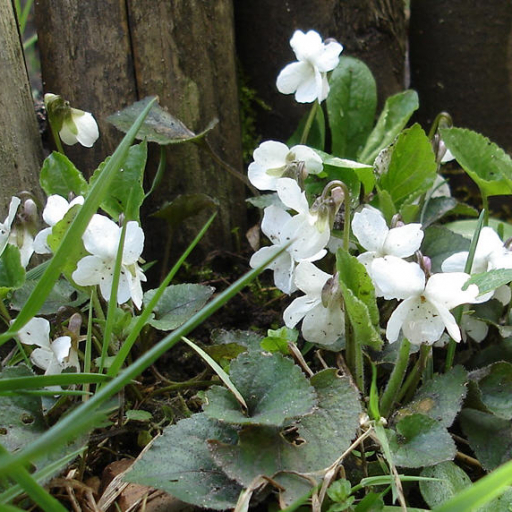
Plant Overview
Commonly known as the White Violet, this delicate woodland beauty is the ghost-like cousin of the more common blue violet. In many European cultures, it is celebrated as a serene herald of spring, often emerging while the morning frost still lingers on the grass. It is most famous for its legendary, honey-sweet perfume, which has made it a favorite in the world of vintage apothecary and floral scents.
🔍 How to Identify
- ☁️ The Bloom: Small, nodding flowers with five pristine white petals. Some subspecies may show a tiny yellowish-green "eye" or very faint purple veins at the throat.
- 💚 Heart-Shaped Leaves: Deep green, slightly hairy foliage that grows in a distinct heart shape (cordate) with rounded teeth along the edges.
- 🌱 Runners: Unlike some violets that grow in tight clumps, Viola alba produces long runners (stolons) that allow it to "walk" across the garden floor, forming a lush, low-growing carpet.
🏡 In Your Garden
- 🌳 The Woodland Niche: This plant is a specialist of the dappled shade. It mimics its natural forest home by thriving under the canopy of deciduous trees where it receives bright light in early spring before the trees leaf out.
- 🍂 Soil Secrets: It craves "forest floor" conditions. This means soil that is rich in leaf mold and organic matter. While it loves moisture, it hates "wet feet"; ensure the area is well-draining to prevent the roots from rotting during dormant months.
⚠️ Safety & Toxicity
- ✅ Generally Safe: Viola alba is considered non-toxic to humans. In fact, many violet species have a history of being used in salads or as candied garnishes.
- 🐾 Pet Caution: While not high-risk, keep an eye on curious cats or dogs. Ingesting large amounts of the foliage can occasionally cause mild stomach upset or vomiting in pets.
- 🛑 The Look-Alike Rule: Before foraging, ensure you haven't confused the leaves with those of the Lesser Celandine or White Snakeroot, which can be toxic if ingested.
✨ Fun Fact
The scent of the White Violet is a bit of a "phantom." It contains a chemical called ionone, which temporarily desensitizes the human sense of smell. After you take one deep sniff, the scent seems to vanish, only to "reappear" a few minutes later once your receptors have reset!

Detailed Care Instructions
| Humidity | Normal |
| Lighting | Part Sun |
| Difficulty | Medium |
| Hibernation | Cold Period |
| Hardiness Zones | 6 - 9 |
To grow Viola Alba (commonly known as White Violet), follow these steps:
- Choose a suitable location: Viola Alba prefers partial shade to full shade. Select a spot in your garden that receives filtered sunlight, such as under a tree or along a shady border.
- Prepare the soil: Ensure the soil is moist, well-draining, and rich in organic matter. Amend the soil with compost or well-rotted manure to improve its fertility and water-retention capacity.
- Sow or transplant the plant: Viola Alba can be grown from seeds or transplanted from nursery-bought plants. If sowing seeds, sow them in early spring or late summer directly into well-prepared soil. If transplanting, dig a hole slightly larger than the root ball and place the plant in the hole, ensuring the crown is level with the soil surface.
- Watering: Keep the soil consistently moist but not waterlogged. Water the plants deeply, once or twice a week, depending on the weather and soil conditions. Mulching around the plants will help retain moisture.
- Fertilizing: Viola Alba doesn't require heavy fertilization but can benefit from a light application of balanced, slow-release fertilizer in spring. Follow the instructions on the fertilizer packaging for proper application.
- Weed and pest control: Regularly check for weeds and remove them to prevent competition for nutrients and moisture. Watch out for common pests like aphids and slugs, and take appropriate measures to control them, such as using organic insecticides or traps.
- Pruning: Viola Alba doesn't need excessive pruning, but you can remove spent flowers to encourage more blooms and prevent self-seeding. Trim back any dead or damaged foliage to maintain the plant's appearance.
- Winter care: Viola Alba is a cold-hardy perennial that can tolerate frost. However, if you live in a severe winter climate, it's advisable to mulch the plants with a layer of hay or straw in late fall to protect them from extreme cold.
By following these steps and providing proper care, you can successfully grow Viola Alba in your garden. Enjoy the beautiful white blooms and delicate fragrance it offers!

Place in a window with dappled sun or a spot in the middle of a room. Or directly in a window facing west or east.

1. Viola Alba is a small perennial plant that requires regular watering to thrive.
2. The plant prefers moist soil, so make sure to water it deeply and thoroughly, but avoid overwatering, which can lead to root rot.
3. Water the plant at the base, preferably in the morning or evening when the temperature is cooler.
4. Use a watering can or a hose with a gentle spray nozzle to water the plants.
5. Be mindful of the weather conditions and adjust the watering frequency accordingly.
6. If you notice any signs of wilting or yellowing leaves, increase the frequency of watering until the plant recovers.
To fertilize the Viola Alba plant, use a slow-release fertilizer with a balanced NPK ratio (such as 10-10-10 or 8-8-8) in early spring before new growth emerges. Follow the instructions on the label and avoid over-fertilizing, as this can cause yellowing or burning of the leaves. Alternatively, you can use a liquid fertilizer diluted to half strength every two to three weeks during the growing season. Apply just enough to moisten the soil around the plant, but do not allow it to pool or run off. If using organic fertilizers, such as compost or manure, apply sparingly to avoid excess nutrients and potential burning.
The best type of soil to use with Viola Alba plant is a well-draining, loamy soil that is rich in organic matter. The soil pH should be slightly acidic to neutral (between 5.5 and 7.0) for optimal growth. The soil should also retain moisture but not be prone to waterlogging, as excessive moisture can cause root rot. Adding compost or other organic matter to the soil can improve its fertility and structure, and providing ample drainage through the addition of sand or perlite can help prevent waterlogging. It is also important to keep the soil weed-free, as weedy plants can compete with Viola Alba for nutrients and water.
To propagate this plant, you need to:
- Take stem cuttings from a healthy and mature plant during the growing season.
- Prepare a rooting hormone and dip the cut end of the stem into it.
- Plant the stem cutting in a small pot filled with well-draining soil.
- Cover the pot with a clear plastic bag to create a humid environment and place it in a bright, indirect light.
- Water the cutting regularly and ensure that the soil stays moist but not waterlogged.
- After a few weeks, you should start to see new growth. Once the plant has established roots and new leaves, you can transplant it into a larger pot or into your garden.
- Keep the new plant in a shaded area until it grows big enough to handle full sun.
- With proper care, your propagated Viola Alba plant will thrive and bloom beautifully.
Common pests of the white violet include Aphids, thrips, whiteflies, larvae. Make a habit of checking your white violet frequently for pests so that any infestations can be caught and managed early.








