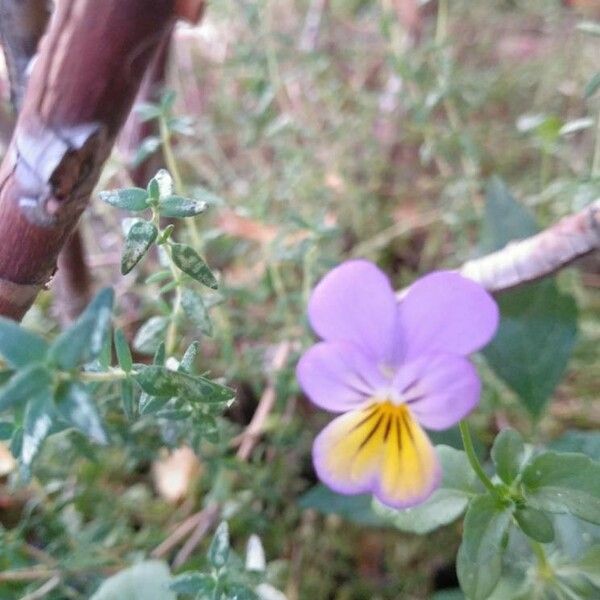
Plant Overview
Known as the Corsican Violet, this Mediterranean gem is a far cry from the delicate, wilting violets of Victorian poetry. Hailing from the rugged mountains of Corsica and Sardinia, this plant is a "tough-as-nails" perennial that brings a shock of electric purple to rock gardens. Unlike its pansy cousins that fade when the sun gets hot, the Corsican Violet is built to endure, blooming relentlessly from early spring until the first heavy frost.
🔍 How to Identify
- 🌸 Velvety Petals: Features vibrant violet-blue flowers with a distinct, bright yellow "eye" and dark purple whiskers radiating from the center.
- 🍃 Foliage: The leaves are small, deep green, and oval-to-heart-shaped with slightly scalloped (crenate) edges, forming a tidy basal rosette.
- 📏 Airy Habit: The flowers are held on slender, upright stems that rise 6–8 inches above the leaves, giving the plant a light and delicate appearance despite its hardiness.
🏡 In Your Garden
- ☀️ Heat Endurance: While most violets crave deep shade and cool moisture, Viola corsica is surprisingly drought-tolerant once established and thrives in full sun to partial shade.
- 🪨 Perfect for Crevices: Because of its mountain heritage, it hates "wet feet." It is happiest in well-draining, gritty soil, making it the ideal candidate for rock gardens, stone troughs, or the edges of gravel paths.
- ✂️ Self-Sowing Charms: It is a gentle self-seeder. If it likes its spot, it will tuck little "babies" into nearby cracks and crevices without becoming invasive or overwhelming its neighbors.
⚠️ Safety & Toxicity
- 🐾 Pet Friendly: The Corsican Violet is generally considered non-toxic to dogs, cats, and horses, making it a safe choice for pet-accessible garden borders.
- 👶 Child Safe: There are no known skin irritants associated with this plant. However, as with any garden plant, ensure that toddlers do not ingest large quantities, as any plant material can cause mild stomach upset in small children.
✨ Fun Fact
🏔️ The Marathon Bloomer: In the horticultural world, Viola corsica is nicknamed the "ever-blooming violet." While most perennials have a 2-4 week window of glory, this species has been known to produce flowers for up to six months straight if the spent blooms are occasionally pinched off!

Detailed Care Instructions
To grow Viola Corsica plants, you can follow these steps:
- Choose a suitable location: Viola Corsica plants prefer full sun to partial shade. Select a location in your garden that receives at least 4-6 hours of sunlight per day.
- Prepare the soil: Viola Corsica plants thrive in well-draining soil. Work on improving the soil by adding compost or organic matter to ensure good drainage and fertility.
- Sow the seeds: Viola Corsica can be grown from seeds. Sow the seeds directly in the prepared soil, following the recommended depth mentioned on the seed packet. Alternatively, you can also start the seeds indoors in seed trays and transplant them later when they are a few inches tall.
- Watering: Water the plants regularly to keep the soil moist but not waterlogged. Viola Corsica plants prefer consistently moist soil, so monitor the soil moisture and water when needed, especially during hot and dry periods.
- Mulching: Apply a layer of organic mulch around the plants to help retain soil moisture, suppress weed growth, and regulate soil temperature.
- Fertilizing: Viola Corsica plants are not heavy feeders, but you can provide them with a balanced, slow-release fertilizer during the growing season to promote healthy growth and blooming.
- Pruning: Deadhead spent flowers regularly to encourage continuous blooming. This will also prevent the plants from self-seeding and becoming invasive.
- Pest and disease control: Keep an eye out for common garden pests like aphids and slugs. Use organic pest control methods or insecticidal soap if necessary. Viola Corsica plants are relatively disease resistant but can be susceptible to fungal diseases in humid conditions. Ensure good air circulation and avoid overhead watering to minimize the risk.
- Winter care: Viola Corsica plants are typically hardy and can tolerate frost and cool temperatures. However, if you live in an extremely cold region, apply a thick layer of mulch in late fall to protect the plants during winter.
By following these steps, you should be able to successfully grow Viola Corsica plants in your garden.
To properly water this plant, make sure that the soil is moist, but not overly saturated. Allow the top layer of soil to dry out slightly before watering again. Avoid getting water on the leaves and petals to prevent damage or disease. Consider watering in the morning or early evening to avoid evaporation and to allow the plant to absorb the water more effectively. Use room temperature water and ensure that water is able to drain well from the pot or container.
- Choose a balanced fertilizer that contains equal amounts of nitrogen, phosphorus, and potassium.
- Apply the fertilizer at a rate that is recommended on the package, typically once every 2-4 weeks.
- Water the plant thoroughly before and after applying fertilizer to prevent root burn.
- Avoid getting fertilizer on the leaves or flowers, as it can cause damage.
- If the plant is in a container, make sure there is drainage to prevent over-fertilization and root rot.
- Monitor the plant's growth and adjust fertilization as needed.
Viola Corsica plants prefer a well-draining soil that is both rich in nutrients and organic matter. It is essential to provide a slightly acidic soil with a pH between 6.0 and 6.5 to facilitate growth. The ideal soil should be friable, loamy, and loose. Adding sand, perlite, or vermiculite to the soil mix can improve drainage and aeration. Avoid heavy clay soils, as they can retain water and cause root rot. Additionally, it is recommended to add compost, well-rotted manure, or peat moss to the soil to provide essential nutrients for the plant's growth. A high-quality, all-purpose potting mix combined with these organic amendments will provide the best growing conditions for the Viola Corsica plant.
Viola Corsica is a plant that can be easily propagated through stem cuttings. To propagate this plant, you will need to take cuttings from the parent plant during the growing season when it is actively growing. Start by selecting a healthy stem with at least two nodes and cut it at a 45-degree angle just below the node. Remove the lower leaves from the stem to expose the node.
Prepare a pot with a well-draining potting medium and moisten it thoroughly. Dip the cut end of the stem in rooting hormone powder and insert it into the potting medium, making sure that at least one node is buried in the soil. Cover the pot with a plastic bag to create a humid environment and place it in an area with bright, indirect light.
Keep the potting medium moist but not waterlogged and check regularly for new growth. Once new growth appears, remove the plastic bag and gradually acclimate the new plant to normal environmental conditions. Once the plant has become established, it can be transplanted into a larger pot or into the garden.








