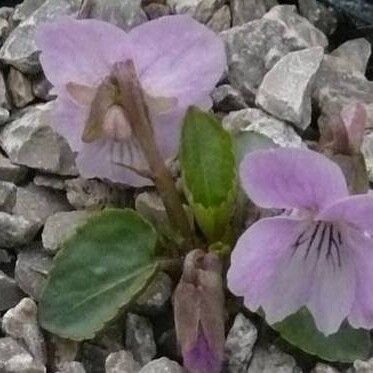
Plant Overview
Nestled in the craggy limestone cliffs of the Carpathian Mountains, Viola jooi is a hidden gem of the botanical world. Often called the Transylvanian Violet, this rare alpine beauty is a true survivor, clinging to rocky crevices where few other plants dare to grow. It is a prized find for rock garden enthusiasts and those who appreciate the delicate resilience of high-altitude flora.
🔍 How to Identify
- 🌸 The Bloom: Features charming, five-petaled flowers that range from a pale, misty lilac to a deeper rose-violet, often decorated with delicate dark veins (nectar guides) leading to the center.
- 🍃 The Foliage: The leaves are classically heart-shaped (cordate) and slightly glossy, forming a tight, low-growing rosette that stays close to the ground to protect itself from harsh mountain winds.
- 📏 The Stature: Unlike the leggy pansies found in local nurseries, this species remains very compact and tufted, rarely exceeding three to four inches in height.
🏡 In Your Garden
- ⛰️ The Mountain Connection: Because its natural home is on limestone scree, it demands exceptional drainage. In a garden setting, it thrives best in a dedicated rockery or an alpine trough where water can never pool around the roots, which causes rot.
- ❄️ Cooler Roots: This violet is sensitive to extreme heat. While it enjoys bright light, it prefers its "feet" to stay cool. Tucking it next to a large stone can help regulate soil temperature, mimicking the damp crevices of the Transylvanian peaks.
- 🌱 Slow and Steady: It does not spread aggressively like some of its common violet cousins. It is a polite, slow-growing perennial that rewards the patient gardener with a burst of color in late spring.
⚠️ Safety & Toxicity
- ✅ Status: Generally considered non-toxic to humans and common household pets.
- 🐾 Details: While members of the Viola genus are often edible, they contain small amounts of saponins. If a curious pet or child consumes a large quantity, it may cause mild stomach upset or vomiting, but it is not considered a dangerous plant to have in the home landscape.
✨ Fun Fact
Viola jooi is what scientists call a "Tertiary Relict." This means it is a survivor from a much warmer geological era that occurred millions of years ago; it managed to survive the Ice Age by hiding in specific, protected microclimates within the Romanian mountains.

Detailed Care Instructions

Place in a window with dappled sun or a spot in the middle of a room. Or directly in a window facing west or east.

Some plants require more regular watering than others, which should be done every few days. It's critical to maintain the soil moist all of the time. The water requirements of the same plant placed in pots with varying sizes will differ. Because the water in the smaller pot evaporates faster than the water in the larger pot, it will require more watering. Regardless of pot size, the surface should constantly be maintained moist.







