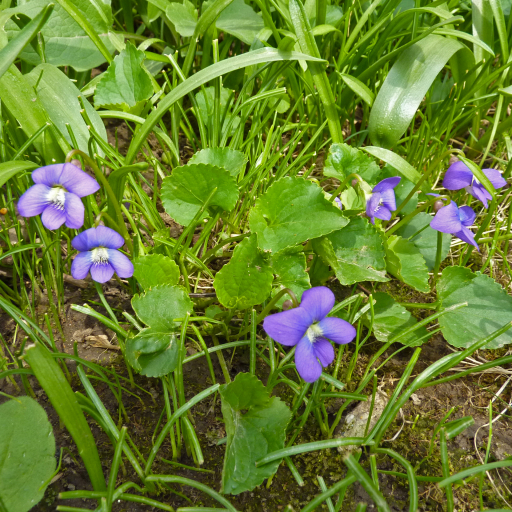
Plant Overview
Often called the "Common Blue Violet" or the "Meadow Violet," this resilient little wildflower is a hallmark of spring across North America. While some lawn perfectionists view it as a stubborn weed, nature lovers cherish it for its vibrant purple "butterfly" blooms and its historical role in herbalism. Its name, papilionacea, actually refers to the butterfly-like appearance of its delicate, winged petals.
🔍 How to Identify
- 💜 The Bloom: Five-petaled flowers ranging from deep violet to pale blue. The lower petal typically features a white, fuzzy "beard" near the center to help guide pollinators.
- 🍃 The Foliage: Distinctive heart-shaped (cordate) leaves with slightly scalloped or toothed edges that grow in a basal rosette close to the ground.
- 🌱 Growth Habit: A low-growing perennial that forms dense, lush clumps. It spreads via thick underground rhizomes, making it a champion at "colonizing" garden corners.
🏡 In Your Garden
- 🦋 Pollinator Paradise: These are vital early-season food sources for bees and serve as the primary host plant for Great Spangled Fritillary butterfly larvae.
- 🌿 The Sneaky Seeder: Beyond the visible purple flowers, this plant produces "cleistogamous" flowers—small, green, petal-less buds near the soil that never open. They self-pollinate and "explode" when ripe, flinging seeds several feet away.
- 💧 Adaptability: While it prefers dappled shade and moist, rich soil, it is incredibly hardy. It can survive heavy foot traffic and frequent mowing, often rebounding faster than the grass around it.
⚠️ Safety & Toxicity
- 🍽️ Edibility: Generally considered safe and edible for humans. The flowers and young leaves are rich in Vitamins A and C and are often used in salads, jellies, or as candied decorations.
- 🚫 Chemical Warning: Because they often grow in lawns, the primary danger is chemical exposure. Never consume violets from a yard that has been treated with herbicides or pesticides.
- 🐾 Pets: These are classified as non-toxic to dogs and cats, though eating large quantities of any plant material can cause mild stomach upset.
✨ Fun Fact
Violets were a favorite of Napoleon Bonaparte; he used them as a secret symbol to tell his supporters he would return from his exile in Elba "with the violets in the spring."

Detailed Care Instructions
To grow Viola papilionacea, also known as the Appalachian violet or the Woolly blue violet, you can follow these steps:
- Find the right location: Viola papilionacea prefers partial shade to full shade. Choose a spot in your garden or outdoor area that receives about 4-6 hours of sun each day. The soil should be moist but well-draining.
- Prepare the soil: Before planting, prepare the soil by removing any weeds, rocks, or debris. Loosen the soil and mix in compost or organic matter to improve drainage and provide nutrients.
- Plant the seeds or seedlings: You can start Viola papilionacea from seeds or purchase seedlings from a nursery or garden center. If starting from seeds, sow them directly into the prepared soil, following the packet instructions for planting depth and spacing. If using seedlings, dig holes slightly larger than their root balls and gently place them in the holes. Backfill with soil and pat it down gently.
- Water regularly: Keep the soil consistently moist but not waterlogged. Water the plants regularly, especially during dry spells or hot weather, to ensure they have enough moisture for healthy growth. Avoid overhead watering, as this can promote disease.
- Mulch and weed control: Apply a layer of organic mulch around the plants to help conserve moisture, suppress weeds, and maintain an even soil temperature. Be careful not to pile the mulch too close to the stems, as this can cause rot.
- Fertilize: Viola papilionacea typically doesn't require extensive fertilization. However, you can feed them with a balanced fertilizer once or twice throughout the growing season to promote healthy growth. Follow the instructions on the fertilizer packaging for application rates.
- Pruning and maintenance: As the plants grow and bloom, you can deadhead spent flowers to encourage continuous blooming. This involves removing the faded flowers by pinching or cutting them off just above a healthy leaf. Additionally, keep an eye out for any pests or diseases and promptly address any issues that arise.
By following these steps and providing the right conditions, you should be able to successfully grow Viola papilionacea plants.

Place in a window with dappled sun or a spot in the middle of a room. Or directly in a window facing west or east.

To properly water this plant, you should first check the soil moisture level by inserting your finger into the soil up to the second knuckle. If the soil feels dry at this depth, the plant likely needs water. However, if it still feels moist, wait to water until the soil has dried out more.
When watering, use a watering can with a spout that will allow you to carefully and slowly pour water onto the soil around the plant. Avoid getting water on the leaves or flowers as this can cause damage or disease.
Water the plant until you see water begin to drain out of the bottom of the pot or until the soil feels evenly moist. Be careful not to over-water the plant as this can lead to root rot and other issues.
To maintain proper soil moisture, check the soil regularly and adjust your watering schedule as needed. In general, it is better to water deeply and less frequently than to water lightly and frequently.
To successfully fertilize this plant, it is recommended to use a balanced fertilizer with an N-P-K ratio of 10-10-10. Apply the fertilizer to the soil around the plant, being careful not to get any on the leaves or stems. Water the plant thoroughly after fertilizing. Repeat this process every 2-3 weeks during the growing season, which is typically from spring to late summer. Avoid fertilizing during the dormant season in winter.
The ideal soil for Viola Papilionacea plant should be well-draining, loose and fertile. The soil should be rich in organic matter and have a pH between 5.5 and 7.0. Sandy loam or loamy soils with good drainage are favorable for this plant. Adding compost or well-rotted manure to the soil before planting can help improve soil structure, water-holding capacity and nutrient content. The soil should be kept consistently moist but not waterlogged, as excess moisture can cause root rot and other diseases. Adequate sunlight and proper soil drainage are essential for the healthy growth of Viola Papilionacea plant.
To propagate this plant, start by harvesting seeds from the mature flowers. Sow the seeds in a potting mix that is well-draining and has a neutral pH value. Keep the seeds moist and place the pot in bright, indirect sunlight. The seeds will germinate in about two weeks. Once the seedlings are big enough to handle, transplant them to individual pots and continue to grow them in a sunny location.
Another way to propagate this plant is through stem cuttings. Take a 4-6 inch long stem cutting from the parent plant, making sure to include a few leaves. Dip the cut end of the stem in rooting hormone and plant it in a soilless mix. Keep the cutting moist and in a warm, bright location. In about four to six weeks, roots should start to form, and the new plant can be transplanted to a larger pot or garden bed.
Dividing the plant is yet another way to propagate it. Remove the plant from the pot or garden bed and gently separate the roots using a knife. Each section should have at least one healthy shoot and root system. Plant each division in a separate pot or garden bed, water well, and keep them in a shady location for the first few days, gradually increasing the light exposure over time.
Common pests of the common blue violet include Aphids, thrips, whiteflies, larvae. Make a habit of checking your common blue violet frequently for pests so that any infestations can be caught and managed early.








