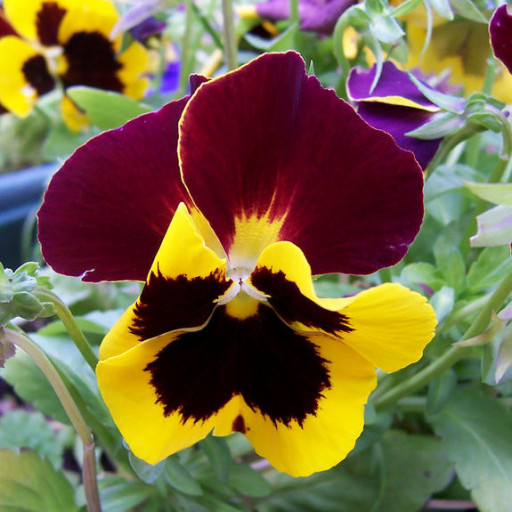
Plant Overview
Affectionately known as the "flower with a face," the Garden Pansy is the cheerful herald of both spring and autumn. These hardy hybrids are the result of centuries of selective breeding, designed to bring a painter’s palette of colors to the chillier months when most other plants retreat. Whether peering out from a window box or carpeting a garden bed, their velvety petals and sweet, subtle scent have made them a timeless favorite for gardeners worldwide.
🔍 How to Identify
- 🌸 Petal Structure: Look for five rounded, overlapping petals. Usually, two petals point upwards, two are oriented to the sides, and one large petal points downward, often featuring a slight indentation.
- 🎨 The "Face": Many varieties feature a dark, central blotch that resembles a tiny, brooding face, though modern "Clear" varieties may be a solid color without this marking.
- 🍃 Foliage: The leaves are typically oval or heart-shaped with slightly scalloped (crenate) edges, forming a low-growing, compact clump that rarely exceeds 9 inches in height.
🏡 In Your Garden
- ❄️ Cool Weather Specialists: Pansies are the "marathon runners" of the shoulder seasons. They thrive in the crisp air of early spring and late fall, and can even survive a light frost. However, they are sensitive to high heat; once summer temperatures spike, they often become "leggy" or stop blooming entirely.
- ✂️ The Power of Deadheading: To keep the blooms coming, you must pinch off faded flowers at the stem. This prevents the plant from shifting its energy into seed production, tricking it into producing a fresh flush of color. They prefer "rich" soil and consistent moisture—if they dry out completely, they rarely recover their former glory.
⚠️ Safety & Toxicity
- 🥗 Edible Petals: Garden Pansies are one of the most popular edible flowers! Their petals have a mild, grassy, or slightly minty flavor and are frequently used to garnish salads, cakes, and cocktails.
- 🐾 Pet & Child Safety: They are generally considered non-toxic to humans and pets. However, the seeds and roots contain higher concentrations of saponins, which can cause mild stomach upset if ingested in large quantities. Note: Never eat pansies from a commercial florist or nursery unless they are specifically labeled as organic/edible, as they are often treated with systemic pesticides.
✨ Fun Fact
The name "Pansy" is derived from the French word pensée, which means "thought." In the Victorian "Language of Flowers," sending a bouquet of pansies was a silent way of telling the recipient, "I am thinking of you."

Detailed Care Instructions
| Humidity | Normal |
| Difficulty | Medium |
| Hibernation | Cold Period |
| Temperature | 24°C - 30°C |
| Hardiness Zones | 6 - 10 |
To grow Viola × Wittrockiana plants, also known as pansies, you can follow these steps:
- Choose a suitable location: Pansies prefer a location with full or partial sun, as they need at least 6 hours of sunlight daily. Ensure the area has well-drained soil.
- Prepare the soil: Before planting, prepare the soil by removing any weeds and loosening it with a garden fork or trowel. Add organic matter, such as compost or aged manure, to enrich the soil and improve drainage.
- Start seeds indoors (optional): If you wish to start from seeds, sow them indoors 8 to 12 weeks before the last frost date. Use seed trays or small pots filled with a seed-starting mix. Keep the soil moist and provide sufficient light. Transplant seedlings outdoors when they have developed a few true leaves.
- Plant outdoors: If you prefer to directly plant outdoors, choose healthy seedlings from a nursery or garden center. Dig small holes that are 6-8 inches apart and deep enough to accommodate the root ball. Gently place each seedling in the hole, cover it with soil, and press it down to remove air pockets.
- Water regularly: Keep the soil consistently moist but not overly waterlogged. Water the plants deeply once or twice a week, depending on the weather conditions. Avoid overhead watering, as wet leaves can promote disease.
- Fertilize: Apply a balanced, slow-release fertilizer according to package instructions, typically every 4-6 weeks, to provide essential nutrients for healthy growth.
- Mulch: Apply a layer of organic mulch, like wood chips or straw, around the plants to help retain moisture, suppress weed growth, and regulate soil temperature.
- Prune and deadhead: Remove faded flowers regularly, also known as deadheading, to promote continuous blooming. Pruning helps shape the plants and removes any yellowed or damaged leaves.
- Pest and disease control: Monitor your plants regularly for pests like aphids, slugs, or snails. Use organic pest control methods or appropriate pesticides as needed. Keep an eye out for diseases like powdery mildew or rust, and treat them promptly.
- Winter protection (in colder climates): In areas with severe winters, add a layer of mulch or straw around the plants to provide extra insulation. Alternatively, you can grow pansies as cool-season annuals in these regions.
With proper care and suitable conditions, your Viola × Wittrockiana plants should thrive and produce beautiful flowers.

Place in a bright room that is sun drenched almost all day. Or directly in a south-facing window.
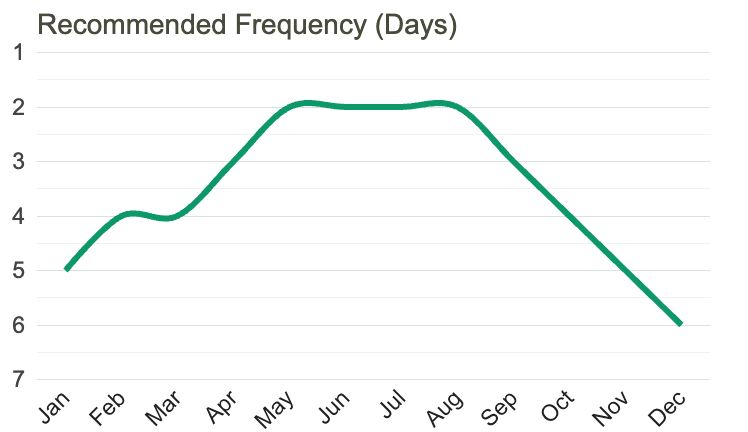
To water this plant, one should first ensure that the soil is dry before watering. The frequency of watering depends on various factors such as the climate, the size of the pot, and the amount of sunlight it receives. However, it is recommended to water it deeply once a week rather than frequent shallow watering. It is important not to overwater as it can cause root rot. One can test the moisture level of the soil by sticking a finger 1-2 inches into the soil. If it feels dry at that depth, it is time to water. Additionally, it is better to water directly on the soil rather than on the leaves as it can lead to fungal diseases.
To provide adequate nutrients for this plant, apply a balanced fertilizer to the soil every 4-6 weeks during the growing season. Use a slow-release fertilizer or liquid fertilizer according to the package directions. Water the plant thoroughly after fertilizing to ensure proper absorption of nutrients. Avoid over-fertilizing as it can lead to leaf burn and other problems.
The best soil for Viola × Wittrockiana plants is a well-draining soil that is rich in organic matter. The soil should be slightly acidic, with a pH range between 5.5 and 6.5. It should also be able to retain moisture, but not become waterlogged. Organic materials such as leaf mold, compost, and well-rotted manure can be added to the soil to increase its fertility. The soil should also be loose and friable, allowing roots to penetrate easily and air to circulate around them. In addition, the soil should not contain any toxic substances or contaminants that could harm the plant.
Viola × Wittrockiana is commonly propagated through a process called stem cuttings. To do this, select a healthy stem from the plant with at least 2-3 nodes. Cut the stem at a 45-degree angle using a sharp, sterile blade. Dip the cut end in rooting hormone powder, and then plant it in moist soil or a rooting medium such as perlite or vermiculite. Place the cutting in a warm, bright spot, but out of direct sunlight. Mist the cutting regularly to keep the soil moist and cover it with a clear plastic bag or plastic wrap to create a humid environment. After a few weeks, the cutting should start to root and new growth will appear. Once the new plant has established roots, it can be transplanted into a larger pot or into the garden.
Common pests of the pansy include Aphids, thrips, whiteflies, larvae. Make a habit of checking your pansy frequently for pests so that any infestations can be caught and managed early.








