Plant Overview
Known in the deep Amazon as a "Blood Tree," Virola michelii is a majestic relative of the common kitchen nutmeg. It is famous among indigenous tribes for its striking red sap that oozes out whenever the bark is nicked, looking eerily like human blood. While it is a giant of the jungle rather than a typical windowsill resident, its presence is a hallmark of a healthy, ancient rainforest ecosystem.
🔍 How to Identify
- 🪵 The "Bleeding" Bark: The most iconic feature is its resinous sap; when the bark is cut, it releases a fluid that quickly oxidizes into a deep, rust-red color.
- 🍃 Leathery Foliage: It sports large, oblong leaves that are dark green and glossy on top, often featuring a slightly paler, matte underside with prominent veins.
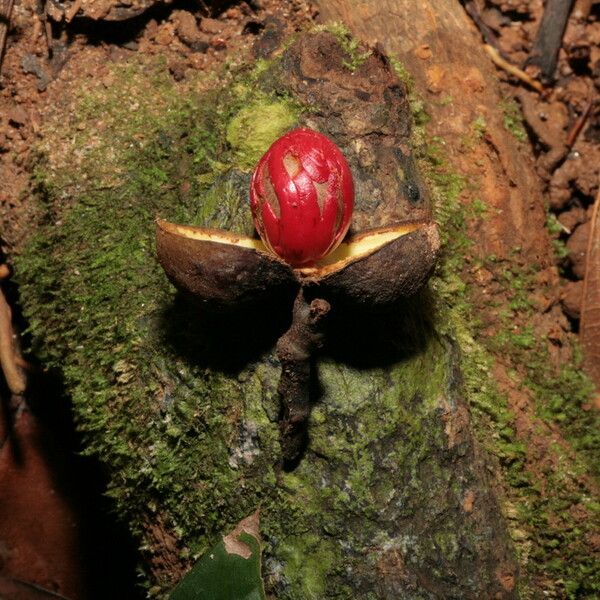
- 🌰 Lacy Seeds: It produces small, oval fruits that split open to reveal a dark seed encased in a bright red, waxy "net" (the aril), resembling a wild version of a nutmeg seed.
🌳 Habitat & Ecology
- 🌧️ Rainforest Titan: In the wild, this tree can reach heights of over 30 meters. It acts as a "canopy filler," providing essential shade and structure for the middle layers of the Amazonian forest.
- 🦜 Wildlife Buffet: The fatty arils surrounding the seeds are a high-energy food source for tropical birds like toucans and large fruit-eating bats, which help disperse the seeds throughout the jungle.
⚠️ Safety & Toxicity
- 🚫 Non-Edible: Unlike its commercial cousin (Myristica fragrans), the seeds of Virola michelii are not intended for culinary use and can be toxic if ingested in significant quantities.
- 🧤 Resin Sensitivity: The "blood" sap contains high concentrations of tannins and other compounds that may cause skin irritation or permanent staining on clothing and skin.
✨ Fun Fact
- 💨 Ancient Snuff: Various species of the Virola genus were historically used by indigenous shamans to create "Epena," a potent hallucinogenic snuff used in spiritual rituals to communicate with forest spirits.

Detailed Care Instructions

Place in a window with dappled sun or a spot in the middle of a room. Or directly in a window facing west or east.

Some plants require more regular watering than others, which should be done every few days. It's critical to maintain the soil moist all of the time. The water requirements of the same plant placed in pots with varying sizes will differ. Because the water in the smaller pot evaporates faster than the water in the larger pot, it will require more watering. Regardless of pot size, the surface should constantly be maintained moist.








