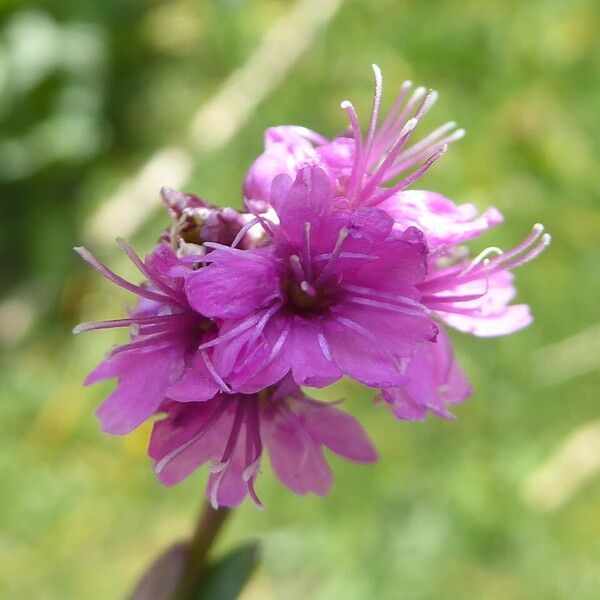
Plant Overview
Known as the Alpine Catchfly, this resilient little gem thrives where others falter—clinging to rocky cliffs and arctic tundras. Its vibrant pink clusters act like a neon beacon of color against the harsh, grey landscapes of high altitudes. While it looks delicate, it is a master of survival, often found in the most extreme environments of the Northern Hemisphere.
🔍 How to Identify
- 🌸 Flower Clusters: It features dense, flat-topped clusters of bright magenta to purplish-pink flowers, each with five deeply notched petals that look like tiny hearts.
- 🌿 Basal Rosette: The base of the plant consists of narrow, lance-shaped, dark green leaves that form a tight, grass-like tuft.
- 🍯 The "Catchfly" Stem: The stems are upright and often have a slightly sticky texture below the flower nodes, a clever defense mechanism against crawling insects.
🏡 In Your Garden
- 🪨 Rock Garden Specialist: Because it naturally grows in mountain crevices, it is the perfect candidate for alpine troughs, rockeries, or stone walls where drainage is exceptionally sharp.
- ❄️ Cold Weather Warrior: This plant is a true "northern soul." It is incredibly frost-hardy but tends to struggle in the sweltering heat and high humidity of southern summers.
- 🧪 Soil Nuance: Unlike many garden favorites, it prefers poor, acidic soils. It is remarkably tolerant of "heavy metal" soils containing copper or nickel, which would be toxic to most other flora.
⚠️ Safety & Toxicity
- ✅ Non-Toxic: Viscaria alpina is generally considered safe and non-toxic for humans, dogs, and cats.
- ✋ Mild Irritation: While it isn't poisonous, the "sticky" sap on the stems may occasionally cause minor skin irritation for those with very sensitive skin or allergies to the Caryophyllaceae family.
✨ Fun Fact
⛏️ The Prospector’s Bloom: In Scandinavia, this plant is known as a "copper flower." Because it can grow in soil rich in heavy metals, early geologists and miners would use sightings of Viscaria alpina as a biological map to find hidden deposits of copper and nickel ore!

Detailed Care Instructions
Viscaria Alpina, also known as the Alpine Catchfly, is a beautiful perennial plant that produces small, star-shaped flowers in shades of pink, purple, and white. Here are some tips on how to grow and care for Viscaria Alpina:
- Choose a well-draining soil: Viscaria Alpina prefers a well-draining soil that is slightly alkaline. If your soil is too heavy or compacted, add some sand or perlite to improve drainage.
- Select a sunny location: Viscaria Alpina thrives in full sun to partial shade. Choose a location in your garden that receives at least 6-8 hours of sunlight per day.
- Water regularly: Keep the soil evenly moist but not waterlogged. Water the plant deeply once or twice a week, depending on the weather and soil moisture.
- Fertilize sparingly: Viscaria Alpina does not require a lot of fertilizer. You can feed it with a balanced fertilizer once or twice during the growing season, following the instructions on the label.
- Prune after flowering: Deadhead the spent flowers to encourage continuous blooming and prevent the plant from self-seeding. Cut back any leggy or overgrown stems to promote bushier growth.
- Divide the plant: Viscaria Alpina can become congested over time, so it's a good idea to divide the plant every 2-3 years in the spring or fall. Dig up the plant, divide the clumps, and replant in a well-prepared soil.
- Mulch around the plant: Apply a layer of mulch around the base of the plant to help retain moisture, suppress weeds, and insulate the roots during extreme temperatures.
By following these tips, you can grow and enjoy the beauty of Viscaria Alpina in your garden for years to come.
Viscaria Alpina plants should be watered consistently to keep the soil consistently moist but not waterlogged. It is important to water the plant at the base, avoiding getting the leaves wet. Use room temperature water and water until it begins to drain out of the bottom of the pot. Allow the top inch of soil to dry out before watering again. During the winter months, reduce watering slightly to prevent overwatering. It is recommended to use a well-draining potting mix to prevent water from pooling around the roots.
To fertilize Viscaria Alpina, apply a balanced liquid fertilizer once a month during the growing season, typically spring through early fall. Dilute the fertilizer to half the recommended strength to avoid over-fertilization. Water the plant thoroughly after fertilizing to help distribute the nutrients throughout the soil. Avoid fertilizing during the plant's dormant period in winter.
Viscaria alpina plants prefer well-draining soil that is rich in organic matter. A suitable soil mixture for this plant would consist of a combination of sandy soil, peat moss, and perlite to ensure good drainage and aeration. It is important to avoid heavy or compacted soils that can lead to waterlogging and root rot. Additionally, adding a small amount of compost or aged manure to the soil mix can provide essential nutrients for healthy growth. Overall, a loose, slightly acidic soil with good moisture retention is ideal for Viscaria alpina plants to thrive.
Viscaria Alpina can be propagated through division, cuttings, or seeds.
To propagate through division, wait until the plant is dormant in the fall or early spring. Gently dig up the plant and separate the root mass into smaller sections, making sure each section has healthy roots and shoots. Replant these sections in well-draining soil and water thoroughly.
For propagation through cuttings, take a cutting from a healthy stem of the plant in the spring or early summer. Remove the lower leaves and dip the cut end in rooting hormone before planting it in a small container filled with moist, well-draining soil. Keep the cutting in a warm, humid environment with filtered sunlight until roots have developed and then transplant it into a larger pot or the garden.
To propagate Viscaria Alpina from seeds, collect ripe seeds in the fall and sow them directly into the garden in the fall or early spring. Cover the seeds lightly with soil and keep the area moist until germination occurs. Thin out the seedlings as needed to allow proper spacing for growth.
Regardless of the propagation method chosen, make sure to provide adequate water, sunlight, and nutrients for the new plants to establish and thrive.








