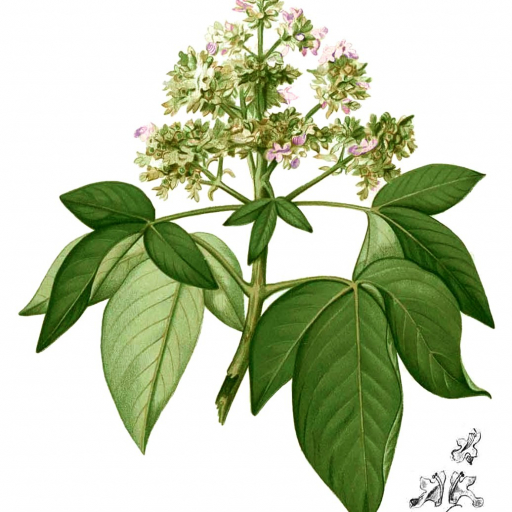
Plant Overview
Known as the "Leban Tree" or "Malaysian Chaste Tree," this sturdy inhabitant of Southeast Asian landscapes is as tough as it is beautiful. In many cultures, it is celebrated for its "iron-strong" wood and its historical role in traditional medicine. It is a resilient survivor, often seen reclaiming open grasslands or standing tall along coastal edges where other trees might struggle.
🔍 How to Identify
- 🌿 The Leaf Structure: It features palmately compound leaves, typically with 3 to 5 leaflets. The central leaflet is usually the largest, and the leaf stalk (petiole) often has narrow "wings" running down its sides.
- 🪻 Lavender Blooms: The tree produces clusters of small, fragrant, two-lipped flowers. They are usually a delicate shade of violet or pale blue, acting as a beacon for local pollinators.
- 🪵 Distinctive Bark: The bark is greyish-brown and develops a shallowly fissured, fibrous texture as the tree matures, often peeling in long, thin strips.
- 🍒 Small Berries: After flowering, it produces small, round fruits that turn from green to a dark purple or black when ripe.
🏡 In Your Garden
- 🦋 Pollinator Paradise: If you want to bring life to your outdoor space, this tree is a magnet for butterflies and honeybees. Its nectar-rich flowers provide a consistent food source for local wildlife.
- ☀️ Sun & Space: Vitex pinnata thrives in full sun and is incredibly drought-tolerant once established. Because it can grow into a medium-sized tree, it is best used as a shade provider or a focal point in larger gardens rather than tight spaces.
- 💪 Soil Warrior: This plant is not picky. It can handle poor, sandy, or even rocky soils, making it an excellent choice for stabilizing slopes or for gardeners who struggle with difficult terrain.
⚠️ Safety & Toxicity
- ✅ Status: Generally considered non-toxic to humans and common pets.
- 💊 Medicinal Note: While various parts of the tree (bark and leaves) are used in traditional herbal medicine for treating aches or fevers, they should never be ingested or applied without professional guidance.
- 🐾 Pet Safety: There are no documented reports of Vitex pinnata causing distress to cats or dogs, making it a "pet-friendly" choice for a backyard shade tree.
✨ Fun Fact
The wood of the Leban tree is so dense and durable that it was historically used to make handles for "keris" (traditional Malay daggers) and heavy-duty farming tools. It is also remarkably fire-resistant, often surviving grass fires that consume surrounding vegetation!

Detailed Care Instructions
To grow Vitex Pinnata, also known as the West Indian chastetree, you can follow these steps:
- Choose a suitable location: Vitex Pinnata grows best in moist, well-draining soil and prefers full sun. Select a spot in your garden that receives at least 6-8 hours of direct sunlight per day.
- Prepare the soil: Test the soil pH and ensure it is between 6.0 and 7.5, which is slightly acidic to neutral. If needed, amend the soil to achieve the desired pH level. Additionally, ensure the soil is loose and rich in organic matter. You can add compost or well-rotted manure to improve the soil structure and fertility.
- Planting: Dig a hole that is twice as wide and deep as the root ball. Gently remove the plant from its container and place it in the hole. Backfill the hole with soil, ensuring that the plant is at the same depth as it was in the container. Do not bury the stem too deep.
- Watering: Immediately after planting, water the Vitex Pinnata thoroughly. Keep the soil evenly moist but not waterlogged. Watering deeply once a week is usually sufficient, but adjust based on rainfall and temperature.
- Mulching: Apply a layer of mulch around the base of the plant to conserve moisture, suppress weeds, and regulate soil temperature. Use organic mulch such as wood chips or bark, making sure to leave some space around the stem to prevent rot.
- Pruning: Prune the plant annually in late winter or early spring. Remove any dead or damaged branches and shape the tree as desired. This helps maintain a healthy and compact growth habit.
- Fertilizing: Vitex Pinnata generally does not require heavy feeding. However, you can apply a balanced, slow-release fertilizer during the growing season to promote healthier growth and flowering. Follow the instructions on the fertilizer packaging for application rates.
- Pests and diseases: Vitex Pinnata is generally resistant to pests and diseases. However, keep an eye out for aphids, spider mites, or powdery mildew. If necessary, treat with appropriate insecticides or fungicides.
- Propagation: You can propagate Vitex Pinnata through seeds or cuttings. Seeds can be collected from mature fruits, soaked overnight, and sown in well-draining soil. Cuttings can be taken in late spring or early summer and rooted in a moist rooting medium.
Remember to monitor the plant regularly for any signs of stress, pests, or diseases. Provide proper care and maintenance to ensure healthy growth and beautiful flowering.
To water this plant, you should consider the soil type and the weather. If the soil is dry, you should water it deeply and make sure it drains well. If it is clay soil, you should water it slowly to avoid runoff. During the summer months, you may need to water this plant more frequently, especially if the weather is hot and dry. However, during the winter months, you should water it sparingly to avoid over-watering. It is important to avoid getting the foliage wet to prevent disease, so try to water the soil directly. You may also consider adding mulch to help retain moisture in the soil and protect the plant's roots.
To fertilize this plant, use an all-purpose fertilizer with a balanced ratio of N-P-K (nitrogen, phosphorus, and potassium) such as 10-10-10. Apply the fertilizer every two to three months during the growing season (spring and summer) following the package instructions for application rates. Be careful not to over-fertilize as this can burn the plant or lead to excessive foliage growth at the expense of flowering. Water the plant thoroughly after fertilizing to help distribute the nutrients evenly.
Vitex pinnata is a flowering plant that is native to Southeast Asia and the Pacific Islands, and it is commonly cultivated in warm tropical climates as a garden plant. When choosing soil for this plant, it is important to consider its native habitat as well as its specific soil preferences.
Vitex pinnata grows naturally in sandy or loamy soil that is well drained, with a pH range of 5.5 to 6.5. The soil should be nutrient-rich, with sufficient levels of nitrogen, phosphorus, and potassium to support healthy growth and flowering. It is also important to ensure that the soil has good water-holding capacity, as the plant can become stressed in periods of drought.
When planting Vitex pinnata, it is recommended to amend the soil with organic matter such as compost or well-rotted manure, to improve its structure and fertility. The plant can also benefit from regular fertilization, using a balanced organic fertilizer or slow-release granular fertilizer applied at the base of the plant.
Overall, the best soil for Vitex pinnata is a well-draining, nutrient-rich, and slightly acidic soil that is amended with organic matter and regularly fertilized to support healthy growth and flowering.
There are several ways to propagate this plant. One method is through seed propagation. Collect seeds when the fruits are mature and sow them in a well-draining soil mix. Keep the soil moist and warm until germination occurs, which can take up to several weeks.
Another method is through softwood cuttings. Take cuttings from the soft, green growth on the plant during the summer months and place them in a rooting hormone. Plant them in a well-draining soil mix and keep them in a warm, humid location until they take root.
Layering is also a method of propagation, where a stem from the plant is bent down and buried in the soil, allowing it to grow roots from the buried portion. Once the roots have established, the new plant can be separated from the mother plant and transplanted.
Lastly, the plant can be propagated through division. Dig up the plant and separate the roots into smaller clumps, ensuring each clump has enough roots and foliage to survive. Transplant the clumps into their new location and keep the soil moist until they become established.








