Plant Overview
Often called the "Beach Vitex" or "Round-leaf Chaste Tree," this coastal wanderer is a master of the shoreline. Originally from the sandy coasts of the Asia-Pacific, it is famous for its ability to thrive where other plants fail—amidst salt spray, shifting sands, and intense sun. While it produces beautiful lavender blooms, it is a plant with a dual personality: a stabilizer of dunes in its home range, but a fierce invader in other parts of the world.
🔍 How to Identify
- 🍃 The Foliage: The leaves are distinctively round (hence rotundifolia), thick, and velvety to the touch. They have a striking silvery-gray underside that shimmer when the wind catches them.
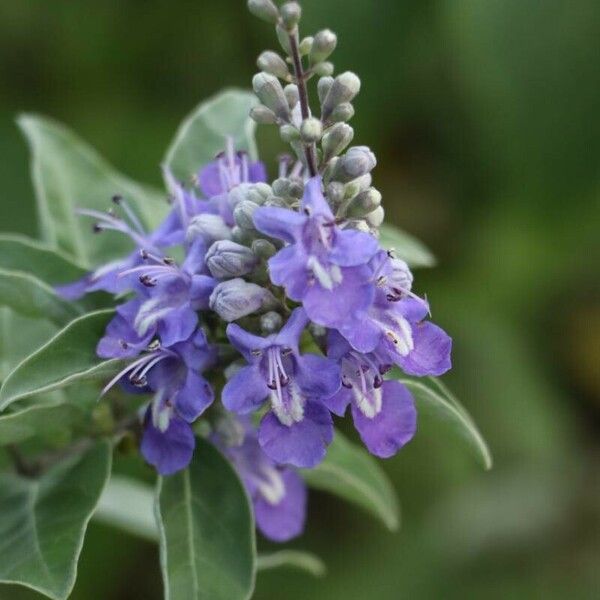
- 🟣 The Flowers: In late spring and summer, the plant produces small, upright clusters of vibrant purple or bluish-lavender flowers that are highly attractive to bees and butterflies.
- 🍇 The Fruit: After flowering, it develops small, round, woody drupes (berries) that turn from green to a dark purplish-black when ripe.
- 🌱 The Growth Habit: It is a "prostrate" shrub, meaning it crawls along the ground rather than growing tall. Its long runners can stretch over 10 feet, rooting into the sand as they go.
🏡 In Your Garden
- 🏖️ Salt & Sand Specialist: This is one of the best choices for coastal properties where salt spray kills most other greenery. It requires incredibly well-draining soil; if kept in heavy, wet clay, the roots will likely rot.
- 🏃♂️ Space Invader: Be mindful of its "creeping" nature. In a home garden, it can quickly overwhelm smaller perennials. It is best used as a wide-scale groundcover or allowed to spill over the edge of a large retaining wall.
- 🌿 Aromatic Experience: If you crush the leaves, they release a pleasant, spicy, or herbal scent, similar to other members of the Chaste Tree family.
⚠️ Safety & Toxicity
- ✅ General Safety: Vitex rotundifolia is generally considered non-toxic to humans and common pets like dogs and cats.
- 🌊 Ecosystem Alert: The biggest "danger" this plant poses is to the environment. In the Southeastern United States (specifically the Carolinas), it is classified as a noxious weed. It grows so densely that it can prevent sea turtles from nesting and crowd out native sea oats. Always check your local invasive species list before planting!
✨ Fun Fact
In traditional medicine across East Asia, the dried fruits of this plant are known as Man Jing Zi. They have been used for centuries in herbal teas and remedies to treat headaches and eye redness, thanks to their cooling and anti-inflammatory properties.

Detailed Care Instructions
Growing Vitex rotundifolia, commonly known as beach vitex or roundleaf chastetree, can be a rewarding experience as it's a hardy plant known for its attractive foliage and fragrant flowers. Here's a detailed guide on how to successfully grow this plant:
1. Climate and Location
- Climate: Vitex rotundifolia thrives in warm climates and is often found in coastal regions.
- Sunlight: Choose a location that provides full sun to partial shade. The plant performs best with at least six hours of direct sunlight each day.
- Soil: The plant prefers well-draining sandy or loamy soil but is adaptable to various soil types.
2. Planting
- Propagation: Vitex can be propagated via seeds, cuttings, or layering.
- Seeds: Collect seeds from mature plants and plant them in a seed-starting mix. Keep the soil moist until they germinate, which can take a few weeks.
- Cuttings: Take semi-hardwood cuttings in late spring or early summer. Dip the cut end in rooting hormone and plant in a pot with a well-draining potting mix. Keep the soil consistently moist.
- Layering: Bend a low-growing branch to the ground and cover a portion of it with soil, leaving the tip exposed. Keep the soil moist until roots develop, then cut the new plant from the parent and transplant it.
3. Watering
- Establishment Phase: Newly planted Vitex rotundifolia needs regular watering until it establishes. Keep the soil consistently moist but not waterlogged.
- Mature Plants: Once established, the plant is quite drought-tolerant. Water deeply but infrequently, allowing the soil to dry out between waterings.
4. Fertilizing
Vitex rotundifolia isn’t particularly heavy on nutrient requirements. An occasional feeding in the early spring with a balanced, slow-release fertilizer can help support growth. Over-fertilizing can lead to excessive foliage growth at the expense of flowers.
5. Pruning
Prune in early spring to shape the plant and remove any dead or damaged branches. Pruning can also help control its size and encourage bushier growth. Avoid heavy pruning in late summer or fall as this can reduce blooming.
6. Pests and Diseases
This plant is generally resistant to pests and diseases but occasionally may be affected by spider mites or aphids. If infestations occur, treat with insecticidal soap or a gentle hose spray to remove pests.
7. Winter Care
Vitex rotundifolia is hardy in USDA zones 7-11. In colder climates, it may need protection from frost or should be grown in pots that can be moved indoors during the winter.
8. Container Growing
If you choose to grow Vitex rotundifolia in a container:
- Pot Selection: Choose a large pot with drainage holes.
- Potting Mix: Use a high-quality, well-draining potting mix.
- Watering: Container plants may need more frequent watering than those in the ground.
- Repotting: Repot every couple of years to refresh the soil and give the roots more space.
9. Maintenance
- Mulching: Apply a layer of mulch around the plant to retain moisture and suppress weeds.
- Monitoring: Regularly check for signs of stress, pest issues, or nutrient deficiencies and address them promptly.
By following these steps, you can successfully grow and enjoy the beauty of Vitex rotundifolia in your garden.
Vitex rotundifolia is a resilient coastal plant known for its adaptability to various environmental conditions. When watering this plant, consider the following guidelines to ensure its healthy growth:
Soil Moisture
- Well-Draining Soil: It thrives in well-draining soil, which prevents waterlogging and root rot. Ensure that the planting medium is sandy or loamy.
- Moist, Not Wet: Keep the soil consistently moist but not waterlogged. Over-watering can harm the plant.
Watering Frequency
- Initial Stage: When newly planted, water more frequently to help the plant establish a strong root system. This might mean watering once every couple of days for the first few weeks, depending on the weather.
- Established Plants: Once established, reduce the watering frequency. Watering deeply once a week should suffice, but adjust based on local climate and rainfall.
Seasonal Adjustments
- Summer: During the hot summer months, increase watering frequency slightly if there is no rainfall, as the plant's water needs will be higher.
- Winter: In cooler months, reduce watering, as the plant will not need as much moisture and the risk of water retention in the soil is higher.
Environmental Considerations
- Humidity: In environments with high humidity, less frequent watering is needed. The natural humidity will help keep the soil moist.
- Location: If planted in an area with full sun exposure, the soil will dry out faster and may require more frequent watering.
Watering Method
- Deep Watering: Water deeply to ensure the moisture reaches the root zone. This promotes deeper root growth and a more drought-tolerant plant.
- Avoid Leaf Wetting: When possible, water at the base of the plant to avoid wetting the leaves, which can lead to mildew or other fungal issues.
By following these guidelines, you can ensure that your Vitex rotundifolia stays healthy and thrives in its environment.
To properly fertilize Vitex rotundifolia, follow these steps:
Timing: Aim to fertilize during the growing season, typically spring and early summer. Avoid fertilizing in late fall or winter when the plant is dormant.
Choice of Fertilizer: Use a balanced, slow-release fertilizer with an N-P-K ratio such as 10-10-10 or 14-14-14. Organic options like compost or well-rotted manure are also beneficial.
Application Rate: Follow the manufacturer’s instructions for the specific fertilizer you choose. Generally, for granular fertilizers, you might apply about 1-2 pounds per 100 square feet.
Method:
- Granular Fertilizer: Evenly distribute the granular fertilizer around the base of the plant, keeping it a few inches away from the main stem to avoid burning.
- Liquid Fertilizer: For liquid fertilizers, dilute as recommended on the label and water the base of the plant.
Watering: After applying the fertilizer, water the plant thoroughly to help the nutrients penetrate the soil and reach the root zone.
Mulching: Consider adding a layer of organic mulch around the base of the plant. This helps to retain moisture, regulate soil temperature, and gradually improve soil fertility as the mulch breaks down.
Observation: Monitor the plant for signs of nutrient deficiencies such as yellowing leaves or stunted growth, and adjust fertilization as necessary.
By following these steps, you can ensure that your Vitex rotundifolia receives the nutrients it needs for healthy growth.
Vitex rotundifolia requires well-drained soil to thrive. Here are the specific soil characteristics and requirements for growing it successfully:
Type: Sandy soil is typically ideal for Vitex rotundifolia because it provides the necessary drainage. However, the plant can also adapt to other soil types as long as they are well-draining. Loamy soils can be amended with sand or gravel to improve drainage.
pH Level: This plant prefers slightly acidic to neutral pH levels, ranging from about 6.0 to 7.0. Testing your soil's pH and making necessary adjustments will help ensure optimal growth.
Organic Matter: Adding organic matter such as compost can improve soil fertility and structure. This helps retain essential nutrients while still promoting good drainage.
Nutrient Content: Although Vitex rotundifolia is not particularly demanding in terms of nutrients, balanced soil with moderate levels of nitrogen, phosphorus, and potassium will support its growth.
Moisture: While the plant is somewhat drought-tolerant once established, it performs best in soils that can retain some moisture without becoming waterlogged. Consistent watering during the establishment phase will encourage robust root development.
Aeration: Proper soil aeration is crucial. Soil should not be compacted, as restricted aeration can lead to root rot and other issues. Incorporating organic matter can improve aeration and soil structure.
Salinity: This species is noted for its tolerance to saline conditions, making it a good choice for coastal areas. Ensure the soil has good drainage to prevent the accumulation of salts, which could harm the plant over time.
Following these guidelines will help create an optimal growing environment for Vitex rotundifolia, leading to a healthy, thriving plant.
Propagating Vitex rotundifolia can be done through both seeds and cuttings. Here’s a detailed guide on how to propagate this plant:
Propagation by Seeds
- Seed Collection: Collect seeds from mature fruits. The fruits typically ripen in the late summer to early fall and turn dark purple or blue.
- Cleaning Seeds: Remove the seeds from the fruit pulp by soaking them in water and subsequently scrubbing them clean.
- Stratification (Optional): Vitex rotundifolia seeds may benefit from a cold stratification period to enhance germination rates. Place the cleaned seeds in a damp paper towel, put them in a sealed plastic bag, and refrigerate for about 4-6 weeks.
- Sowing Seeds:
- Use a well-draining seed-starting mix.
- Sow seeds on the surface of the soil and lightly cover with a thin layer of the mix, or press them gently into the soil.
- Water thoroughly and maintain consistent moisture.
- Germination Conditions:
- Place the seeded tray in a warm location with bright, indirect light.
- Maintain a temperature of around 70-75°F (21-24°C).
- Seeds typically germinate within 2-4 weeks.
- Transplanting: Once the seedlings have at least two sets of true leaves and are strong enough to handle, they can be transplanted into individual pots or directly into the garden.
Propagation by Cuttings
- Selecting Cuttings: Choose semi-hardwood cuttings from the current season's growth. The best time to take cuttings is late summer to early fall.
- Cutting Preparation:
- Cut a 4-6 inch (10-15 cm) section of stem with several nodes.
- Remove the leaves from the lower half of the cutting.
- Optionally, dip the cut end in rooting hormone to enhance root development.
- Planting Cuttings:
- Prepare a pot with a well-draining rooting medium, such as a mix of perlite and peat moss or a commercial seed-starting mix.
- Insert the cut end of the stem into the rooting medium, burying at least one node.
- Firmly press the medium around the cutting to secure it.
- Environmental Conditions:
- Place the pot in a warm, bright location out of direct sunlight.
- Maintain high humidity by covering the pot with a plastic bag or placing it under a propagator dome.
- Ensure the medium remains consistently moist but not waterlogged.
- Root Development:
- Roots should begin to form in 4-6 weeks.
- Gently tug on the cutting to feel for resistance, indicating root development.
- Transplanting:
- Once the cuttings have established a good root system, transplant them to individual pots or directly into the garden.
- Acclimate the young plants to outdoor conditions gradually if they were started indoors.
General Tips
- Watering: Keep the soil consistently moist during the propagation phase, but avoid waterlogging.
- Light: Adequate light is essential for both seeds and cuttings, but avoid direct harsh sunlight, especially for cuttings.
- Temperature: Optimal temperatures for germination and rooting are around 70-75°F (21-24°C).
Following these detailed steps should help you successfully propagate Vitex rotundifolia, ensuring healthy and strong new plants.







