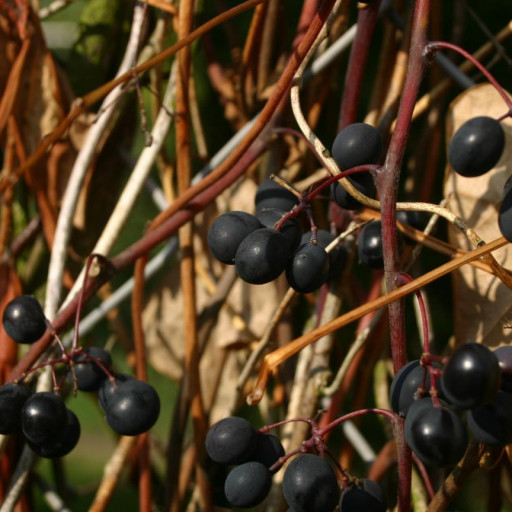
Plant Overview
Often referred to as the "Fox Grape," Vitis labrusca is the legendary ancestor of the world-famous Concord grape. Native to eastern North America, this vigorous woody vine is famous for its distinct, musky "foxy" aroma and its incredible resilience. While European grapes struggled with pests, this American powerhouse stood its ground, eventually saving the global wine industry through cross-breeding.
🔍 How to Identify
- 🍃 Large, Fuzzy Leaves: The leaves are heart-shaped and often three-lobed, but the real giveaway is the underside, which is covered in a dense, felt-like white or rusty-brown fuzz.
- 🍇 "Slip-Skin" Fruit: The berries grow in compact clusters. Unlike European grapes where the skin is stuck to the flesh, the skin of a Fox Grape "slips" off easily in one piece when squeezed.
- 🧶 Forked Tendrils: As a climber, it uses tendrils to grab onto structures. In Vitis labrusca, these tendrils appear at almost every leaf node, making it a particularly aggressive and successful climber.
🏡 In Your Garden
- 🏗️ Heavy-Duty Support: Because of its vigorous growth and heavy wood, this vine requires a sturdy trellis or arbor. It is not a plant for a flimsy plastic stake; it will eventually weigh down and collapse weak structures.
- ✂️ Pruning Nuance: This grape produces fruit on "one-year-old wood." If you don't prune it back hard in the late winter, the vine will become a tangled mess of leaves with very little fruit to show for it.
- 🛡️ Natural Resilience: This species is naturally resistant to many pests (like Phylloxera) that kill other grapevines, making it a great "low-intervention" choice for organic gardeners.
⚠️ Safety & Toxicity
- 🐾 Pet Danger: While the fruit is a delicious treat for humans, grapes are highly toxic to dogs and cats. Even a small amount can cause acute kidney failure.
- 👶 Kid-Friendly Fruit: The grapes are edible and used for some of the best jams and juices in the world, though they do contain large, hard seeds that can be a choking hazard for very small children.
✨ Fun Fact
The term "foxy" doesn't mean it smells like a fox! In the 1800s, "foxy" was a term used to describe a wild, earthy, and musky flavor profile that was starkly different from the clean, sweet taste of European wine grapes.

Detailed Care Instructions
To grow Vitis Labrusca, commonly known as the Labrusca grapevine or Fox grape, follow these steps:
- Choose a suitable location: Labrusca grapes grow best in a sunny spot that receives at least 6-8 hours of direct sunlight per day. Ensure the soil is well-draining with a pH level between 5.5 and 6.5.
- Prep the soil: Amend the soil with organic matter like compost or well-rotted manure to improve fertility and drainage. Remove any weeds or grass from the area before planting.
- Purchase healthy plants: Buy Vitis Labrusca plants from a reputable nursery or garden center. Look for healthy plants with well-developed roots and sturdy stems.
- Plant the grapes: Dig a hole slightly larger than the root ball of the plant. Place the grapevine in the hole, ensuring that the bud union (the swollen area where the vine was grafted onto the rootstock) is above the soil level. Backfill the hole with soil, gently firming the soil around the roots.
- Provide support: Labrusca grapes need support to grow and vine properly. Install a trellis or wire system to support the vines as they grow. Ensure the support structure is sturdy and can handle the weight of the vines.
- Watering: Water the plant thoroughly after planting and continue to water regularly to keep the soil moist but not waterlogged. During hot and dry periods, increase the frequency of watering.
- Fertilization: Apply a balanced fertilizer specifically formulated for grapes during the growing season. Follow the instructions on the fertilizer packaging for application rates and frequency.
- Pruning: Prune the grapevines in late winter or early spring when they are dormant. Remove any dead, damaged, or diseased wood. Train the vines to grow along the support structure, and prune back excess growth to promote better air circulation and sun exposure.
- Pest and disease control: Monitor the vines regularly for any signs of pests or diseases, such as aphids, mildew, or rot. Apply appropriate organic or chemical treatments as necessary.
- Harvesting: Vitis Labrusca grapes are usually harvested in late summer or early fall when they reach full ripeness. The fruit should be firm, sweet, and colored (different varieties have different colors). Simply cut the grape clusters from the vines when they are ready to be harvested.
By following these guidelines, you should be able to successfully grow Vitis Labrusca plants and enjoy a bountiful harvest of delicious grapes.

Place in a bright room that is sun drenched almost all day. Or directly in a south-facing window.

Vitis Labrusca is a type of plant that requires specific watering techniques to keep it healthy and thriving. To water this plant properly, you should first ensure that the soil is moist before watering. This means not watering it immediately after you see the soil is dry, as overwatering can be detrimental to the plant's growth.
When watering, use a watering can or hose to give the plant a deep and thorough watering. Ensure that the water penetrates the soil to the root system to provide the plant with the nutrients it needs to grow. The amount of water you give the plant should depend on the weather conditions, as you do not want to overwater in humid or rainy weather.
It is also essential to avoid watering the plant's leaves or fruit, as this can promote fungal growth and damage the plant. When watering, direct the water to the soil and avoid wetting the foliage.
Finally, it is essential to water Vitis Labrusca regularly. This plant needs consistent watering to thrive, especially during the growing season. Ensure that the soil is always moist, but not waterlogged, to avoid root damage and fungal growth.
For Vitis Labrusca plants, it is recommended to fertilize them in the spring, just before new growth begins. Use a balanced fertilizer with equal parts nitrogen, phosphorus, and potassium. Apply the fertilizer around the base of the plant, following the manufacturer's instructions for the correct amount to use. During the growing season, you can also use a liquid fertilizer every two to three weeks to provide additional nutrients. However, be careful not to over-fertilize, as this can result in excessive vegetative growth at the expense of fruit production.
The ideal soil for Vitis Labrusca plants is well-drained and loamy with a slightly acidic pH. It should be rich in organic matter and have good nutrient availability. A mixture of sand, peat moss, and perlite can be added to improve drainage and aeration. It is essential to avoid heavy compacted soil that retains water, which can lead to root rot and other diseases. Additionally, the soil must be irrigated adequately and regularly to maintain the optimum moisture level for the plant's growth.
One way to propagate this plant is through cuttings. To do this, choose a healthy stem from the parent plant that is about six inches long and has at least two nodes (where the leaves grow from). Cut the stem at a 45-degree angle just below a node, remove any leaves from the bottom half of the stem, and dip the end into rooting hormone powder.
Next, prepare a pot or container with a well-draining potting mix and make a hole in the soil for the cutting. Insert the cutting about an inch into the soil and gently press the soil around it. Water the cutting thoroughly and cover the pot with a clear plastic bag or plastic wrap to create a mini greenhouse.
Place the pot in a bright but indirect light location and keep the soil moist but not waterlogged. After a few weeks, check the cutting by gently tugging on it. If it resists, it has started to form roots. When the roots have developed enough (usually after a month or so), remove the plastic covering and gradually acclimate the new plant to normal conditions.
Common pests of the concord grape include Mealybugs, spider mites. Make a habit of checking your concord grape frequently for pests so that any infestations can be caught and managed early.








